



Why Acoustic Wall Panels Matter in Modern Spaces

We've all experienced it: the overwhelming noise in a busy restaurant, the distracting chatter in an open-plan office, or the echoing sound in a living room with hard floors. When words blur and voices bounce off hard surfaces like glass and concrete, the constant reverberation is not just annoying; it's exhausting.
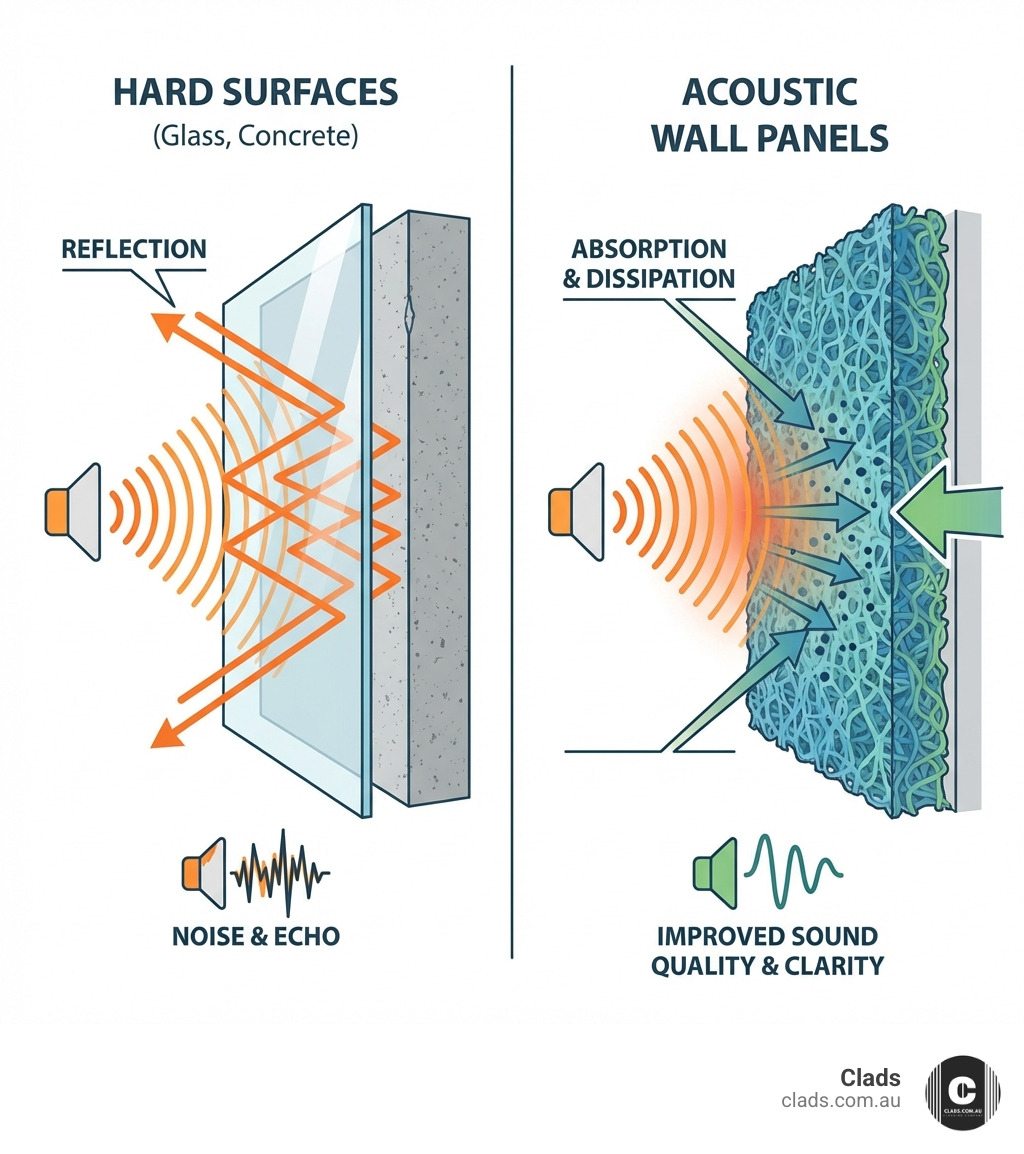
This is where acoustic wall panels come in. They are specialised treatments designed to absorb sound energy, reducing echo and reverberation to create a more comfortable and functional environment. Unlike soundproofing, which blocks sound from entering or leaving a room, acoustic panels improve the sound quality within a space. They work by absorbing sound waves, effectively stopping them from reflecting around the room.
Today's acoustic panels are also key design elements, available in a wide range of textures, colours, and finishes that improve your interior. Whether you're designing a corporate office, a home theatre, or a busy family home, understanding how acoustic panels work is essential for creating a space that looks as good as it sounds.
As Lawrismin Gomez, Sales Manager at Clads Australia, I've helped countless clients transform noisy spaces into acoustically optimised environments. In this guide, I'll share what I've learned to help you achieve the same results, creating architectural aesthetics that deliver both impact and longevity.
Understanding and Selecting Acoustic Wall Panels
This section will cover the science behind acoustic panels, how to evaluate their performance, and the practical steps for choosing the right solution for your space.
How Acoustic Panels Work: The Science of Sound Absorption
At their core, acoustic wall panels are engineered to absorb sound. Imagine a sponge soaking up water; an acoustic panel similarly "soaks up" sound waves. When sound strikes the panel, it penetrates the porous, fibrous core material. As the sound energy moves through this dense network, friction converts it into a minuscule amount of heat, dissipating the sound and preventing it from reflecting back into the room.
This mechanism directly addresses reverberation (lingering sound) and flutter echo (rapid echoes between parallel walls). By controlling these issues, acoustic wall panels significantly improve speech clarity and overall sound quality, making conversations easier to understand and environments more comfortable.
Sound Absorption vs. Soundproofing: A Critical Distinction
It's a common misconception that acoustic panels are for soundproofing. Understanding the difference is crucial for choosing the right solution.
Sound absorption focuses on improving sound quality within a room. Its goal is to reduce echoes and reverberation by soaking up sound energy. Acoustic wall panels are designed for this purpose, using soft, porous materials to absorb sound waves.
Soundproofing, on the other hand, aims to block sound transmission between spaces. It relies on heavy, dense materials like concrete or specialised membranes to stop sound from entering or leaving a room. The effectiveness of soundproofing is measured by its STC (Sound Transmission Class) rating.
While acoustic panels can make a room feel quieter, they are not designed to block significant noise from passing through a wall. For dedicated soundproofing needs, other specialised solutions are required. You can find more information in our guide on soundboard wall panels.
Decoding Performance: Materials and NRC Ratings
The effectiveness of an acoustic wall panel is quantified by its Noise Reduction Coefficient (NRC) rating. The NRC is a single-number rating from 0 (no absorption) to 1.0 (100% absorption), representing the average sound absorption performance across key frequencies.
The primary materials used in high-performance acoustic wall panels include:
- Fibreglass: A popular core material known for its excellent sound absorption properties and robustness.
- Polyester (PET Felt): Often made from recycled plastics, these panels offer good acoustic performance and are a versatile, eco-friendly choice.
- Wood Fibre: Panels made from compressed wood fibres provide a natural aesthetic and good acoustic properties.
Panel thickness also plays a crucial role. While a standard 25 mm (1 inch) panel is highly effective for absorbing mid-range frequencies like human speech, a thicker 50 mm (2 inch) panel will absorb a broader spectrum of sound, including more difficult low-end frequencies from music or machinery. When evaluating panels, consider the NRC rating in conjunction with the specific acoustic challenges of your space.
The Benefits of Installing Acoustic Walls Panels
The installation of acoustic walls panels profoundly impacts the functionality and comfort of any space. One of the most significant benefits is improved speech intelligibility. By absorbing sound reflections, panels allow spoken words to be heard clearly without strain, which is critical in offices, conference rooms, and classrooms.
This leads to a reduction in overall background noise, creating a quieter, more peaceful environment. The result is improved comfort and increased productivity, whether in an office where employees can focus or a restaurant where diners can converse easily.
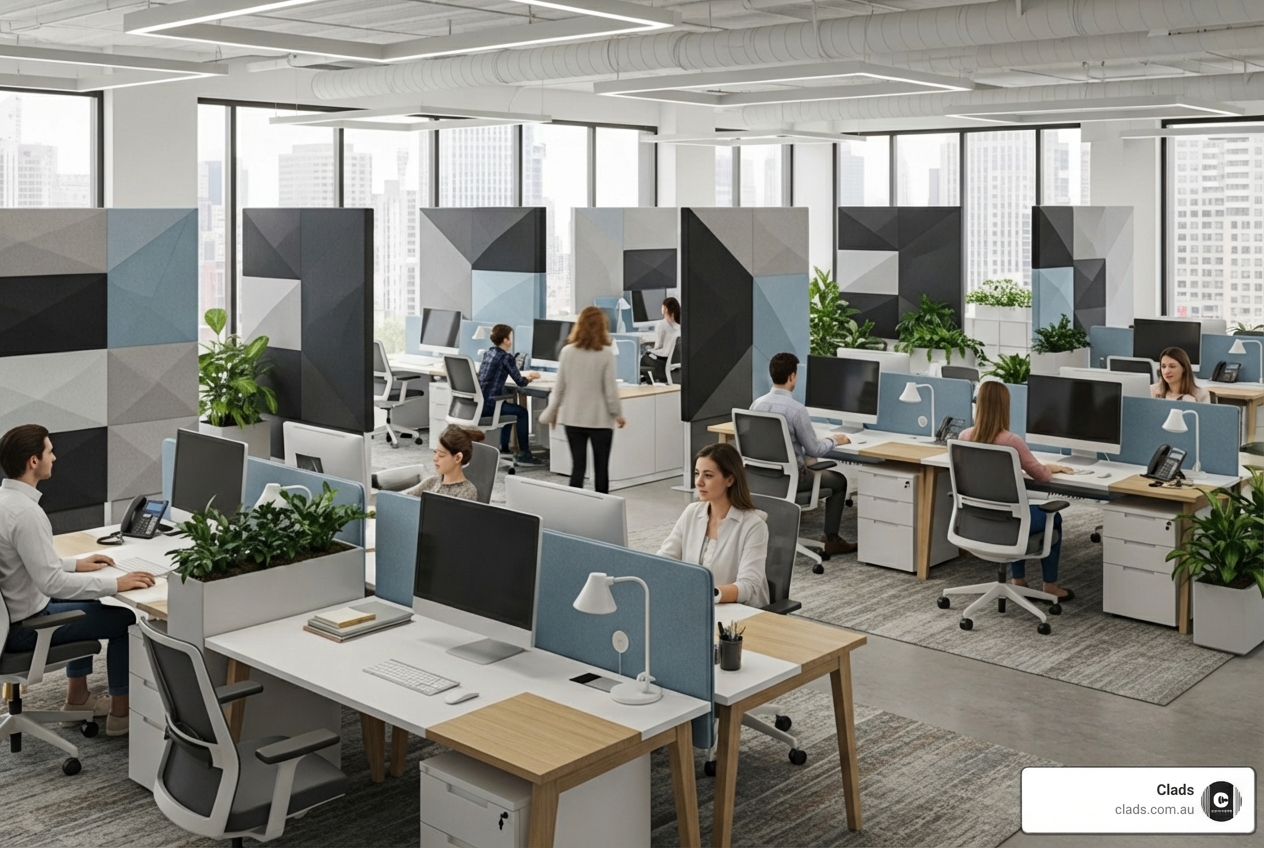
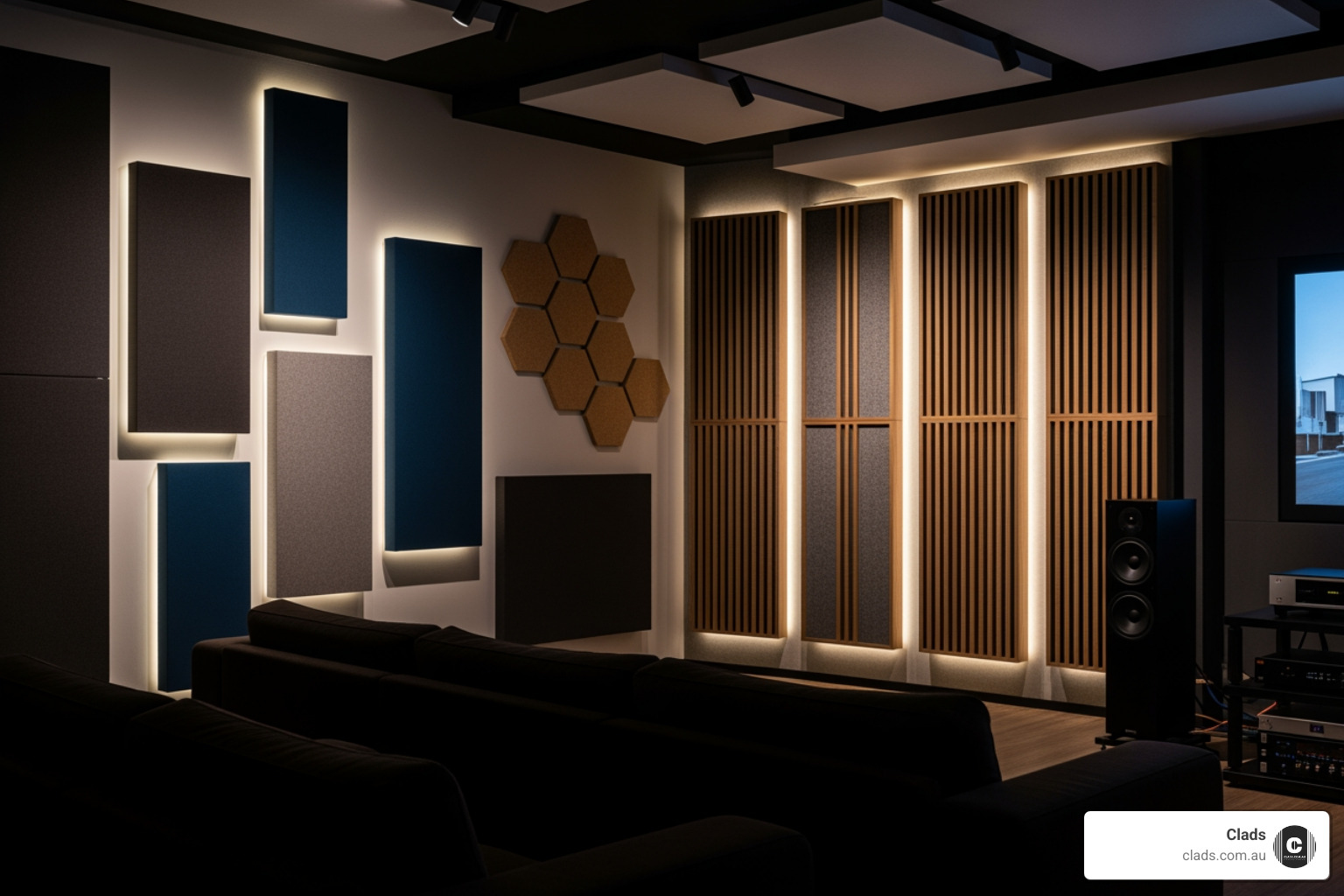
The applications are incredibly diverse, including offices, home theatres, recording studios, restaurants, residential living areas, and schools. Beyond their functional prowess, modern acoustic wall panels offer immense aesthetic versatility. Available in a vast array of colours, textures, and finishes, they are not just solutions to a problem but opportunities to improve the visual appeal of a space.
A Buyer's Guide: Types, Customisation, and Cost
Choosing the right acoustic wall panels involves understanding the available types, customisation options, and cost factors.
Common types of acoustic wall panels include:
- Fabric-Wrapped Panels: A versatile option consisting of a sound-absorbing core wrapped in an acoustically transparent fabric, available in an extensive range of colours.
- Wooden Slat Wall Panels: Extremely popular for their modern aesthetic, these panels feature wooden slats on an acoustic felt backing, adding natural warmth and contemporary design. We offer a beautiful range of wooden slat wall panels.
- Decorative & Perforated Panels: These panels can be custom-printed or feature perforations for a sleek, architectural look, turning acoustic treatment into a design feature.
Customisation is a key advantage. Panels can be tailored to your needs with custom sizes, shapes, and a vast selection of fabric choices and finishes. The main cost factors include the core material, panel size and thickness, and the degree of customisation. For current pricing and detailed specifications, please visit our internal cladding range.
Installation and Maintenance for Acoustic Walls Panels
Proper installation and simple maintenance are key to maximising the performance and longevity of your acoustic wall panels. While Clads Australia is a product supplier, we can connect you with trusted local installers upon request.
Optimal placement is crucial. The goal is to target "first reflection points" – the areas on walls where sound first bounces before reaching the listener. Covering 15-20% of a room's wall surface area is a good starting point for general echo reduction.
Common mounting options include:
- Impaling Clips: A cost-effective method where panels are pushed onto clips screwed into the wall.
- Z-Clips: A secure, interlocking system that allows for easy removal.
- Adhesives: Construction adhesives can be used for a permanent, flush installation.
Many acoustic walls panels are designed for DIY-friendly installation. If you prefer professional assistance, we can connect you with trusted local installers. One of the great benefits of our panels is their low-maintenance nature. Regular dusting with a soft cloth or light vacuuming with an upholstery attachment is usually all that's needed. For minor marks, spot clean gently with a diluted, mild detergent. This simple care ensures the longevity of your panels, keeping your space acoustically and visually appealing for years to come.
Conclusion
In the field of modern Australian architecture and interior design, the importance of effective acoustics cannot be overstated. Acoustic walls panels stand out as a versatile and essential solution, masterfully blending functional excellence with aesthetic appeal. They are not merely sound-dampening devices but integral components that improve the quality of life and productivity within any environment, from busy commercial hubs in Melbourne to serene residential havens across Victoria.
Throughout this guide, we've explored how these innovative panels work by absorbing sound energy, significantly reducing unwanted echoes and reverberation. We've clarified the critical distinction between sound absorption and soundproofing, highlighting the NRC rating as your compass for performance. We've also digd into the myriad benefits, from improved speech clarity and comfort to increased productivity, and showcased the diverse types, customisation options, and cost considerations that empower you to make informed decisions.
At Clads Australia, we pride ourselves on being the design-led cladding specialists. We understand that creating architectural aesthetics means delivering solutions that are both visually stunning and impeccably functional. Our range of acoustic walls panels is carefully curated to offer you trusted, low-maintenance, and stylish options that meet the highest standards of performance and design. Whether you're an architect, builder, designer, or a design-conscious homeowner, we are committed to helping you achieve spaces that not only look incredible but also feel incredibly good.
Transform your space into an acoustically optimised sanctuary where sound, comfort, and style harmoniously coexist. If you have any questions or need personalised advice for your next project, please don't hesitate to reach out.
Contact our team for expert advice Order your free samples to see the quality firsthand