



Understanding Your Outside Wall Cladding Options
Cladding on outside walls is a protective and decorative skin for your home. It acts as the first line of defence against weather and pests while defining your home's architectural style and boosting its street appeal.
Quick Overview: What You Need to Know
- Purpose: Protection, insulation, and aesthetic improvement.
- Main Types: Aluminium, composite (WPC), and timber-look.
- Key Benefits: Low maintenance, durability, and energy efficiency.
- Lifespan: 30-50+ years, depending on the material.
- Installation: DIY-friendly systems available; professional help recommended for large jobs.
- Climate: Choose materials based on corrosion, UV, and fire-risk factors.
Many Australian homeowners are moving away from traditional timber that requires constant upkeep. Modern materials like aluminium and composite panels offer the beauty of natural timber without the demanding maintenance.
Whether you're renovating or building new, this guide will help you choose the right cladding by exploring materials, design trends, fire ratings, and installation, ensuring you balance aesthetics, durability, and budget.
What Are the Real Benefits of Cladding on Outside Walls?
When you invest in cladding on outside walls, you get more than a cosmetic upgrade. The right cladding delivers robust protection, improved energy efficiency, and a stunning visual appeal that boosts property value.
Let's walk through what these benefits mean for your home.
How does cladding protect my home?
Think of cladding as your home's protective suit against the harsh Australian climate. A properly installed system actively deflects rain, manages moisture, and stands firm against wind. A ventilated cavity behind the cladding is key, as it allows any moisture to drain and dry, preventing rot and mould.
Our materials are also engineered to resist UV degradation, so they won't fade or crack under the relentless sun. This ensures your home's colour and integrity last for decades. Furthermore, our aluminium and composite options are resistant to termites and other pests, offering a barrier that traditional timber cannot match.
For properties in high-risk areas, fire protection is non-negotiable. We offer cladding with excellent Bushfire Attack Level (BAL) ratings to meet strict safety requirements. For guidance on selecting the right BAL-rated system for your home, talk with our team.
Will new cladding improve my home's energy efficiency?
Absolutely. Cladding on outside walls plays a vital role in your home's thermal performance, leading to real savings on energy bills. By creating a thermal envelope with insulation and a ventilated cavity, cladding helps regulate your home's internal temperature. It reduces heat transfer, keeping your home cooler in summer and warmer in winter.
While standard cladding makes a difference, some of our insulated composite panels offer serious thermal resistance, with R-values up to 8.0. This means your air conditioning and heating systems work less, directly lowering your energy costs over time.
As an added bonus, quality cladding helps dampen external noise, creating a quieter and more peaceful indoor environment, which is a game-changer for homes near busy roads.
How does cladding impact aesthetics and resale value?
This is where the change becomes truly exciting. Cladding on outside walls is one of the most impactful upgrades you can make to your home's exterior and curb appeal.
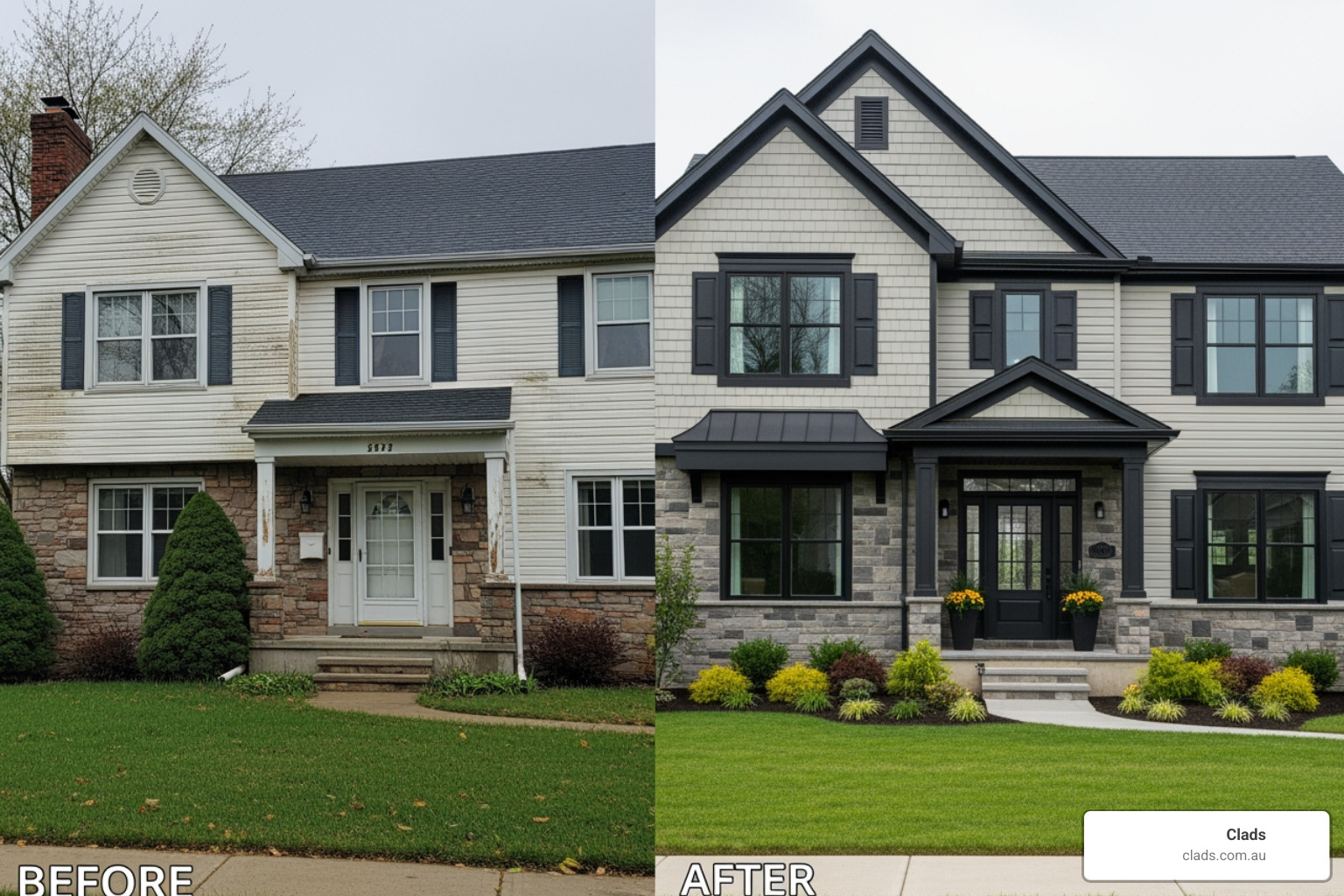
Modern cladding allows you to define your home's architectural style. Choose sleek aluminium for a contemporary look or warm timber-look profiles for a natural aesthetic, all without the maintenance of real wood. You can even mix materials to create feature walls and striking contrasts for a custom appearance.
For older homes, cladding is a powerful modernisation tool, turning tired facades into contemporary showpieces. This significant boost to curb appeal directly increases property value. Real estate experts agree that homes with attractive, low-maintenance exteriors command higher prices and sell faster, making quality cladding a smart investment.
Looking for inspiration? Explore our gallery of exterior cladding ideas that will instantly elevate your home's look to see what's possible when you combine quality materials with thoughtful design.
What Are the Most Popular Cladding Options from Clads Australia?
Choosing the right cladding on outside walls will define your home's look and performance for decades. At Clads Australia, we focus on materials that deliver modern aesthetics, durability, and minimal maintenance.
Your choice depends on your climate, design vision, and desired upkeep. Whether you want a sleek contemporary finish or the warmth of timber without the hassle, our range has you covered.

Aluminium Cladding
For a modern, sophisticated finish that is virtually maintenance-free, aluminium cladding is an excellent choice. It's lightweight yet strong, making it easy to install without compromising durability. It won't rust, rot, or warp, and its corrosion resistance is perfect for coastal environments.
Aluminium is also non-combustible and achieves high Bushfire Attack Level (BAL) ratings, providing peace of mind in fire-prone areas. With minimal upkeep required, just an occasional wash, it saves you time and money. Our range offers a wide spectrum of colours and profiles for a consistently impressive modern finish. Learn more about our aluminium cladding.
Wood Plastic Composite (WPC) Cladding
WPC cladding offers the perfect solution for those who love timber's warmth but not its maintenance. It blends recycled wood fibres with plastics to create a material that looks and feels like real wood but requires no painting, staining, or sealing.
WPC is engineered for longevity, resisting UV fade, rot, and pests. It stands up to the elements without warping or splintering, giving you decades of reliable performance. As it uses recycled materials, it's also a more sustainable choice. See our composite cladding range to explore available colours and profiles.
Timber-Look Cladding
Our timber-look cladding combines the classic appeal of timber with modern profiles and superior performance. The range includes modern batten and castellated profiles that create stunning shadow lines and add architectural depth to your facade.
Unlike traditional timber, these products are UV stable and pre-finished, so the colour stays true without fading or weathering. The lightweight construction simplifies installation, while the engineered materials resist rot and moisture damage. Explore timber-look cladding to find out how you can design the difference for your home.
Acoustic and Internal Wall Cladding
We also offer stunning solutions for internal spaces. Our acoustic panels and internal cladding are perfect for feature walls, media rooms, and offices, combining visual impact with functional benefits like improved sound quality.
These panels add texture and warmth, changing plain walls into design features. Installation is straightforward, making them accessible for both DIY enthusiasts and professional fit-outs. Find acoustic panels and see how internal cladding can redefine your indoor spaces.
How Do I Choose the Right Cladding for My Home?

Selecting the perfect cladding on outside walls involves balancing climate, budget, and long-term performance. We're here to guide you through the key factors so you can make a choice you'll be happy with for years to come.
What cladding works best for the Australian climate?
Your cladding must withstand Australia's diverse climate. For coastal areas, our corrosion-resistant aluminium is ideal against salt spray. In high UV zones, our aluminium and WPC options offer superior colour stability to prevent fading. For bushfire-prone areas, our non-combustible aluminium achieves high Bushfire Attack Level (BAL) ratings. Always check your property's BAL rating with your local council.
Proper condensation management is also vital. A ventilated cavity behind the cladding allows air to circulate and dry out moisture, preventing mould and rot. This should be paired with a vapour-permeable membrane on the frame.
How do I balance cost, durability, and maintenance for cladding on outside walls?
The true value of cladding is its total cost of ownership over its lifespan. A material that seems cheaper upfront but needs constant repainting will cost far more in the long run. Our products are sourced for longevity and minimal upkeep, offering exceptional long-term value.
Here's how our popular options compare:
| Cladding Type | Average Cost ($/sqm, installed) | Lifespan (Years) | Maintenance Level | Key Pro |
|---|---|---|---|---|
| Aluminium Cladding | $10–16 | 50+ | Low | Non-combustible, corrosion-resistant, sleek modern look, lightweight, excellent for high BAL zones. |
| WPC Cladding | $10–16 | 30–50 | Low | Mimics natural timber without maintenance, rot and pest resistant, highly durable, and often DIY-friendly. |
| Timber-Look Cladding | $10–16 | 30–50 | Low | Aesthetic appeal of wood without upkeep, UV stable, modern profiles (batten, castellated), lightweight. |
Note: Costs are estimates and can vary based on specific product, complexity of installation, and project scope.
What do I need to know about fire safety and BAL ratings?
Understanding Bushfire Attack Level (BAL) ratings is crucial for safety and compliance. This rating measures bushfire risk and dictates which materials you can use. In high-risk zones, non-combustible materials are often mandatory.
Our aluminium cladding is non-combustible and suitable for many high BAL zones, as it won't ignite or fuel a fire. Always verify your property's BAL rating with your local council and ensure your choice complies with the National Construction Code (NCC). For more details, read our article on understanding cladding fire risk.
Can I install my own outside wall cladding?
Yes, many of our cladding on outside walls options are designed for experienced DIYers. Lightweight aluminium and composite systems with interlocking profiles are straightforward to handle, making them great for feature walls or smaller projects.
For large projects, we recommend professional installation to ensure correct weatherproofing and compliance. Crucially, a house wrap (weather barrier) must be installed on the wall frame before any cladding is applied. While we don't install, we can connect you with trusted professionals. Feel free to contact our team for assistance.
What Cladding Designs Are Trending in Australia?
At Clads Australia, we are at the forefront of design-led cladding on outside walls, helping you create stylish facades that stand out.

How can I mix materials and textures for a unique look?
One of the most exciting trends is combining different materials to create dynamic facades. Imagine the contrast of sleek aluminium paired with the warmth of timber-look panels, or the robust feel of natural stone designs complementing a modern WPC facade. This approach adds depth and character.
Using a distinct material for a feature wall is another simple technique to highlight an entrance or architectural element. The interplay between different surfaces and textures can transform a simple facade into something truly architectural.
Why is vertical cladding so popular right now?
Vertical cladding offers a fresh, contemporary aesthetic that can dramatically alter a home's perception. Our modern batten and castellated profiles create strong vertical lines that add shadow, depth, and a sense of height.
This orientation draws the eye upwards, giving even single-storey homes a more commanding presence. It lends a sophisticated feel that suits the clean lines of modern Australian architecture.
Insider Tip: Use vertical profiles to introduce shadow lines and depth, creating a more high-end architectural finish than a simple flat surface.
What colours and finishes are in demand?
Colour and finish choices are crucial for defining your home's personality. Charcoal greys and deep blues remain popular for a sleek, contemporary look. The appeal of natural timber looks is also strong, offering warmth without the maintenance of real wood.
Earthy tones inspired by the Australian landscape, like warm browns and sandy beiges, are trending for their ability to create a harmonious aesthetic. These colours help homes blend seamlessly with their natural surroundings.
Insider Tip: Always request the largest possible sample to see how the colour and texture change in different light conditions throughout the day.
Frequently Asked Questions about Cladding on Outside Walls
We hear these questions all the time, and we're here to give you straight answers to help you make confident decisions.
Is cladding only for external walls?
Not at all. While cladding on outside walls is our specialty, we also offer stunning internal cladding. Our acoustic panels are perfect for creating feature walls in media rooms or offices, adding texture, warmth, and improved sound quality.
How long does exterior cladding last?
Longevity is a key benefit. Our aluminium cladding can last 50+ years, while our WPC and timber-look cladding typically offer a lifespan of 30 to 50 years. Proper installation and choosing the right material for your climate are crucial for maximising lifespan.
Do I need council approval to install cladding in Australia?
It depends on your local council and project scope. Minor, like-for-like repairs may not need approval, but significant changes, heritage properties, or homes in bushfire-prone zones likely will. We always recommend checking with your local council before starting any work.
What is the easiest cladding to install myself?
Our lightweight aluminium and composite cladding systems are particularly DIY-friendly. Products with interlocking or shiplap profiles are designed for easy handling and installation, making them ideal for experienced DIYers tackling smaller projects like feature walls.
How do I clean and maintain my new cladding?
Maintenance is refreshingly simple. For most of our products, an occasional low-pressure wash with a mild detergent every one to three years is all that's needed to remove dirt. A yearly inspection for any damage or loose fixings is also a good idea to ensure your cladding looks great for decades.
Ready to Transform Your Home's Exterior?
You now have a solid understanding of cladding on outside walls, from its protective benefits to its stunning aesthetic possibilities. At Clads Australia, we are passionate about helping you design the difference with trusted, low-maintenance cladding solutions that deliver long-term value.
We supply the highest quality products across Australia and can connect you with trusted installers to ensure your project is completed to the highest standard.
Ready to see the quality for yourself? Request your free sample here to experience the texture and finish in person. If you have questions, our expert team is here to help.
Contact us today for personalised advice. Let's create aesthetics for your Australian home together.