



Black Cladding: What It Is and Why Specifiers Are Choosing It
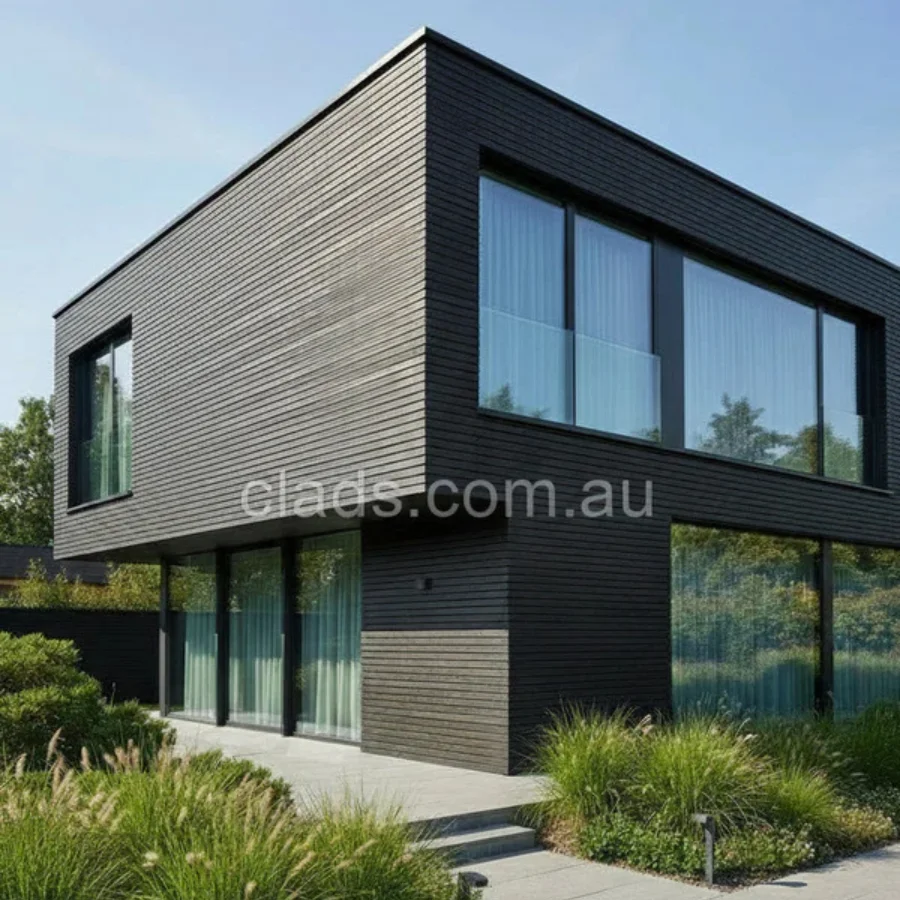
Black cladding is an exterior or interior wall finish system applied to a building's outer shell, delivering both protection and a consistent architectural outcome in a deep, dark tone.
Quick answers:
- What it is: A wall cladding system finished in black or near-black, available in WPC, aluminium, or timber
- Common materials: WPC (Wood Plastic Composite), powder-coated aluminium
- Key benefits: UV resistance, reduced lifecycle cost, low maintenance, consistent finish across elevations
- Typical applications: External facades, feature walls, alfresco areas, commercial fit-outs, high-rise buildings
- Starting cost: External WPC cladding from approximately $16 per linear metre
- Lifespan: 25 to 30+ years depending on material and exposure
For builders, architects, and developers, black cladding is increasingly a specification decision, not just a design preference. It reduces callbacks, performs across a wide range of Australian climate zones, and delivers a finish that holds up without ongoing painting, sealing, or replacement cycles.
I'm James Lawrence, and with over 15 years in Melbourne's construction and building materials sector, I've worked closely with architects, builders, and developers to match the right black cladding systems to the right projects. In this guide, I'll walk you through everything you need to make a confident specification decision.
Black Cladding Explained: Materials, Applications, and Performance
When we talk about black cladding in modern construction, we are referring to a non-structural external layer designed to protect the building envelope while achieving a specific design intent.
In April 2026, the market has shifted heavily toward materials that offer high UV stability and moisture resistance, as traditional timber often fails to maintain its deep black hue under the harsh Australian sun.
Choosing the right material is a critical specification decision that directly impacts compliance, maintenance cycles, and long-term ROI.
For developers, the goal is to minimise callbacks. Using a material like WPC or aluminium ensures that the "ebony" or "jet black" finish specified in the renders is the same finish the client sees five years post-completion.
Why Black Cladding Is Widely Adopted in Multi-Res and Commercial Builds
The dominance of black cladding in the Australian landscape is no accident. It offers an architectural contrast that provides visual weight to a structure, allowing it to either disappear into a landscape or stand out as a bold, modern statement.
Historically, this aesthetic was achieved through Yakisugi (also known as Shou Sugi Ban), a traditional Japanese method dating back to at least the 18th century that involves charring timber to improve its resistance to moisture, insects, and decay. While the technique remains influential in contemporary design, many modern builders now replicate the look using engineered materials such as WPC cladding and powder-coated aluminium to achieve a similar charred-black aesthetic with lower maintenance and more consistent performance.
Improving project performance also comes down to thermal considerations. While dark colours naturally absorb more heat, modern black cladding systems utilise the rain screen principle. By creating a ventilated cavity (typically 10 to 25mm), we allow air to circulate behind the panels. This reduces solar heat gain and protects the building's primary structure from thermal stress.
Furthermore, in multi-residential and commercial builds, NCC compliance is the priority. Specifying black aluminium or fire-rated WPC ensures the project meets stringent safety standards while maintaining the desired high-contrast architectural finish.
Black WPC Cladding: Reduced Lifecycle Cost for Residential and Commercial Projects
Wood Plastic Composite (WPC) has become the "gold standard" for builders looking to reduce lifecycle costs. Our WPC range combines HDPE (High-Density Polyethylene) with reclaimed wood fibres, resulting in a product that is termite-proof and highly resistant to rot.
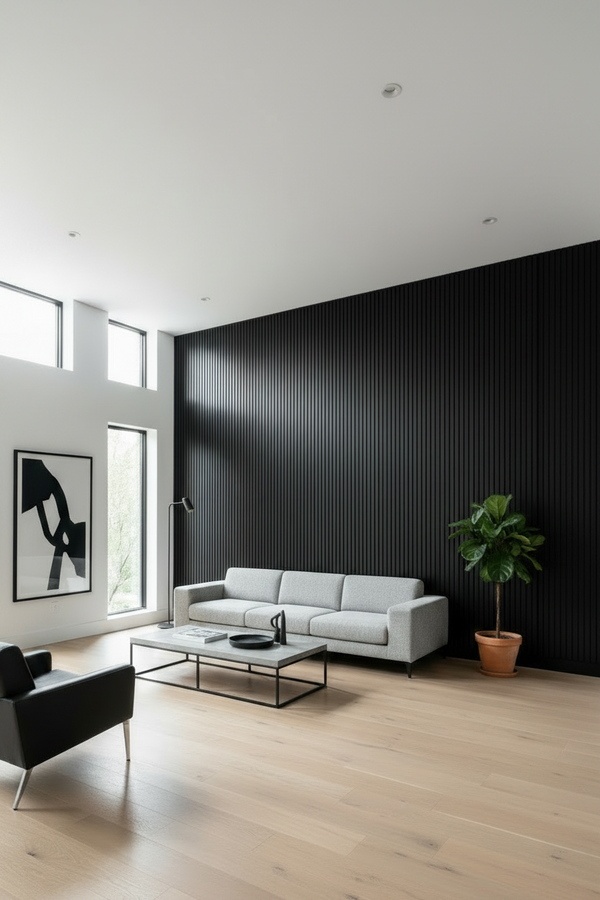
For volume builds and multi-residential projects, WPC is a specification for durability. It eliminates the need for the sanding, staining, and oiling associated with traditional timber. In coastal areas like the Mornington Peninsula or Sydney’s Northern Beaches, WPC excels because it does not react to salt spray or high humidity in the same way as natural wood or certain metals.
Why WPC Cladding Makes Sense for Australian Builds
Australia's climate is notoriously harsh on building materials. Black cladding made from WPC offers exceptional dimensional stability. Unlike timber, which expands and contracts significantly with moisture changes, WPC remains stable, reducing the risk of warped boards or popped fixings.
Key performance factors include:
- Moisture resistance: Ideal for coastal and humid Queensland or NSW climates.
- Termite resistance: A critical factor for Australian ground-level applications.
- UV Performance: Most high-quality WPC products now come with a 25-year colour fade guarantee, ensuring the black stays black.
Key Features and Advantages of Black Cladding in WPC
- UV Stabilised: Formulated to resist the bleaching effect of the sun.
- Low Maintenance: No oiling or staining required, ever.
- Hidden Fasteners: Tongue and groove systems allow for a clean, screw-free aesthetic.
- Cost Efficiency: Starting at approximately $16 per linear metre, it provides a premium look at a mid-range price point.
- Waterproof: 100 percent waterproof properties make it suitable for wet-weather exposure.
Best Use Cases (External vs Internal)
Externally, black WPC is perfect for boundary walls, alfresco areas, and full facades. Internally, it is widely used for retail fit-outs, commercial storefronts, and media walls. Because the finish is consistent, architects often specify the same profile for both the external soffit and the internal ceiling to create a seamless indoor-outdoor flow.
Black Aluminium Cladding: High-Performance Solution for Compliance and Fire Safety
When a project demands the highest level of fire safety, aluminium is the primary choice. Black aluminium cladding is non-combustible and meets AS1530.1 compliance, making it mandatory for many high-rise facades and buildings located in high-risk bushfire-prone zones (BAL-40 or BAL-FZ).
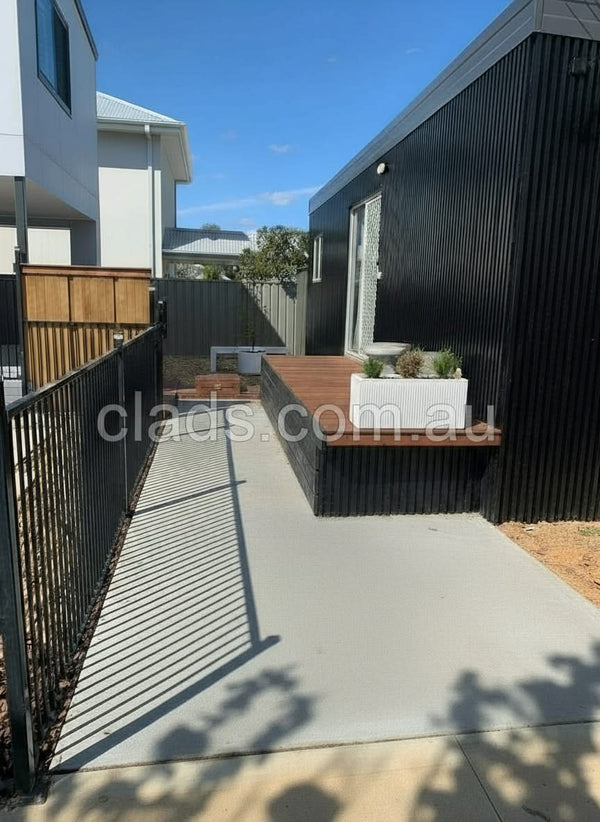
Why Aluminium Cladding Is Ideal for Large-Scale and High-Risk Projects
In large-scale developments, structural efficiency is key. Aluminium is incredibly lightweight yet structurally stable, reducing the load on the building's subframe. For developers, this can lead to savings in structural steel and installation time.
- NCC Group 1 Requirements: Essential for public infrastructure and high-rise residential towers in Sydney and Melbourne CBDs.
- Minimal Thermal Movement: High-quality powder-coated aluminium handles temperature fluctuations without the buckling seen in cheaper plastics.
Key Features and Advantages of Black Cladding in Aluminium
- Fade Resistance: Utilises premium powder-coated finishes (often RAL 9005) that are tested for long-term exposure.
- Recyclability: A sustainable choice for projects targeting high Green Star ratings.
- Precision Engineering: Interlocking systems ensure perfectly straight lines and sharp corners, achieving a level of precision timber cannot match.
- High Contrast: Provides a crisp, matte or satin finish that defines architectural geometry.
Best Use Cases (External vs Internal)
Aluminium is the go-to for apartment complexes, commercial towers, and lift lobbies. Its durability makes it ideal for high-traffic retail environments where impact resistance and fire safety are non-negotiable.
Design Flexibility: Profiles, Finishes, and Layout Options
The versatility of black cladding lies in its profile. A flat panel creates a minimalist, industrial look, while a fluted or castellated profile adds depth through shadow lines.
When specifying, consider the following options:
- Fluted/Castellated: Creates a series of ridges and valleys. This is highly effective for breaking up large, flat surfaces and adding visual texture.
- Shiplap: A classic look with a modern twist when finished in black.
- Slat Solutions: Ideal for privacy screening or feature sections.
- Orientation: Vertical installation can make a building appear taller and more luxurious, while horizontal layouts ground the structure and offer a more traditional feel.
Most of our popular black profiles offer a 200mm effective width, meaning you need exactly 5 panels per metre of wall, simplifying the estimation process for contractors.
Installation Considerations for Black Cladding Systems
To achieve a consistent architectural outcome, proper installation is paramount. We recommend that builders and contractors focus on the subframe preparation to avoid long-term issues.
- Subframe and Batten Spacing: Battens should typically be spaced at 400mm to 500mm centres. For black WPC, ensuring the subframe is perfectly level is vital, as the dark colour will highlight any undulations in the wall.
- Ventilated Cavity: Always maintain a drainage gap of 10 to 25mm between the cladding and the sarking. This allows moisture to escape and air to circulate, which is essential for the rain screen principle.
- Fixings: Use stainless steel fixings only. Many modern systems use hidden screw designs or clips that allow for natural expansion and contraction without visible screw heads.
- Pre-drilling: Especially for modified timber or certain composites, pre-drilling protocols must be followed to prevent splitting or cracking.
Maintenance, Lifespan, and Long-Term Value
One of the biggest selling points for black cladding is the reduced lifecycle cost. While traditional timber requires a maintenance cycle every 12 to 24 months, high-performance WPC and aluminium systems only require an inspection every 7 to 10 years.
For cleaning, we suggest using microfiber cloths and mild soapy water. Avoid harsh chemicals or abrasive pressure washers, as these can damage the UV-protective top layer. With a 30-year service life, these materials represent excellent long-term value, maintaining their aesthetic appeal and protecting the building’s ROI long after the initial construction phase is complete.
Cost Breakdown and Buying Considerations
For developers and trade professionals, project scalability and supply reliability are the most important factors. We offer volume pricing to ensure that large-scale projects remain within budget.
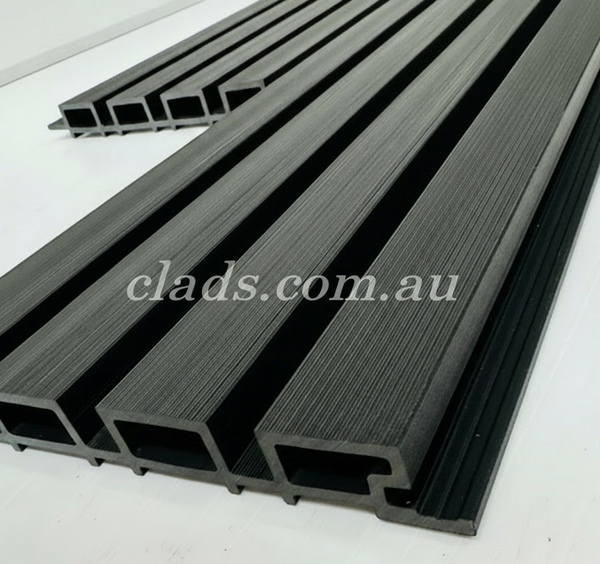
- WPC External Cladding: Starts from approximately $16 per linear metre.
- WPC Internal Cladding: Starts from approximately $26 per panel.
- Wholesale Pallet Coverage: A standard pallet of our exterior composite cladding covers approximately 807 sq.ft (roughly 75 sqm), containing 125 panels. Each individual panel covers about 6.45 sq.ft.
With over 150 depot locations across Australia, including major hubs in Melbourne, Sydney, Brisbane, and Adelaide, we ensure that your materials are accessible when you need them, reducing shipping friction and site delays.
Black Cladding FAQ (Materials, Cost, Installation & Performance)
How long does delivery take for black cladding in Australia?
Standard delivery typically takes 2 to 8 business days while expedited shipping can arrive within 1 to 4 business days depending on location and stock availability. We service all major regions including Victoria, New South Wales, and Queensland.
What days are black cladding deliveries available?
Deliveries are generally scheduled Monday to Friday 9AM to 5PM. Weekend delivery may be arranged on request depending on courier availability and project location.
Is external black cladding waterproof and weather-resistant?
Yes. Quality external cladding systems are designed to be waterproof and weather resistant protecting against rain, UV exposure, and moisture when installed correctly. Our WPC and aluminium ranges are specifically engineered for the Australian climate.
Can black cladding panels be used for internal applications?
Yes. Many black cladding systems, particularly WPC and aluminium panels, are suitable for both external facades and internal feature walls. They are popular for media walls and retail fit-outs.
What materials are black cladding panels made from?
Black cladding panels are commonly made from WPC (Wood Plastic Composite) or aluminium, each offering different performance and maintenance benefits for the specifier. WPC offers a wood-like look, while aluminium provides superior fire safety.
What is the cost of external black WPC cladding per linear metre?
External black WPC cladding typically starts from around $16 per linear metre depending on profile and order volume. Volume discounts are available for trade and developers.
How much does internal WPC cladding cost per panel?
Internal WPC cladding generally starts from $26 per panel with pricing varying based on design and size. These panels are often used for high-end residential interiors.
How long does black WPC cladding last?
High quality WPC cladding can last 30 plus years with minimal maintenance and strong resistance to UV, moisture, and pests. Our products often come with a 25-year no-fade guarantee.
Build Smarter with High-Performance Black Cladding
At Clads Australia, we aren't just a supplier; we are a design-led specification partner. Whether you are a builder looking to reduce callbacks or an architect striving to achieve a specific design intent, our range of black cladding solutions offers the perfect blend of modern aesthetics and practical performance.
With national supply capability and a focus on project scalability, we support the Australian building industry from our Melbourne HQ to our 150+ depots across the country.
Ready to specify black cladding for your next project?
- Request a free sample
- Contact our trade support team
- Explore our full External Cladding collection
- Explore our full Internal Cladding collection
By choosing the right material and following professional installation standards, you can ensure your project delivers a bold, lasting impression for decades to come. Build smarter with Clads.