



Why External Corner Trim is Essential for a Professional Finish
External corner trim is a critical component with two vital functions: protecting vulnerable corners from damage and delivering a clean, professional finish. Without it, even high-quality cladding can look incomplete, leaving corners exposed to moisture, UV damage, and physical wear.
In short, external corner trim is a protective and decorative finishing piece that:
- Protects cladding edges from moisture, impact, and weather.
- Seals corner joints to prevent water ingress.
- Conceals raw panel edges for a polished look.
- Adds architectural detail and clean lines.
- Extends the lifespan of your cladding system.
For Australian homeowners, choosing and installing the right corner trim is the difference between a result that lasts for decades and a finish that fails within years. This guide covers everything you need to know about selecting and installing external corner trim like a professional, with clear steps for a flawless result.
At Clads Australia, we supply premium corner trim designed to integrate with our cladding systems. While we don't install, many of our lightweight options are perfect for confident DIYers. If you need professional installation, we can connect you with a trusted local installer.
What Should You Consider Before You Begin?
Before you begin, proper planning is essential for a professional corner trim installation. This section covers the key planning steps to help you select the perfect Clads Australia trim for a flawless, long-lasting result.
Understanding the Role of External Corner Trim
External corner trim serves two equally important roles: protection and aesthetics. First, it protects your building's vulnerable corners from the elements. Moisture ingress is a major threat, as water seeping into exposed panel edges can cause swelling, rot, and structural damage. Our trims create a crucial barrier to seal these joints.
Trim also provides impact resistance against bumps from garden equipment or daily life. It shields edges from Australia's harsh sun, which can cause fading and cracking. Furthermore, a well-installed trim seals potential entry points for insects and pests.
Beyond protection, external corner trim transforms your building's exterior aesthetic. It delivers the clean lines and crisp, defined edges that lift a facade's visual appeal. By concealing the cut edges of cladding panels, it hides minor irregularities and provides a seamless, polished look. Depending on the profile and colour, trim can also add striking architectural detail, making a significant impact on your overall design.
More info about our cladding accessories.
Choosing the Right Material for Your Project
The material you choose for your external corner trim dictates its performance, maintenance, and how well it complements your cladding. At Clads Australia, we offer several high-quality options designed to work seamlessly with our cladding systems.
| Feature | WPC (Wood-Plastic Composite) Trim | Aluminium Trim | Fibre Cement Trim |
|---|---|---|---|
| Durability | Excellent; highly resistant to rot, insects, and moisture. | Superior; strong, rigid, and impact-resistant. | Very good; robust, fire-resistant, and durable. |
| Maintenance | Very low; no painting, staining, or sealing required. Simple cleaning. | Low; resistant to corrosion, requires occasional cleaning. | Moderate; may require periodic repainting to maintain appearance. |
| Weather Resistance | Outstanding; waterproof, UV-resistant, and withstands harsh weather. | Excellent; non-corrosive, holds up well in extreme temperatures and UV. | Good; resistant to moisture and rot, but can be brittle if impacted. |
| Cost-Effectiveness | Moderate upfront, but very cost-effective long-term due to low maintenance. | Higher upfront, but excellent longevity and minimal maintenance. | Moderate upfront, ongoing cost if repainting is needed. |
| Aesthetic | Often available with premium wood grain finishes, natural look. | Modern, sleek, clean lines. Available in various colours and finishes. | Classic, paintable to match any colour scheme. |
| Clads Compatibility | Perfectly complements our WPC cladding. | Ideal for our Aluminium and Fibre Cement cladding ranges. | Great for our Fibre Cement and other paintable cladding systems. |
WPC trims are popular in Australia because they are waterproof, UV-resistant, and require no painting or sealing. They offer the look of timber without the maintenance.
Aluminium trims provide superior strength and a modern, sleek look. Their baked enamel coating offers excellent durability, often with long warranties against chipping or cracking.
Fibre cement trims are robust, fire-resistant, and paintable for colour flexibility, though they may need repainting over time to maintain their appearance.
When choosing, consider your primary cladding material, budget, and desired aesthetic. We recommend selecting a trim compatible with your cladding system for seamless integration and optimal performance.
- Explore our WPC Cladding options
- Discover our Aluminium Cladding range
- See our Fibre Cement Cladding
Matching Trim Style to Your Cladding
After choosing a material, select the right style and profile for your external corner trim. The most common profile is the versatile L-shape trim, which forms a 90-degree angle for a clean, minimalist finish. For a bolder look, box style trim creates a more substantial, square profile that makes a strong architectural statement.
At Clads Australia, we also offer custom profiles like our 'Big Exterior Corner Trim', designed for a bolder aesthetic and to complete slat wall installations with style.
The key to a cohesive design is matching your trim style to your cladding. A sleek L-shape aluminium trim pairs well with modern aluminium or fibre cement cladding, while a WPC trim complements a wood grain finish.
Colour is a powerful design tool. Matching the trim colour to your cladding creates a seamless look, while a contrasting colour makes a bold statement, such as dark grey trim against light-coloured cladding. Finishes like matte, gloss, or textured profiles also add depth and visual interest.
Always ensure the trim's dimensions are compatible with your cladding panel thickness. Our trims are designed for a perfect fit and typically come in lengths from 2.4 to 3.6 metres to minimise joints.
How Do You Install External Corner Trim Like a Pro?
Correctly installing external corner trim is where preparation meets execution. This guide provides a clear process for both experienced DIYers and trade professionals.
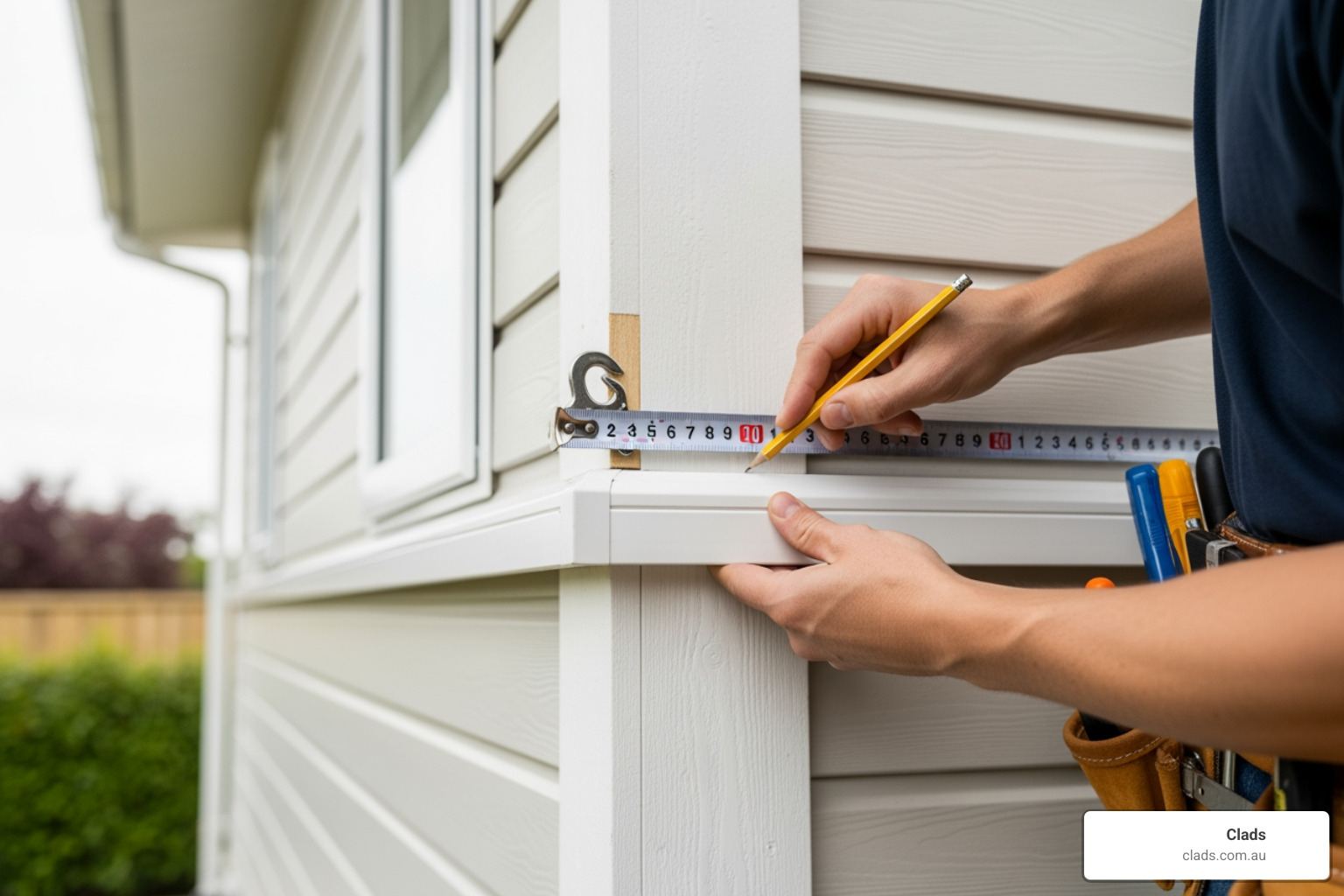
Note: Clads Australia supplies products only. For installation, we recommend experienced DIYers or can connect you with a local installer if needed. Always prioritise safety and consult a professional if you're unsure.
Step 1: Gather Your Tools and Materials
Having all your tools and materials ready ensures a smooth installation.
For tools, you will need a tape measure, pencil, fine-toothed saw (a mitre saw is ideal for angles), a level, a caulking gun, and a power drill. Essential safety gear includes safety glasses, gloves, and a dust mask.
For materials, you will need your Clads Australia corner trim pieces, exterior-grade construction adhesive, corrosion-resistant screws or nails (stainless steel or galvanised), and exterior-grade sealant.
Step 2: Measure Twice, Cut Once
Accuracy is critical to avoid wasting material and time. Start by measuring the exact vertical length of the corner. Measure in a few spots to account for any variations.
Transfer your measurement to the trim piece with a clear, straight line. Use a fine-toothed saw for a clean, splinter-free edge, which is especially important for WPC and aluminium trims. For angled corners, use a mitre box or saw for precision.
Always support the trim securely while cutting to prevent vibration. Before applying adhesive, perform a dry fit by holding the cut piece against the corner to check for accuracy.
Step 3: Preparing the Surface and Trim
Proper preparation is essential for a professional result. Ensure your cladding surfaces are clean, dry, and free of debris. Use a brush or cloth to remove any dust or dirt.
Check that the corner is plumb (vertically straight) and square (90 degrees). Address any significant deviations in the underlying structure before proceeding.
Apply a continuous, even bead of adhesive to the back surfaces of the external corner trim. A serpentine pattern or two parallel beads usually provides good coverage without excessive squeeze-out. If using mechanical fasteners, pre-drill pilot holes to prevent splitting, especially with WPC or fibre cement. For a flush finish, consider countersinking the holes.
Step 4: Fixing the Trim in Place
Take your time during this step to ensure proper alignment. Carefully position the trim piece on the corner, pressing it firmly against the cladding for maximum adhesive contact. Use your level to confirm it is perfectly vertical and make any adjustments while the adhesive is still workable.
If using mechanical fasteners, drive corrosion-resistant screws or nails through the pre-drilled holes, spaced every 300 to 450mm. For best results, we recommend using both construction adhesive and mechanical fasteners. The adhesive provides a continuous bond and seal, while fasteners offer immediate security.
Wipe away any excess adhesive that squeezes out immediately with a damp cloth before it cures. Dried adhesive is difficult to remove and looks unsightly.
Step 5: Finishing and Sealing
These final touches protect your work and provide a polished, watertight finish. Once the adhesive has begun to cure, apply an exterior-grade sealant along all seams where the trim meets the cladding. This is vital for preventing moisture penetration.
Immediately after applying the sealant, tool it smooth with a tooling tool or a wet, gloved finger. This creates a neat, uniform seal and a professional appearance.
Finally, clean any remaining adhesive, sealant, or fingerprints from the trim and surrounding cladding. Allow all materials to cure fully according to the manufacturer's instructions before exposing them to moisture.
Read our latest news and tips.
How Do You Maintain Your Corner Trim for Lasting Results?
Simple but crucial maintenance will ensure your Clads Australia external corner trim continues to protect your home and look great for years. Our products are selected for their low-maintenance properties, so a little care goes a long way.
Maintenance Tips for Different Materials
The required maintenance depends on your chosen material, but all are designed to be straightforward.
WPC (Wood-Plastic Composite) Trim Care is incredibly simple. Our WPC trims are waterproof, UV-resistant, and will not rot or warp. For cleaning, use mild soap and water with a soft brush. Avoid harsh chemicals or abrasive cleaners. Periodically check for and clean any dirt build-up to prevent mould.
Aluminium Trim Care is also fuss-free. Aluminium is highly durable and corrosion-resistant, making it ideal for Australian climates. Regular washing with mild detergent and water is all that is needed. Avoid abrasive cleaners or steel wool that could scratch the finish. Minor scuffs on painted finishes can often be repaired with touch-up paint.
Fibre Cement Trim Care requires some attention to its painted finish. The trim itself is robust and weather-resistant. Periodically inspect the paint for peeling or cracking. A fresh coat of high-quality exterior paint will restore its appearance and protective qualities when needed. For routine cleaning, mild soap and water are effective.
What to Do About Wear and Damage
Even durable external corner trim can experience wear over time. Addressing issues promptly is key to preventing further damage.
For painted trims, minor scuffs or chips can be repaired with colour-matched touch-up paint. This simple fix prevents moisture from reaching the substrate.
Significant damage, like cracks or loose sections, should be repaired or replaced as soon as possible to prevent moisture from getting behind your cladding. Maintaining the trim's integrity is essential for the health of your entire cladding system.
Pay special attention to sealant integrity. UV exposure can cause sealant to degrade over time. We recommend an annual inspection of all sealant lines. If you find any cracking or shrinking, remove the old material and re-apply a fresh bead of exterior-grade sealant. This simple task offers significant protection.
Find more expert advice on our blog.
Frequently Asked Questions About External Corner Trim
We often hear the same questions about external corner trim from homeowners, DIYers, and trade professionals. Here are straightforward answers to the most common ones.
What are the typical lengths and dimensions of Clads Australia corner trim?
Our trim pieces typically come in standard lengths of 2.4, 2.9, or 3.6 metres. These lengths are chosen to minimise joints, which creates a cleaner look and reduces potential points for moisture ingress. The profile dimensions are designed to perfectly match the thickness of Clads Australia cladding panels for a seamless, integrated fit.
What is the typical cost of external corner trim?
The cost of external corner trim depends on the material, profile, and design. While some options may have a lower upfront cost, Clads Australia's WPC, aluminium, and fibre cement trims offer superior durability and low-maintenance benefits. This provides better long-term value, as you will spend less on repairs and upkeep over the lifespan of your cladding system.
Can I install external corner trim myself?
Yes, many of our modern, lightweight trim systems are well-suited for experienced DIYers. With the right tools and a patient, precise approach, you can achieve professional results. Our WPC and aluminium trims are particularly manageable for home renovators. However, for complex projects or if you are not confident, we can connect you with a trusted local installer in Victoria. It is also wise to be aware of local building regulations, which are guided by the National Construction Code (NCC).
How do I choose a colour for my corner trim?
For a subtle, seamless appearance, choose a trim colour that matches your cladding panels. This creates a cohesive look where the cladding is the main feature. To make a bold architectural statement, select a contrasting colour. For example, black external corner trim against light-coloured cladding creates a striking, contemporary edge. Consider your overall aesthetic and order samples to see how colours look in your home's lighting.
Where can I buy high-quality corner trims in Australia?
Clads Australia is your source for high-quality external corner trims and accessories across Australia. Based in Sunshine, Victoria, we serve the entire country through our 150-depot network. We offer a curated range of cladding accessories designed to integrate seamlessly with our cladding systems, ensuring a flawless, durable, and design-led finish.
Conclusion
Choosing and installing external corner trim is a critical step that impacts both the protection and visual appeal of your home. By selecting a quality trim from Clads Australia, whether it's our low-maintenance WPC, sleek aluminium, or robust fibre cement, you are safeguarding your investment while creating the clean, architectural lines that define a stunning facade.
By following the steps in this guide, you can achieve a professional result that seals your corners against moisture and lifts your building's kerb appeal. Many of our lightweight trim options are suitable for experienced DIYers, and for those who prefer a professional touch, we can connect you with a trusted local installer.
Ready to find the perfect finish for your project? Contact the expert team at Clads Australia for personalised advice, or order your free samples today to see and feel the quality for yourself. Seeing the product in your home's natural light is the best way to feel confident in your choice.
We Create Aesthetics. Design the Difference.