



Why Sound Isolation Panels Matter for Modern Australian Homes

Sound isolation panels are often the first solution people consider for noise problems in modern Australian homes. These acoustic solutions are designed to improve sound quality by managing how sound waves behave in a space, reducing echo and reverberation. However, it's crucial to distinguish between improving acoustics within a room and truly soundproofing it from outside noise.
Many people seek "soundproofing" but find that standard acoustic panels work differently. Understanding this distinction is the key to solving your specific noise problem effectively, whether you're dealing with a noisy open-plan living area or need a quiet home office.
I'm Suresh Babu, and with three years in Australia's cladding and acoustic solutions industry, I've helped many customers understand the practical uses of sound isolation panels. My goal is to help you choose the right products for your specific noise challenges, whether it's improving sound quality or blocking unwanted noise.
Understanding Acoustic Treatment: Absorption vs. Sound Isolation Panels
When we talk about managing sound in a space, it’s crucial to understand that not all solutions are created equal. Often, the terms "soundproofing" and "acoustic panels" are used interchangeably, but they address very different aspects of sound control. Our aim at Clads Australia is to clarify these distinctions so you can choose the right products for your specific needs, whether that’s creating a peaceful bedroom or a professional recording studio. This section will dig into the science behind acoustic panels, how their performance is measured, and what to consider before choosing a solution for your space.
Sound Absorption vs. Sound Isolation: What's the Difference?
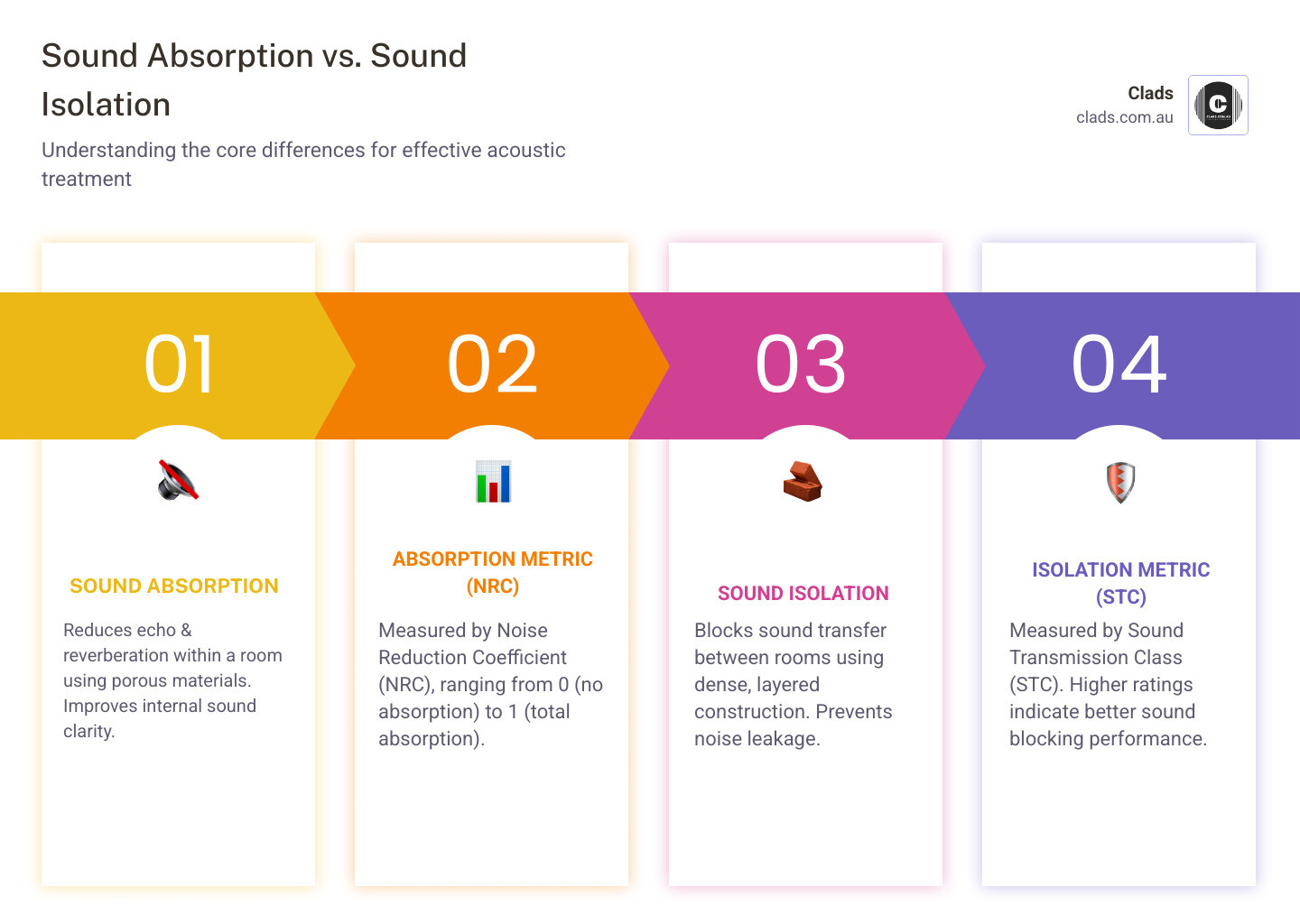
The most fundamental distinction is between absorption and isolation. Think of sound as water: sound absorption is like a sponge, soaking up sound within a room to prevent it from echoing. Sound isolation panels are designed for this purpose, reducing reverberation to improve sound clarity. They make a space feel acoustically "drier" and more comfortable for conversation.
Sound isolation (or soundproofing) is like a sealed bucket, stopping sound from transferring between rooms. It involves adding mass and dense, layered materials to walls, ceilings, and floors. For example, a heavy door provides isolation, while a curtain provides absorption. While some specialised panels offer a degree of sound blocking, their primary function is managing sound within a room. True isolation requires a more comprehensive construction approach.
How Acoustic Panels Work and Key Performance Metrics
Acoustic panels convert sound energy into a tiny amount of heat. When sound waves hit the panel's porous materials, they get trapped in the fibres. Friction causes the sound energy to dissipate as heat, reducing reflections, echo, and reverberation.
Panel performance is measured by two key metrics:
Noise Reduction Coefficient (NRC): This rating measures sound absorption. An NRC of 0 means no absorption, while 1.0 means 100% absorption. Higher NRC values are better for reducing echo inside a room. The thickness of the panel affects its NRC, with thicker panels generally providing better absorption, especially at lower frequencies.
Sound Transmission Class (STC): This rating measures sound isolation, or how well a structure like a wall blocks sound from passing through. A higher STC rating means better soundproofing between rooms. Dense materials like concrete have high STC ratings, while acoustic panels primarily focus on improving NRC.
Understanding these metrics is crucial. For echo in a living room, you need a high NRC. To block a neighbour's noise, you need a high STC rating in your wall construction.
Common Materials and Types of Acoustic Panels
The effectiveness of sound isolation panels depends on their core material, which drives sound absorption. At Clads Australia, we offer solutions that are both effective and aesthetically pleasing.
Common core materials include:
- Fiberglass: A highly effective and common core material known for excellent sound absorption. Denser fiberglass offers superior acoustic performance and fire ratings.
- Mineral Wool: A fibrous material similar to fiberglass, offering good sound absorption and fire resistance.
- Polyester (PET): An eco-friendly option often made from recycled plastics, providing good acoustic performance in a durable, lightweight panel.
These cores are covered with finishes to match your design:
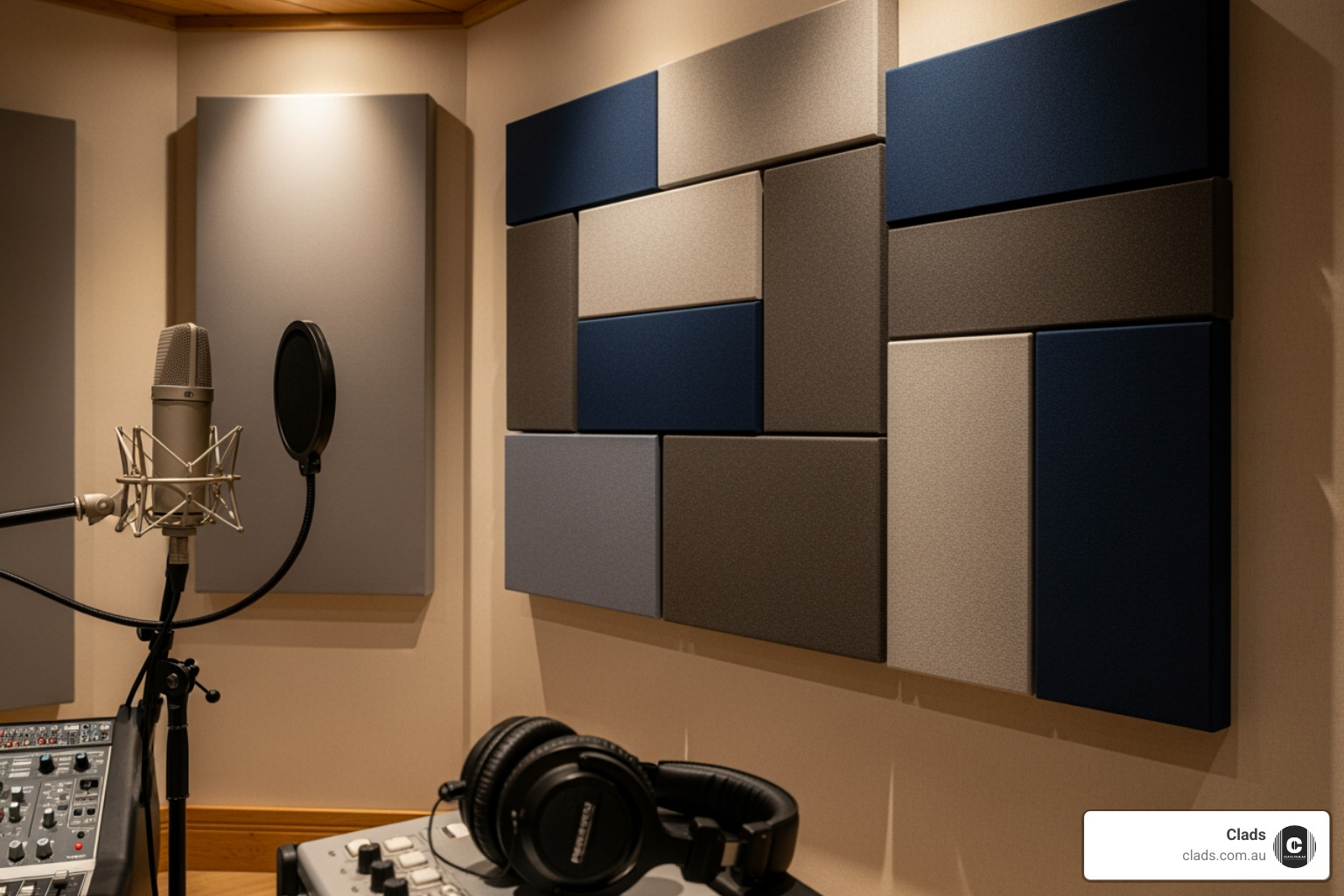
- Fabric Coverings: Acoustically transparent fabric is a popular choice. It protects the core and adds visual appeal with a wide range of colours and textures, while allowing sound to pass through to be absorbed.
- Perforated Wood Panels: These offer the warmth of wood with acoustic benefits. Perforations let sound reach an absorbent backing, providing a stylish and functional finish ideal for modern Australian interiors.
For more information, explore our Internal Acoustic Panels. Our panels are designed to perform exceptionally while enhancing the architectural aesthetics of your space.
Effective Placement Strategies for Acoustic Panels
Where you place your sound isolation panels is as important as the panels themselves. Strategic placement significantly improves performance and acoustic comfort.
- First Reflection Points: In home theatres or studios, place panels on walls and ceilings where sound first bounces from speakers to your ears. This dramatically improves clarity.
- Quiet Spaces: In home offices and bedrooms, place panels on walls to absorb ambient noise and reduce distractions. Near windows, they can help dampen outdoor sounds.
- Open-Plan Living: To combat echo in large, open areas, space panels evenly along walls and on the ceiling. They can also act as dividers to create quieter zones for work or study.
- Vertical Placement: The ideal height depends on the room's use. Place panels at ear level for seated listeners (e.g., a dining room) or higher for standing occupants. The goal is to cover key reflective surfaces relative to the main listening positions.
Choosing the Right Sound Isolation Panels for Your Space
Selecting the right sound isolation panels requires assessing your needs, room function, and aesthetic goals. First, identify the problem: are you fighting echo inside a room (needing high NRC absorption) or blocking noise transfer between rooms (needing high STC isolation)? For more on soundproofing, see our SoundBoard Wall Panels: The Ultimate Buying Guide for Soundproofing.
Next, consider the room's function. For home offices or bedrooms, thinner 1-inch panels are cost-effective for absorbing voice frequencies. Home theatres and studios benefit from thicker 2-inch panels to handle low-frequency sounds from music and movies. In commercial spaces like offices, the goal is a comfortable environment that reduces overall noise.
Your aesthetic goals are also key. Acoustic panels are now a design element, and our range offers colours and finishes to complement any decor. Finally, consider your budget. We offer solutions at various price points, and remember that strategic placement is often more effective than covering every wall. By weighing these factors, you can choose panels that meet your acoustic and design needs.
A Quick Guide to Installing Sound Isolation Panels
Installing sound isolation panels can be a straightforward DIY project. For larger or more complex jobs, we can connect you with local installers to ensure optimal performance.
Common installation methods include:
- Impaling Clips: A cost-effective method for permanent mounting. Clips are fixed to the wall, and the panel is pressed onto them.
- Z-Clips: Ideal if you may need to remove or relocate panels. A bracket on the wall interlocks with one on the panel.
- Construction Adhesive: Can be used for a simple, permanent bond, often in combination with clips for extra security.
Before starting, ensure your wall is clean, dry, and sound. Always use safety gear like gloves and eye protection. Most panels can be installed on standard plasterboard, but consult an expert for complex surfaces. We offer a range of installation accessories to help you get a professional finish. For more tips and visual guides, visit the official Clads Australia YouTube channel.
Conclusion: Creating Architectural Aesthetics and Acoustic Comfort
We've explored how sound isolation panels manage acoustics, clarifying the key difference between sound absorption (NRC) for in-room quality and sound isolation (STC) for blocking noise between rooms. We've seen how panels work, what they're made of, and why placement is so important.
Acoustic panels offer a dual solution: they improve sound quality while enhancing the visual appeal of your space. From reducing echo in open-plan living areas to creating quiet offices, they are a vital tool for modern design.
At Clads Australia, we are design-led cladding specialists. We believe acoustics and aesthetics go hand-in-hand. Our sound isolation panels are crafted to deliver acoustic comfort and clarity, helping your project achieve both superior sound and stunning architectural style.
Ready to transform your space with our high-quality acoustic panels? Our team is here to help you steer the options and find the perfect fit. Contact our team for advice or, to experience the quality and aesthetics firsthand, order a free sample today.