



Why Understanding Stone Cladding Costs Matters for Your Project
Stone cladding cost in Australia typically ranges from $110–$485+ per m² installed. Pricing varies by natural vs engineered stone, panel vs loose format, design complexity, site prep, labour rates, and location.
Our Clads Australia Fake Stone $83+ GST and Natrual Stone $104+GST.Gives most Luxury look.
Quick Cost Breakdown:
- Engineered stone cladding: $110-$375 per m² installed
- Natural stone cladding: $160-$485+ per m² installed
- Materials only: $45-$250 per m²
- Labour costs: $65-$285 per m²
While some assume stone cladding is prohibitively expensive, its exceptional durability and low maintenance requirements make it a smart long-term investment. Natural stone can last over 100 years with minimal upkeep, while quality engineered stone offers 20 to 75 years of performance, making its long-term value clear.
Stone cladding transforms buildings into architectural statements, combining timeless beauty with modern technology to protect your home for decades. This guide will cover the types of stone cladding, key cost factors, budget management strategies, and how to calculate your material needs, helping you make confident decisions for your project. At Clads Australia, we specialise in supplying premium stone cladding that delivers both aesthetic impact and lasting value.
What Types of Stone Cladding Does Clads Australia Offer?
Choosing between natural and engineered stone is a key decision that shapes your budget and timeline. At Clads Australia, we offer both options to suit different project needs.
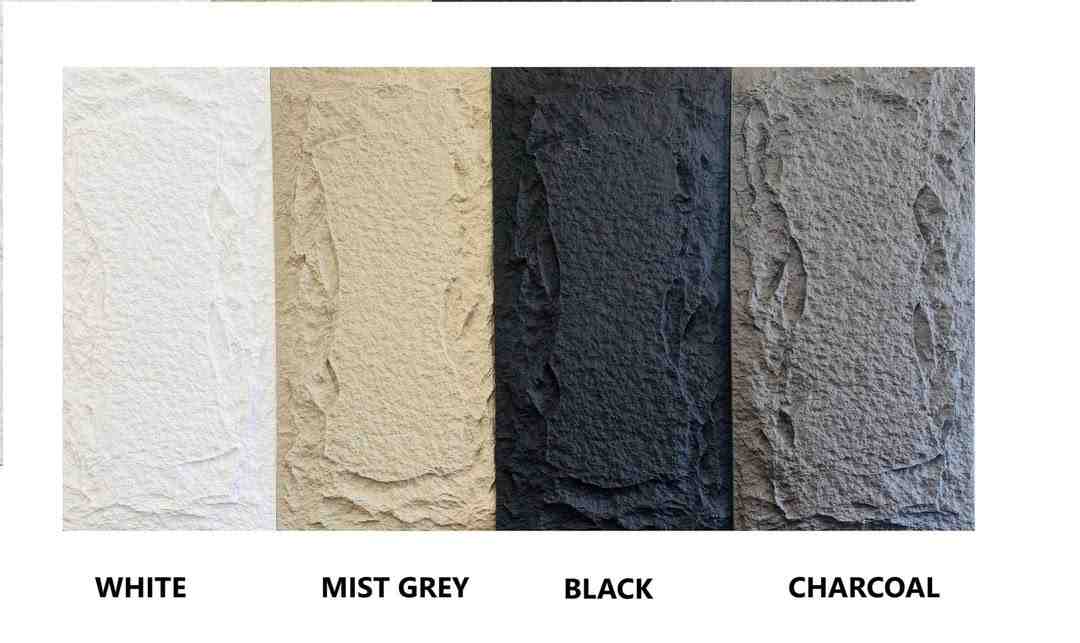
Natural stone cladding is real stone quarried from the earth and cut into thin pieces. It includes materials like granite, slate, and limestone, with each piece offering unique patterns and colour variations that only nature can create.
Engineered stone cladding is manufactured from a cement-based mix of aggregates and pigments, moulded to replicate the look of natural stone. It provides the visual impact of stone but is lighter, more uniform, and often easier to handle during installation.
Here's how they stack up:
| Feature | Natural Stone Cladding | Engineered Stone Cladding |
|---|---|---|
| Cost | Generally higher material cost | More budget-friendly material cost |
| Weight | Heavier, may require structural reinforcement | Lighter, often suitable for direct application |
| Durability | Extremely durable, 50-100+ years, weather-resistant | Very durable, 20-75 years, good weather resistance |
| Installation | Requires skilled masonry, precise cutting | Easier to handle, some systems DIY-friendly |
| Appearance | Unique, organic, natural variations | Consistent colour and texture, realistic replication |
How do natural and engineered stone cladding prices compare?
Your choice significantly impacts the overall stone cladding cost.
Natural stone cladding is the premium option, with materials typically ranging from $100 to $250 per square metre. This price reflects the quarrying, cutting, and transport involved. You are investing in authentic, unduplicatable beauty and generational durability.
Engineered stone cladding is more accessible, with material costs between $50 and $100 per square metre. The efficient manufacturing process translates to savings, and its lighter weight can simplify installation.
These are material costs only. Your total cost will also include the labour for whichever installer you go with.
Explore our range of stone cladding options to see the variety we have available.
What about installation differences?
Installation is another major factor affecting your final stone cladding cost.
Natural stone cladding requires specialised masonry skills. Its weight and unique shapes demand precision cutting, careful placement, and traditional mortar application. Your wall might need structural reinforcement to support the load, making professional installation essential.
Engineered stone cladding is more straightforward to install. Its lighter weight often eliminates the need for structural work. Many systems use adhesives or mechanical fixings, speeding up the process and reducing labour intensity. This makes some lightweight panel systems suitable for experienced DIYers on smaller projects, offering significant labour savings.
Learn about other modern exterior cladding ideas to see how stone cladding fits into facade design.
What Is the Average Cost of Stone Cladding?
When planning your project, the stone cladding cost includes materials, professional installation, and project-specific factors. While material prices catch your eye, labour is often the most variable part of the equation, significantly swinging your total investment based on complexity and location. We want to provide a complete picture so you can budget with confidence.
What is the typical stone cladding cost per square metre?
Across Australia, the typical installed stone cladding cost runs from $110 to $485+ per square metre. This range reflects the different choices in stone type, installation method, and location.
- Natural stone cladding: Expect to invest between $160 to $485+ per square metre for a complete installation. This premium covers the authentic material and specialised craftsmanship.
- Engineered stone cladding: This option is more accessible, typically ranging from $110 to $375 per square metre installed, thanks to its lighter weight and simpler installation.
For a standard 250 square metre home exterior, the total project investment could be anywhere from $27,500 to over $121,250, highlighting why understanding your options is crucial.
How do material and labour costs compare?
Understanding the split between materials and labour clarifies your stone cladding cost.
Material costs for natural stone cladding are typically $65 to $250 per square metre. Engineered stone materials are more budget-friendly at $45 to $215 per square metre. For example, our lightweight stackstone panels start from around $49 per square metre, while ledgestone panels typically run $89 to $109 per square metre.
Labour costs range from $65 to $285 per square metre. Installing loose natural stone requires skilled masonry and costs $185 to $285 per square metre. In contrast, lightweight stackstone and ledgestone panels install more quickly, with labour costs usually between $85 to $150 per square metre. The difference often comes down to the skill required, as traditional stone needs a mason, while many engineered systems can be installed by carpenters.
At Clads Australia, we supply high-quality stone cladding products. While we don't install them, we can connect you with trusted local installers. Contact us to connect with a trusted local installer for a detailed quote covering both materials and labour.
What Factors Influence Your Total Stone Cladding Expense?
Beyond material and labour rates, several other factors can shift your total stone cladding cost. The project size is the most obvious, as total cost increases with the area covered, though per-square-metre rates may be slightly lower on larger jobs. Design complexity also plays a major role; curves, corners, and intricate patterns require more labour and material, increasing costs. Finally, your location affects the final bill, with labour rates and transport costs varying between metro and regional areas.

How does the installation surface affect the price?
The condition of the surface you are cladding can add hundreds or thousands to your stone cladding cost. A new, clean substrate is the most cost-effective scenario. Retrofitting over existing surfaces like brick or render is more complex.
Preparation may be needed, such as:
- Removal of old siding: This typically costs between $10 and $65 per square metre. Costs can rise significantly for materials like asbestos, which require specialised handling.
- Surface repairs: Patching, levelling, or waterproofing the underlying wall can add $10 to $50 per square metre.
- Structural reinforcement: Heavier natural stone may require your wall to be reinforced to support the weight, which can be a significant expense.
Proper preparation is essential to ensure your new stone cladding performs correctly for decades.
Does the stone format make a difference?
Yes, the format of the stone has a substantial impact on your stone cladding cost, primarily through labour.
Loose individual stones offer maximum design flexibility but are time-intensive to install, requiring skilled craftsmanship. Installation costs for loose stone typically run from $185 to $285 per square metre.
Panel systems, where stones are pre-assembled on a backing, are much faster to install. This dramatically reduces labour costs to around $85 to $150 per square metre for lightweight stackstone and ledgestone panels. The straightforward installation also makes some panel systems manageable for experienced DIYers on smaller projects.
Check out our full range of external cladding solutions to compare loose and panelised options.
How Can You Manage Your Budget and Save on Stone Cladding?
Managing your stone cladding cost doesn't mean sacrificing your vision. There are smart strategies to control expenses while achieving a high-end architectural impact.
- Choose engineered stone: Get a realistic stone look at a more accessible price point.
- Opt for panel systems: Panels install much faster than loose stones, directly lowering labour costs.
- Simplify your design: A clean, streamlined design is often just as stunning but reduces labour time and material waste.
- Use it as a feature: Cladding a single entrance wall or foundation creates incredible impact for a fraction of the cost of full coverage.
- Consider DIY: Experienced DIYers can save on labour by self-installing certain lightweight panel systems.
- Get multiple quotes: We recommend getting at least three detailed quotes from local installers to compare pricing and find the best value.
Are there hidden costs to consider?
Even with careful planning, some extra costs can arise. Be aware of these potential expenses:
- Structural engineering reports: May be required for heavy natural stone on older or multi-storey homes.
- Council permits: Depending on your project's scope, permits can cost between $100 and $250. Check with your local council.
- Underlayment and reinforcement: If your existing walls aren't perfectly flat or strong, they may need reinforcement.
- Waterproofing membranes: This is a crucial step for external applications to protect your home from moisture. Ensure it's in your quote.
- Special trims and accessories: Corner pieces and finishing trims are often priced separately.
- Waste removal: Skip bin hire or a removal service for debris will have an associated cost.
- Scaffolding hire: Necessary for multi-storey homes, this can be a substantial daily or weekly expense.
To avoid surprises, get a comprehensive, itemised quote from your installer. While Clads Australia supplies materials, we can connect you with trusted installers who provide transparent quotes.
Request a free sample to see the quality for yourself and start planning. For guidance, contact our expert team.
Frequently Asked Questions About Stone Cladding Costs
Here are answers to some common questions about stone cladding costs and features.
How long does stone cladding last?
Longevity is a key benefit. Natural stone cladding is exceptionally durable, lasting 50 to 100+ years and aging beautifully over time. Engineered stone cladding also offers impressive longevity, typically between 20 to 75 years, depending on product quality and proper installation.
Does stone cladding add value to my home?
Yes, absolutely. Stone cladding significantly boosts curb appeal with a sophisticated, luxurious look that buyers value. Its durability and low maintenance are also major selling points, often delivering a high return on investment at resale.
Can I install stone cladding myself?
It depends. Some lightweight engineered stone panel systems are suitable for experienced DIYers, potentially saving $85 to $150 per square metre in labour. However, natural stone cladding and complex installations should be left to professionals due to the weight, precision, and structural knowledge required. We always recommend a professional for larger projects to ensure safety and a flawless finish.
Contact us to connect with a trusted local installer for expert guidance.
How do I calculate how much stone cladding I need?
To manage your stone cladding cost, calculate your needs accurately:
- Measure the height and width of each wall section in metres and multiply to get the area.
- Add the areas of all sections together.
- Measure and subtract the area of all windows and doors.
- Finally, add 10-15% to your total for cuts and waste. This is your final required quantity in square metres.
Our team at Clads Australia can help you verify your calculations.
Conclusion
Understanding stone cladding cost is about seeing the complete picture, not just the price per square metre. Your choice of material, design complexity, and installation method all shape your final investment.
While the initial outlay can seem substantial, stone cladding is a long-term investment in durability, beauty, and low maintenance. Natural stone can last over a century, and quality engineered stone provides decades of performance, far surpassing materials that need constant upkeep. This value is clear when you consider the boost to your home's curb appeal and resale value, with some projects returning a high percentage of the initial cost.
Smart budgeting is achievable. Choosing engineered stone, opting for panel systems, simplifying your design, or using stone as a feature element are all effective ways to manage costs without compromising on a high-end look.
As the design-led cladding specialists, Clads Australia offers a wide range of high-quality stone cladding to suit every style and budget. We supply trusted, low-maintenance solutions across Australia from our base in Victoria. While we focus on supplying premium products, we can connect you with trusted local installers to ensure your project is executed to the highest standard.
Ready to see the difference? Request your free samples today to experience the quality firsthand. For personalised advice, contact our expert team.
We Create Aesthetics. Design the Difference.