



Mastering Modern House Exterior Design

Modern house exteriors rely on clean lines and layered materials engineered for visual impact. In Australia, facade choices shape curb appeal and energy efficiency.
These designs focus on minimalist geometry and neutral tonal palettes. They integrate natural light through large glass elements to connect indoor and outdoor spaces.
To understand modern house exteriors, we look at the shift toward functional simplicity. Modernism celebrates the honesty of materials and intentional connection to surroundings.
The core principles of a modern house facade include minimalist geometry and material layering. This often involves intersecting planes and low-sloped roofs.
Successful designs use "zoning," such as heavy stone on the ground floor and lighter timber-look cladding above. This creates balance and architectural interest.
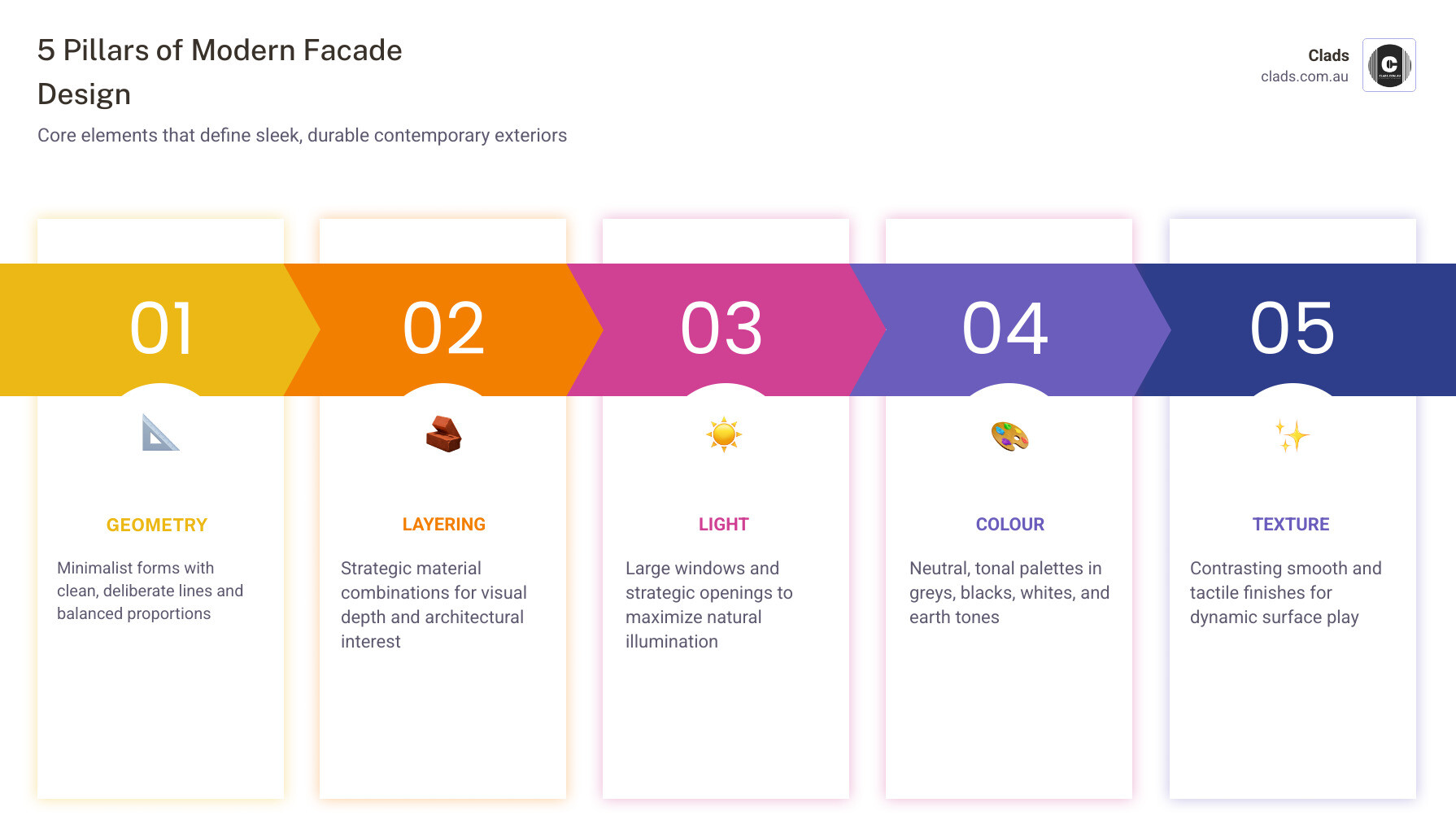
Selecting High-Performance Cladding Materials
Choosing modern cladding materials is the most important decision in a renovation. The material dictates long-term aesthetics and durability.
In Australia, facades must account for intense UV rays and heavy rain cycles. Four materials stand out as leaders for contemporary residential design.
Section Summary
- WPC offers a low-maintenance timber aesthetic.
- Aluminium provides non-combustible, sleek finishes.
- Cement and stone add textural weight and durability.

WPC Cladding (Timber Look, Low Maintenance)
WPC cladding is the gold standard for the warmth of wood without the maintenance. It is a sustainable blend of recycled wood fibres and polymers.
It is resistant to rot, termites, and fading. This makes it perfect for the harsh sun in places like Brisbane or the Gold Coast.
Aluminium Cladding (Modern + Non-Combustible)
For a sleek architectural finish, aluminium cladding is hard to beat. It offers sharp profiles that reflect the contemporary industrial trend.
It is non-combustible and incredibly lightweight. This makes it a safe choice for modern designs in bushfire-prone zones (BAL areas).
Cement / Fibre Cement Cladding (Durable Base Layer)
Cement cladding provides a solid, textural base for large-scale builds. It is popular for creating an industrial or brutalist look.
It serves as a fantastic textural base layer. It can be finished to look like raw concrete or painted in deep charcoal tones.
Stone Cladding (Premium Texture Layer)
Stone cladding adds a sense of permanence and visual weight. It provides a rugged contrast to the smoothness of glass and metal.
Using stone on specific elements makes a new build feel established. It provides incredible depth and ties the house into the landscape.
Creating Depth Through Architectural Layering
Architects use specific techniques to create depth in modern house exteriors. Without these, a facade can look flat and two-dimensional.
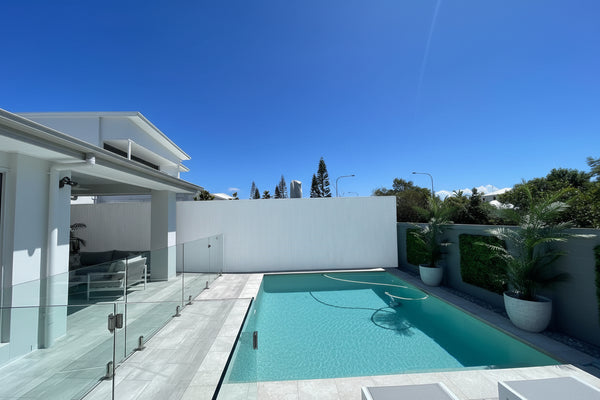
Layering materials and using shadow lines creates visual interest. This forces the eye to move across the facade and notice curated details.
Layering Materials
Instead of one material, architects layer several. A ground floor of cement panels might sit below a first floor of vertical WPC timber slats.
Shadow Lines and Recesses
Shadow lines are the gaps between cladding boards used to create rhythm. Recesses push parts of the wall back to create natural shadows.
Smooth vs. Textured Finishes
Contrast is the soul of modernism. Pairing smooth aluminium with tactile stone creates a sophisticated look that feels expensive and considered.
Window Framing and Proportion
Windows are architectural features, not just light sources. Oversized frames or shrouds can turn a standard window into a major design statement.
Optimising Facades for the Australian Climate
In Australia, homes face constant environmental challenges. Your choice of modern house exteriors must be practical for your specific region.
High-performance materials are required to withstand UV exposure and moisture. Proper selection future-proofs your investment against the local environment.
- UV Exposure: Traditional timber can silver and crack quickly. WPC and powder-coated aluminium are engineered to withstand high UV without degrading.
- Heat Expansion: Materials expand and contract as temperatures shift. Modern systems use specific fixing methods to allow for this movement without warping.
- Moisture and Rain: In coastal areas, salt spray can cause rot. High-performance cladding provides a protective envelope that keeps the structure dry.
- Thermal Performance: When paired with insulation, cladding contributes to thermal mass. This is key for reaching Passive House standards in modern builds.
Integrating Interior and Exterior Aesthetics
Design continuity makes a home feel larger and more cohesive. Materials used on the outside should often transition into the interior spaces.
This blurs the line between inside and out. It creates a seamless flow that is a hallmark of high-end modern architecture.
- Design Continuity: If you use WPC cladding on a portico, continue it into the entry hallway.
- Internal Feature Walls: internal cladding adds luxury to minimalist interiors. It provides a warmth that paint cannot match.
- Acoustic Performance: For homes with hard floors, internal acoustic panel systems improve sound quality while maintaining a modern look.
Comparing Cladding Options for Your Project
Deciding between house cladding options can be overwhelming. Use a simple framework to unlock your homes potential.
Consider the "Rule of Three" for your facade. Try not to exceed three different materials to maintain a clean, architectural look.
Light vs Dark Cladding: Key Differences
| Feature | Black/Dark Cladding | White/Light Cladding |
|---|---|---|
| Heat Absorption | High - absorbs more solar energy | Low - reflects solar energy |
| Visual Impact | Bold, dramatic, and modern | Clean, airy, and timeless |
| Maintenance | Shows dust and salt more easily | Shows organic growth more easily |
| Thermal Gain | Higher - best for cooler climates | Lower - best for hot climates |
Choosing the Right Cladding for Your Design Goal
| Design Goal | Recommended Material | Why It Works |
|---|---|---|
| Low Maintenance | WPC Cladding | No oiling or staining required; highly durable and weather resistant |
| Architectural Edge | Aluminium Cladding | Sleek finish, lightweight, and non-combustible (ideal for BAL-rated zones) |
| Industrial / Raw Aesthetic | Cement Cladding | Strong textural presence that feels grounded and modern |
| Premium Accents | Stone Cladding | Adds depth, weight, and a natural architectural finish |
Accessing Professional Cladding Solutions
Clads focuses on making high-end architectural aesthetics accessible. The team understands the practical challenges of building and renovating in Australia.
Specialising in external cladding, the focus is on WPC systems that blend beauty with low-maintenance performance.
Section Summary
- Access national distribution across 150+ locations.
- Benefit from 18+ years of renovation expertise.
- Utilise DIY-friendly, high-quality cladding systems.
With over 150 depot locations, materials can reach your site quickly. This network supports projects in Sydney, Melbourne, Brisbane, and regional hubs.
Solutions are designed to be DIY-friendly without compromising on quality. Experts are available to help you choose the right system for your specific project.
Expert Answers for Modern Facades
What is the best cladding for modern house exteriors in Australia?
WPC cladding is often the top choice for its timber aesthetic without the maintenance. For bushfire-prone areas or industrial looks, aluminium cladding is the superior architectural option.
Is WPC better than timber for modern house exteriors?
In terms of longevity, yes. WPC resists termites, moisture, and UV damage. It provides a similar visual result to timber without the need for regular sanding and oiling.
Can aluminium cladding be used in residential modern house exteriors?
Yes, it is now a staple of modern residential design. It is lightweight, non-combustible, and available in finishes ranging from matte black to realistic wood grains.
Future-Proofing Your Architectural Vision
Achieving a standout facade requires balancing bold aesthetics with high-performance materials. By integrating textures and respecting the local environment, you create a home that maintains its value and appeal for decades.
Contact our experts to discuss your project, or order a free sample to see the quality firsthand. For immediate assistance, call us at 0416 292 287.