



Why Choosing the Right House Cladding Options Matters

Choosing the right house cladding options is a decision that defines your home's character for decades. It is about more than just a facade; it is about creating a protective envelope that enhances thermal performance and structural integrity. At Clads Australia, we believe in "Creating Architectural Aesthetics" that stand the test of time. Today's cladding systems transform your home's appearance while delivering critical performance benefits including thermal efficiency, moisture management, fire resistance, and long-term durability.
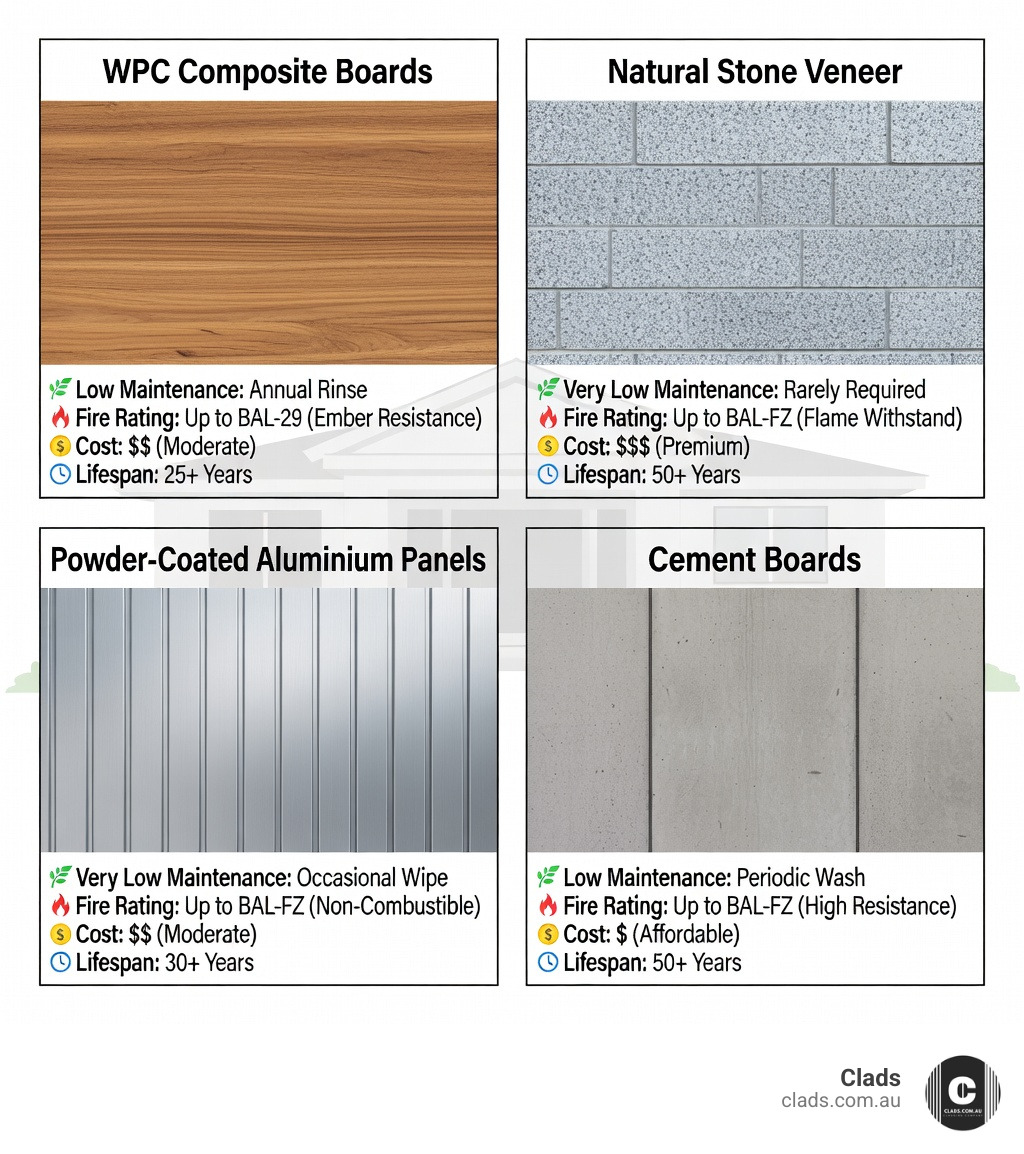
Quick Comparison of Popular House Cladding Options:
| Material | Best For | Maintenance | Fire Rating | Lifespan |
|---|---|---|---|---|
| WPC Composite | Low-maintenance aesthetics | Minimal (annual wash) | Up to BAL-29 | 25+ years |
| Stone Veneer | Luxury impact | Very low | Up to BAL-FZ | 50+ years |
| Aluminium | Modern minimalist design | Very low | BAL-FZ | 30+ years |
| Cement Board | Fire-prone areas | Low (occasional wash) | Up to BAL-FZ | 50+ years |
The right cladding choice depends on your local climate, bushfire attack level (BAL) rating, maintenance preferences, and design vision. Modern cladding systems use rainscreen technology with ventilated cavities behind the visible surface, allowing moisture to escape while protecting your home's structure from the elements. This multi-layered approach is essential for modern Australian builds.
Australian homeowners face unique challenges when selecting exterior cladding. Harsh UV exposure, coastal salt corrosion, bushfire risk, and extreme temperature fluctuations demand materials engineered specifically for our conditions. We focus on providing solutions that are not just imported but are suitable for the rugged Australian landscape. You can see some of our product tests and transformations on the Clads Australia YouTube channel.
I'm Suresh Babu, and over my three years deeply embedded in Australia's cladding industry, I've helped hundreds of homeowners navigate their house cladding options to find solutions that balance aesthetic impact with real-world performance. My goal is ensuring you have the information needed to make the right choice for your specific project, focusing on "Cladding that delivers Impact and Longevity."
Discover more about house cladding options:
Comparing Popular House Cladding Options for Australian Homes
When we look at the Australian landscape, from the coastal fringes of Victoria to the arid inland regions, the durability of your home’s exterior is paramount. Choosing between various house cladding options isn't just about what looks good on a mood board; it’s about selecting a material that can withstand wind pressures, intense UV rays, and the ever-present threat of bushfires. We are "The Design-Led Cladding Specialists," and we understand that every region has its own set of requirements.
At Clads Australia, based in Sunshine, Victoria, we focus on providing materials that offer architectural beauty without the heavy burden of constant upkeep. For instance, while traditional timber looks beautiful, it often struggles with the Australian sun, requiring annual sanding and staining to prevent rot and fading. Modern alternatives like WPC and fibre cement have gained massive traction because they mimic those natural textures while offering superior longevity.
Maintenance requirements should be at the top of your checklist. A material that is cheap to buy but expensive to maintain often ends up costing more over a five-year period than a premium composite or stone solution. We always recommend looking at the "life-cycle cost" rather than just the initial price tag. This ensures your investment remains sound for decades to come.
For those living in bushfire-prone areas, BAL (Bushfire Attack Level) ratings are non-negotiable. Materials like aluminium and certain stone veneers can achieve BAL-FZ (Flame Zone) ratings, providing the highest level of protection. Understanding these technical specifications ensures your home is not only stylish but also safe and compliant with Australian building codes.
To dive deeper into durability, check out our guide on Built to Last: Choosing the Best Durable Exterior Cladding for Your Home or explore the External Facade Systems Guide 2026 for upcoming trends and technologies.
WPC and Composite House Cladding Options
Wood Plastic Composite (WPC) has revolutionised the way we think about wood-look exteriors. By combining recycled wood fibres with high-quality polymers, WPC provides the warmth and texture of natural timber without the susceptibility to termites, rot, or warping. It is an eco-friendly choice that repurposes materials that might otherwise end up in landfill, making it a sustainable option for the modern homeowner.
One of the standout features of our WPC range is the "capped" technology. This refers to a protective outer layer that is co-extruded with the core, providing enhanced UV stability and stain resistance. This means your "walnut" or "teak" finish stays vibrant for decades, even under the harsh Victorian sun. It’s the ultimate "install-and-forget" solution for busy homeowners who want the look of wood without the work.
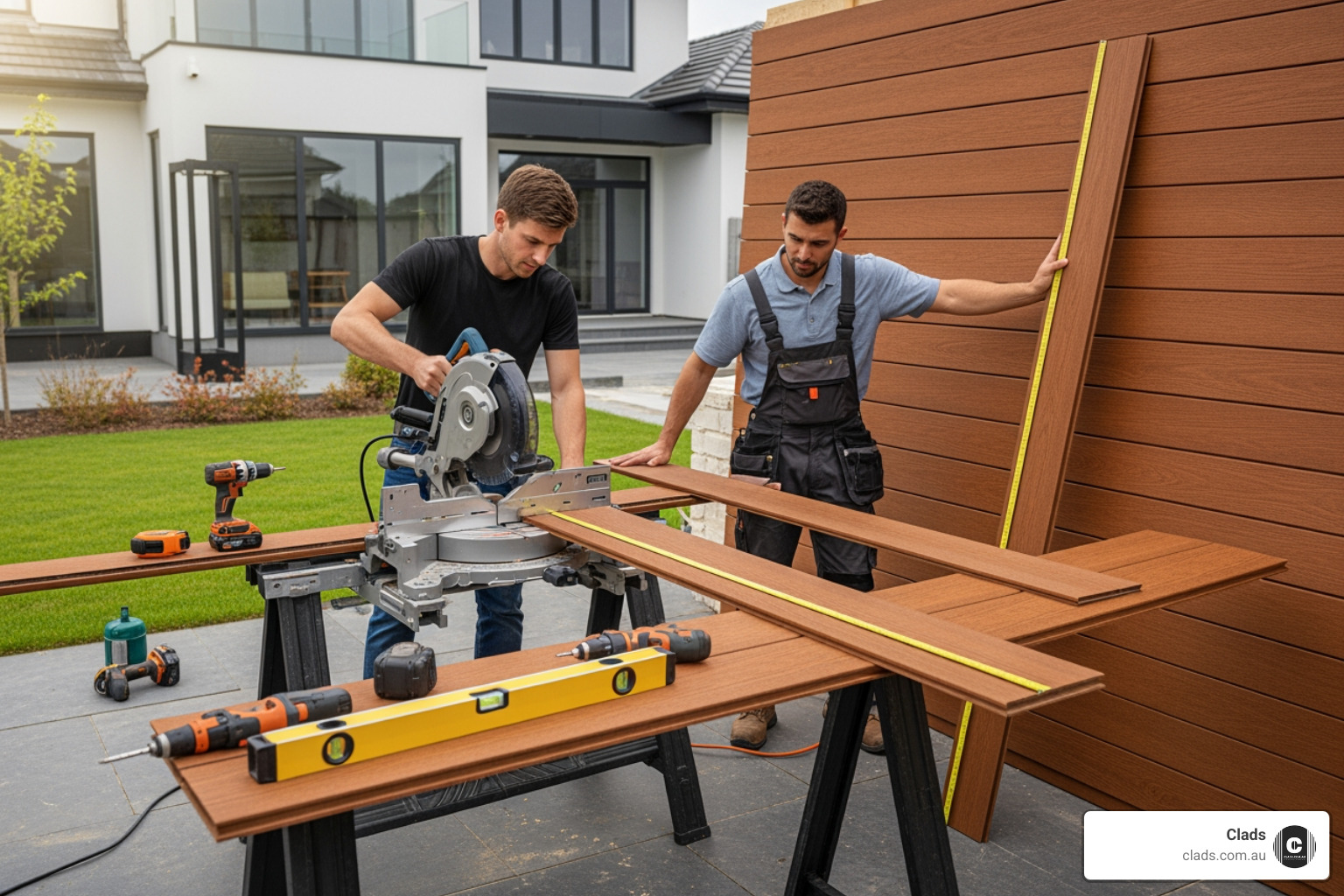
From a design perspective, WPC offers incredible versatility. Whether you prefer a traditional horizontal weatherboard look or a contemporary vertical installation to add height to a structure, WPC boards are lightweight and easy to handle. This makes them a favourite for DIY enthusiasts who want to tackle an exterior makeover themselves. We always suggest getting large samples to see how the colours interact with your local light.
For more technical details, read Beyond Wood: Discovering the Benefits of Wood Plastic Composite or our The Definitive Guide to WPC Cladding. You can also Explore our WPC Cladding Collection to see the full range of colours and profiles available.
Natural Stone and Concrete House Cladding Options
If you are aiming for a luxury, high-impact aesthetic, stone and concrete house cladding options are unparalleled. Natural stone veneer provides a rugged, timeless appeal that works beautifully for feature walls, entryways, or even full facades. It adds a sense of permanence and "rock-solid" quality to any architectural design, creating a tactile depth that synthetic materials cannot match.
Stone cladding is particularly effective in rural or coastal settings where it can blend into the natural environment. Beyond its beauty, stone is incredibly durable and offers excellent thermal mass, helping to regulate indoor temperatures. While it can be more labour-intensive to install than lightweight panels, the result is a finish that can last over 50 years with virtually no maintenance. We recommend using textured profiles to add significant depth to your facade.
On the other hand, cement board panels offer a sleek, architectural concrete look that is perfect for modern, minimalist homes. These panels are fire-resistant and highly resistant to moisture, making them ideal for the variable Melbourne climate. They provide a clean, industrial finish that pairs exceptionally well with glass and metal accents, and they are often used for interior feature walls as well.
For a deep dive into these materials, see our Fake Stone Cladding Complete Guide and A Comprehensive Guide to Cement Cladding. If you're ready to browse, View our Stone Cladding Range for inspiration.
High-Performance Aluminium and Metal Solutions
Aluminium cladding has become the darling of modern architecture, especially for high-end residential and commercial projects. Its primary draw is its incredible strength-to-weight ratio. It is lightweight, which simplifies the installation process and reduces the structural load on the building, yet it is tough enough to withstand extreme weather conditions across Australia.
Fire resistance is another major advantage. Aluminium is non-combustible, which is why it is often specified for projects with strict safety requirements. When finished with high-quality powder coating, aluminium cladding resists fading and corrosion, making it a perfect choice for coastal homes where salt spray can quickly degrade other materials. It provides a crisp, modern look that is highly sought after in contemporary design.
Design-wise, aluminium offers a "modern minimalist" look with crisp lines and a wide variety of finishes, from matte architectural colours to wood-grain effects. It is often used in rainscreen systems, which provide a ventilated cavity that prevents condensation and improves the building's overall energy efficiency. This system ensures that your home's structure remains dry and protected.
Learn more about the advantages in An Essential Guide to Aluminium Cladding Benefits and get a sense of the investment required with How Much Does Aluminium Cladding Cost. You can also Browse Aluminium Cladding Options directly on our site.
Climate Considerations and BAL Ratings
In Australia, the environment dictates our choices. If you are building in a bushfire-prone area, your house cladding options are limited by the BAL rating of the site. Materials like fibre cement, stone, and aluminium are often preferred because they can meet the stringent requirements of BAL-29, BAL-40, or even BAL-FZ. This ensures your home is protected against ember attack and radiant heat.
Beyond fire, we must consider moisture. A well-designed cladding system isn't just about the outer skin; it’s about what’s behind it. Using vapour-permeable membranes (building wraps) is essential to allow the house to "breathe" while preventing external water from entering. This is critical for preventing mould and structural rot, especially in cooler, damp climates like parts of Victoria.
Thermal insulation is another key factor. Cladding acts as an extra layer of "clothing" for your home. When paired with high-quality insulation, it can significantly reduce your energy bills by keeping the house cooler in summer and warmer in winter. This "Clad and Cozy" approach is a smart way to future-proof your home against rising energy costs while improving your overall comfort.
For more on this, read Clad and Cozy: Everything You Need to Know About External Thermal Insulation and our Cladding Materials Australia Complete Guide.
Making the Investment: Installation and Long-Term Value
Investing in high-quality cladding is one of the most effective ways to increase your home's resale value. First impressions are everything, and a modern, well-maintained exterior can add thousands to a property's valuation. Beyond the "kerb appeal," buyers are increasingly looking for low-maintenance homes that won't require expensive repairs or constant repainting every few years.
While we at Clads Australia do not perform installations, we pride ourselves on selling DIY-friendly products. Many of our WPC and aluminium systems are designed for straightforward installation, allowing handy homeowners or local builders to achieve a professional finish. If you aren't comfortable doing it yourself, we can certainly connect you with a trusted local installer in the Sunshine or Greater Melbourne area upon request.
Maintenance schedules for our core products are refreshingly simple. For WPC and aluminium, an annual wash with soapy water is usually all that’s required to remove dust and salt. Stone and cement products are even more "set and forget." This saves you not just money on paint and sealers, but also your precious weekend time. For more inspiration, see Exterior Cladding Ideas That Will Instantly Elevate Your Home's Look.
Ready to start your project? Grab our Transform Your Home: The Complete DIY External Cladding Handbook and don't forget to check out An Essential Guide to Cladding Accessories to ensure you have all the trims and fasteners needed for a perfect finish.
Frequently Asked Questions
How long does modern cladding last? Most high-quality house cladding options like WPC and aluminium are designed to last 25 to 30 years or more. Natural stone and brick can easily exceed 50 to 100 years with proper care and minimal maintenance.
Is cladding hard to clean? Not at all! For most of our products, a garden hose and a soft brush with some mild detergent are all you need. We recommend doing this once a year to keep the colours looking fresh and to remove any salt or dust buildup.
Can I install cladding over my existing brick walls? Yes, this is a popular way to modernise an older home. It usually involves installing timber or metal battens over the brick first to create a level surface and a ventilated cavity, which also helps with thermal performance.
Does cladding fade in the sun? While everything fades slightly over decades, our "capped" WPC and powder-coated aluminium are specifically engineered for high UV resistance to ensure the colour stays true for as long as possible under the Australian sun.
What is the best cladding for a coastal home? Aluminium and stone are excellent for coastal areas because they are highly resistant to salt corrosion. WPC is also a great choice as it does not rot or absorb moisture, making it ideal for humid environments.
Can cladding be used for interiors? Absolutely! Many of our products, especially stone veneers and acoustic panels, are used to create stunning interior feature walls. This adds texture and sound-dampening qualities to your living spaces.
For more deep dives into these questions, check out The Clad Truth: Everything You Need to Know About Cladded and Cladding and Unlock Your Home's Potential: Inspiring Exterior Makeover Ideas.
Conclusion: Choosing Cladding that Delivers Impact and Longevity
Selecting the right house cladding options is a journey that balances your personal style with the practical realities of the Australian climate. Whether you choose the eco-friendly, low-maintenance appeal of WPC, the luxury of stone, or the sleek performance of aluminium, the goal is to create a home that looks stunning today and stays that way for decades. By focusing on high-quality materials, you ensure that your home remains a valuable asset.
At Clads Australia in Sunshine, Victoria, we are "The Design-Led Cladding Specialists." We believe in providing products that deliver both impact and longevity. By focusing on high-quality materials and supporting our customers with expert advice and DIY-friendly solutions, we help you transform your home into an architectural masterpiece. Our commitment is to provide the best materials for your project, ensuring a beautiful and durable result.
| Feature | WPC Cladding | Natural Stone | Aluminium | Fibre Cement |
|---|---|---|---|---|
| Durability | High | Very High | High | High |
| Maintenance | Low | Very Low | Low | Medium |
| DIY Friendly | Yes | No | Yes | Yes |
| Eco-Friendly | Yes (Recycled) | Yes (Natural) | Yes (Recyclable) | Medium |
| Best For | Modern Homes | Feature Walls | Minimalist | Fire Zones |
To begin your home transformation, contact our team for expert advice or request a sample to see the quality firsthand: