



Why Acoustic Panels Matter for Your Space
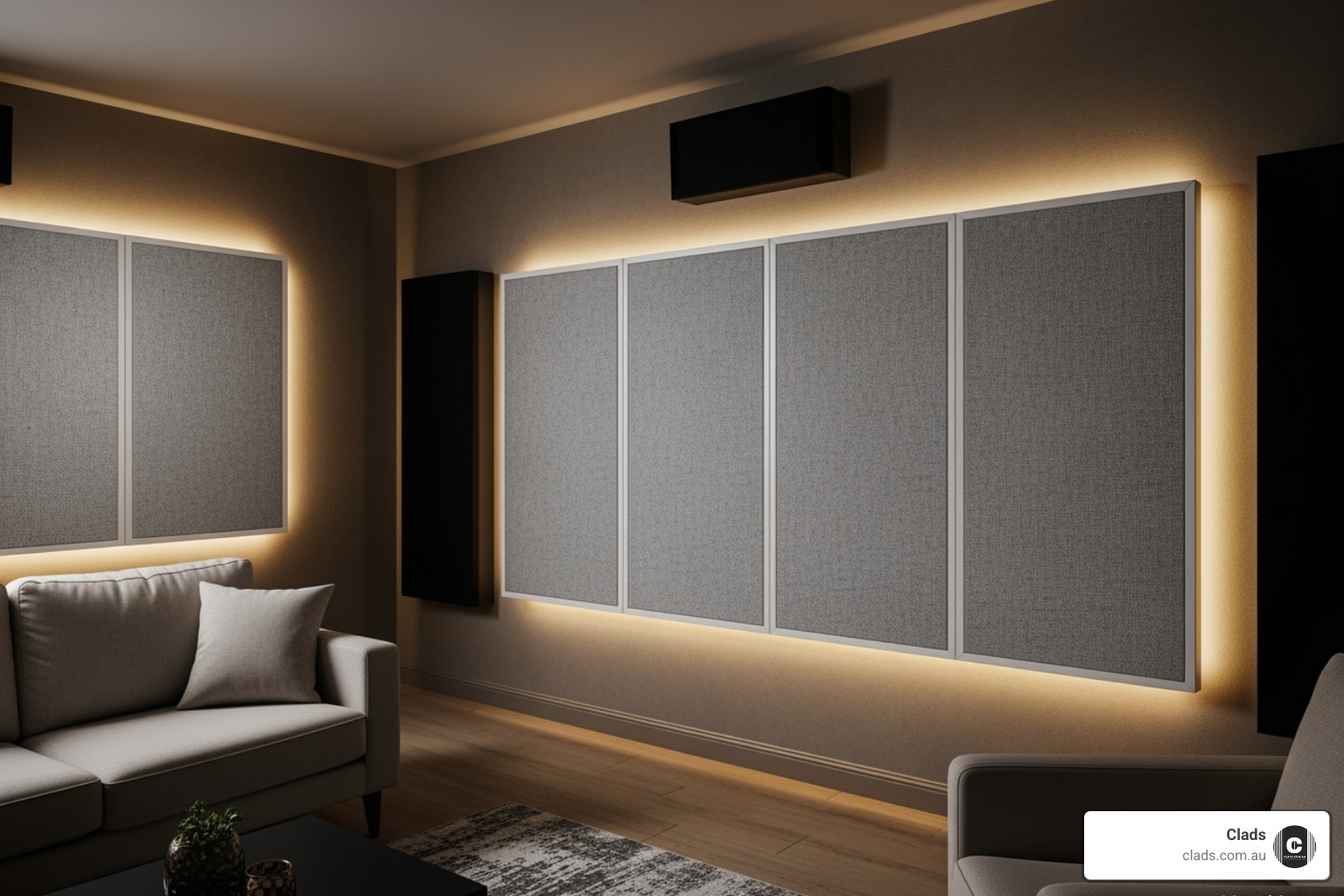
Acoustic panels are sound-absorbing boards designed to reduce echo, reverberation, and ambient noise in a room by trapping sound waves within their porous core materials. Unlike soundproofing solutions that block sound transmission between spaces, acoustic panels improve the quality of sound within a single room, making them ideal for home theatres, offices, restaurants, recording studios, and any space where clear communication and sound clarity matter.
Acoustics is one of those design details that can make a premium space feel “finished” — yet it’s often overlooked until the room is already built. Modern interiors commonly feature hard, reflective surfaces such as plasterboard, glass and timber, which can create a sharp, tiring sound that impacts speech clarity and overall comfort.
I’m Suresh Babu, and with over 20 years of business management experience and deep knowledge of Australia’s building materials industry, I’ve seen how the right acoustic treatment can transform the way a room functions day to day. At Clads Australia (Cladding Lads), we’re The Design-Led Cladding Specialists — supplying acoustic panel solutions that support our broader range of internal cladding products, all aligned to “Creating Architectural Aesthetics” with cladding that delivers Impact and Longevity.
When you’re planning finishes, an insider tip is to order large samples so you can judge both the colour and texture in real lighting, and see how the panel profile sits alongside neighbouring materials. You can also explore real installations and comparisons on the Clads Australia YouTube channel.
Understanding Acoustic Panels and How They Work
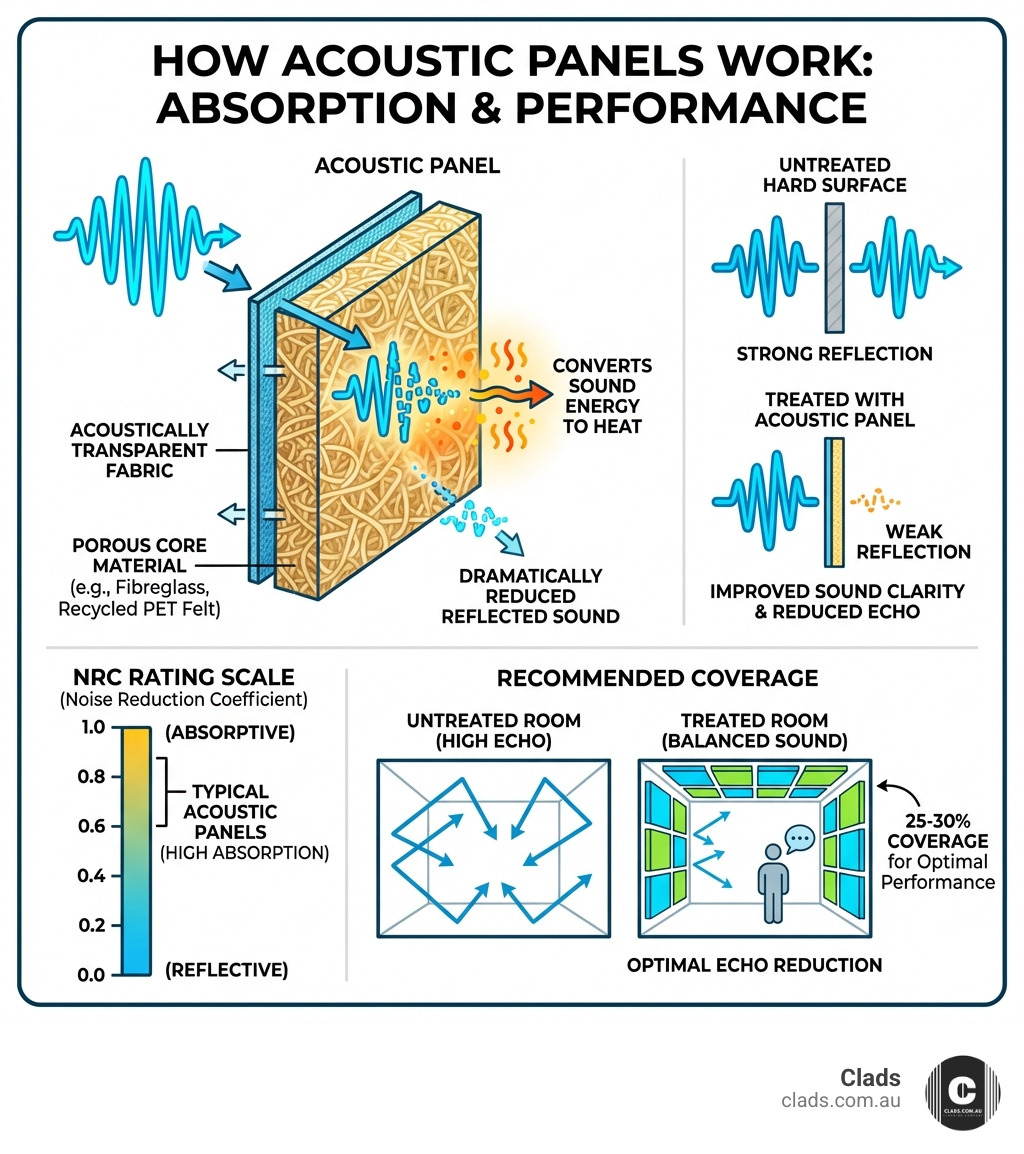
To truly appreciate how acoustic panels change a room, it helps to understand what happens after a sound is made. Voice, music and general activity produce waves that travel until they hit a surface — and in many modern Australian homes and workplaces, those surfaces are predominantly hard and reflective.
That reflection creates two familiar issues: echo (a noticeable repeat) and reverberation (a lingering “wash” that smears clarity). Acoustic panels reduce both by using an acoustically transparent face and an absorptive core. Sound enters the panel, loses energy inside the porous fibres, and returns to the room at a much lower intensity, improving comfort and speech intelligibility.
Performance is commonly described using NRC (Noise Reduction Coefficient). Put simply, a higher NRC indicates more absorption across key frequencies. If you’re comparing options for a workplace, hospitality fit-out, or a home theatre, it’s worth checking the published performance data and selecting products that match the problem you’re trying to solve. You can browse Clads Australia’s internal acoustic panels to compare styles and specifications, and see practical demos on the Clads Australia YouTube channel.
Materials and Types of Acoustic Panels
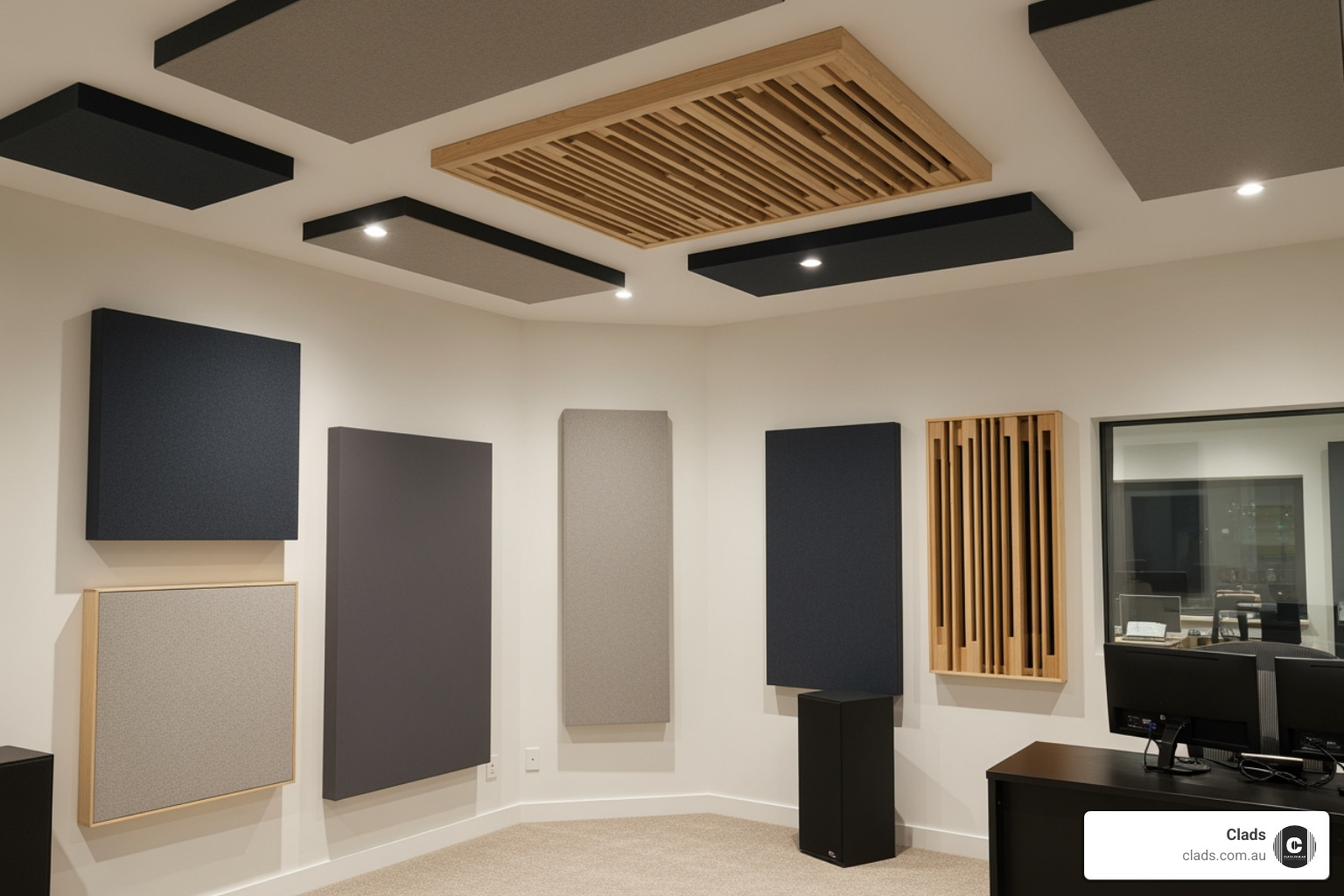
The core material and build quality drive real-world results. High-density fibres (such as fibreglass or PET felt) generally outperform lightweight foam tiles because they absorb more effectively across a broader range of frequencies.
PET felt panels are particularly popular in contemporary projects because they’re low-maintenance, odourless and dustless, and they’re often made from recycled material. They suit offices, education spaces and homes where you want strong acoustic performance without the fragility of soft foam.
Timber slat acoustic panels have also become a standout option for designers who want warmth and depth without compromising function. The timber face introduces texture and architectural rhythm, while the gaps allow sound to reach the absorptive backing — a practical example of how “Creating Architectural Aesthetics” can still be performance-led. If you’re planning a feature wall, using a textured profile can add visual dimension while the acoustic backing improves sound quality.
For more on styles and where they work best, our guide to acoustic walls panels is a helpful reference when you’re coordinating finishes.
Acoustic Panels vs. Soundproofing Solutions
A common misconception is that acoustic panels will stop sound transferring to adjacent rooms. In most cases, panels are designed for acoustic treatment (absorption inside the room), not sound isolation (blocking transmission through walls and ceilings).
That said, acoustic treatment can still make a space feel quieter in practice because it reduces reflections and overall sound build-up, so people don’t need to talk as loudly to be heard. If your project requires isolation as the primary goal, it’s important to specify the right wall and ceiling build-ups alongside the correct products. Our article on acoustic panels for soundproofing explains where panels help and where they don’t.
Benefits for Commercial and Residential Spaces
In commercial environments, better acoustics can support productivity, privacy and wellbeing. Offices, reception areas and meeting rooms often suffer from “spill” — where reflections allow conversations to carry further than intended — and acoustic panels can help calm the space without changing the layout.
In homes, acoustic treatment can be the difference between a beautiful open-plan room and a space that feels harsh and fatiguing. If you’ve invested in quality audio equipment, panels placed at first reflection points can also improve clarity and imaging so the system sounds more natural.
It’s also worth addressing another misconception we see often: cladding is not only for exteriors. Many of today’s architectural wall systems are selected for interiors precisely because they’re durable, low-maintenance, and designed for longevity. Clads Australia supplies a wide range of internal and external cladding options (including WPC, cement, stone and aluminium) that are chosen not just for looks, but for performance considerations such as weathering and, where relevant, fire resistance. When these materials are paired thoughtfully with acoustic products, you can create spaces that look refined and sound comfortable.
If you’re exploring broader interior wall finishes alongside acoustics, our internal cladding range can help you coordinate your palette with confidence.
Selection and Installation Guide for Your Project
Choosing the right panels is easier when you start with the problem you’re trying to solve. A boardroom typically needs improved speech clarity and reduced flutter echo, while a home theatre may need a mix of broadband absorption and additional low-frequency control.
Ceilings are often the largest uninterrupted hard surface in a room, so ceiling-mounted solutions (such as clouds or baffles) can be extremely effective in large spaces. In open-plan designs, combining ceiling treatment with targeted wall placement can improve comfort without covering every surface.
Panel thickness also matters. A 25 mm panel is often effective for mid-to-high frequencies (such as speech), while 50 mm can improve absorption lower down the frequency range. If you’re dealing with bass build-up in corners, purpose-designed bass traps and thicker systems are usually required. For a deeper buying framework, our soundboard wall panels guide is a practical starting point.
Determining How Many Panels You Need
Most rooms don’t need to be fully covered to sound significantly better. As a general rule, treating around 25–30% of the combined hard surface area (walls and ceiling) can provide a noticeable improvement, especially in rooms with lots of glass, polished concrete or minimal soft furnishings.
A helpful approach is to begin with first reflection points — the locations where sound from the main source first strikes a wall or ceiling before reaching the listener. This is where you typically get the biggest return from the first few panels. If you want a more methodical way to map placement, our acoustic isolation panels complete guide provides additional context and planning tips.
Installation Methods for Walls and Ceilings
Many acoustic panels are suitable for DIY installation, depending on wall type, panel weight and the finish you’re aiming for. Common mounting options include interlocking Z-clips for removability, impaling clips for secure mounting, and appropriate construction adhesives for a more permanent, low-profile finish.
For ceilings, panels can be fixed directly or suspended as clouds using suitable hardware. Clads Australia supplies products and accessories to support installation; we don’t provide installation services, but we can connect you with a local installer upon request if you’d prefer professional help. For visual walk-throughs and real project examples, you can also refer to the Clads Australia YouTube channel.
Maintenance and Sustainability
Day-to-day care is typically simple, which is one reason acoustic panels suit busy commercial environments and family homes. Most PET felt and fabric-finished panels only require occasional light vacuuming with a brush attachment to keep them looking fresh.
Sustainability has become a key part of contemporary specification. Many PET felt products use recycled content and are designed to support healthier indoor environments through low-VOC materials and easy cleaning. If you’re finalising selections, another insider tip is to order larger samples so you can confirm the finish under site lighting and check how easily the surface wipes and wears over time — especially in high-traffic areas.
Conclusion
Great acoustics doesn’t happen by accident — it’s a result of selecting the right materials and placing them thoughtfully. Acoustic panels are a practical way to reduce echo and reverberation, improving speech clarity and comfort in offices, hospitality venues, home theatres and open-plan living areas.
At Clads Australia (Cladding Lads), our focus is on “Creating Architectural Aesthetics” through products that balance performance with design. Whether you’re specifying acoustic panels as a feature wall with textured depth, integrating them with internal cladding for a cohesive interior palette, or selecting low-maintenance options for a commercial fit-out, we help you choose cladding that delivers Impact and Longevity.
A final tip before you commit: don’t rely on a small swatch. Large samples make it easier to assess colour accuracy, texture, and how the finish reads across a full wall — and they help ensure your acoustic treatment complements the broader material schedule.
Ready to plan your project?
FAQ: Common Questions About Acoustic Panels
What are acoustic panels used for?
Acoustic panels are used to absorb reflected sound inside a room, reducing echo and reverberation to improve comfort and speech intelligibility.
Do acoustic panels soundproof a room?
Not on their own. Acoustic panels are primarily for absorption within a space. Soundproofing (sound isolation) typically requires changes to the building structure, mass and airtightness.
How do I choose between PET felt and timber slat acoustic panels?
PET felt panels are often chosen for clean, modern aesthetics and low maintenance, while timber slat panels add warmth and texture with an architectural look. Both can perform well when appropriately specified.
How many acoustic panels do I need for a typical room?
A common starting point is treating roughly 25–30% of the room’s hard surface area, then adjusting based on how reflective the finishes are and how the space is used.
Where should acoustic panels be placed for the best results?
Focus first on first reflection points on walls and ceilings, then add coverage to other reflective areas. Corners may need thicker treatments if low-frequency build-up is an issue.
Are acoustic panels hard to maintain?
Most modern panels are low-maintenance and only need occasional light vacuuming or dust removal, making them suitable for high-traffic commercial and residential spaces.