



Why Internal WPC Cladding is the Smart Choice for Modern Australian Homes
As homeowners seek durable, low-maintenance alternatives to traditional wall finishes, the question of how to fit internal plastic cladding is more relevant than ever. Internal WPC (Wood Plastic Composite) cladding is a straightforward DIY project that delivers a professional finish, combining the warmth of timber with the resilience of modern composites.
Quick Answer: How to Fit Internal WPC Cladding
- Prepare the wall: Clean the surface, ensure it's flat, and acclimate panels for 24-48 hours.
- Choose your fixing method: Use adhesive for flat walls or install battens (250-400mm spacing) for uneven surfaces.
- Install starter trims: Fix corner and starter trims using adhesive and silicone sealant.
- Cut panels to size: Use a fine-tooth saw.
- Attach panels: Apply adhesive in an 'S' pattern or screw panels to battens.
- Slot panels together: Use the tongue and groove system, working from one corner across the wall.
- Seal and finish: Apply silicone to trims and joints, especially in wet areas.
Unlike paint or tiles, WPC cladding is waterproof, resistant to moisture, and requires minimal upkeep, making it ideal for bathrooms, kitchens, and feature walls. It's also easier to install than tiles and can often be fitted directly over existing surfaces like plasterboard, saving time and mess.
The versatility of WPC cladding allows you to create stunning feature walls or add texture and depth to any room. With an intuitive tongue and groove system and a wide range of finishes, you can achieve your desired aesthetic with a product that delivers both impact and longevity.
I'm James Lawrence, and with over 15 years in Melbourne's construction sector, I've seen the benefits of WPC firsthand. At Clads Australia, we supply premium WPC solutions practical for the Australian market, supported by a 150-depot network. While many of our products are suitable for experienced DIYers, we can also connect you with local installers if needed. Our goal is to provide high-quality materials and the knowledge to help you succeed.
How to fit internal plastic cladding basics:
Planning & Preparation: Your Pre-Installation Checklist
Proper planning and preparation are key to achieving a professional finish. Taking the time to gather your tools and prepare your walls will prevent issues later and ensure a smooth installation process.
What Tools and Materials Are Needed?
Gather these items before you begin:
- WPC Cladding Panels: Order enough to cover your area, plus 10% extra for cuts.
- Internal Cladding Trims: Essential for a clean finish around corners and edges.
- Panel Adhesive: A high-quality, solvent-free grab adhesive is recommended for flat surfaces.
- Silicone Sealant: Use a non-acidic, WPC-compatible silicone for waterproofing joints and trims, especially in wet areas.
- Cutting Tools: A fine-tooth saw or jigsaw for clean, precise cuts.
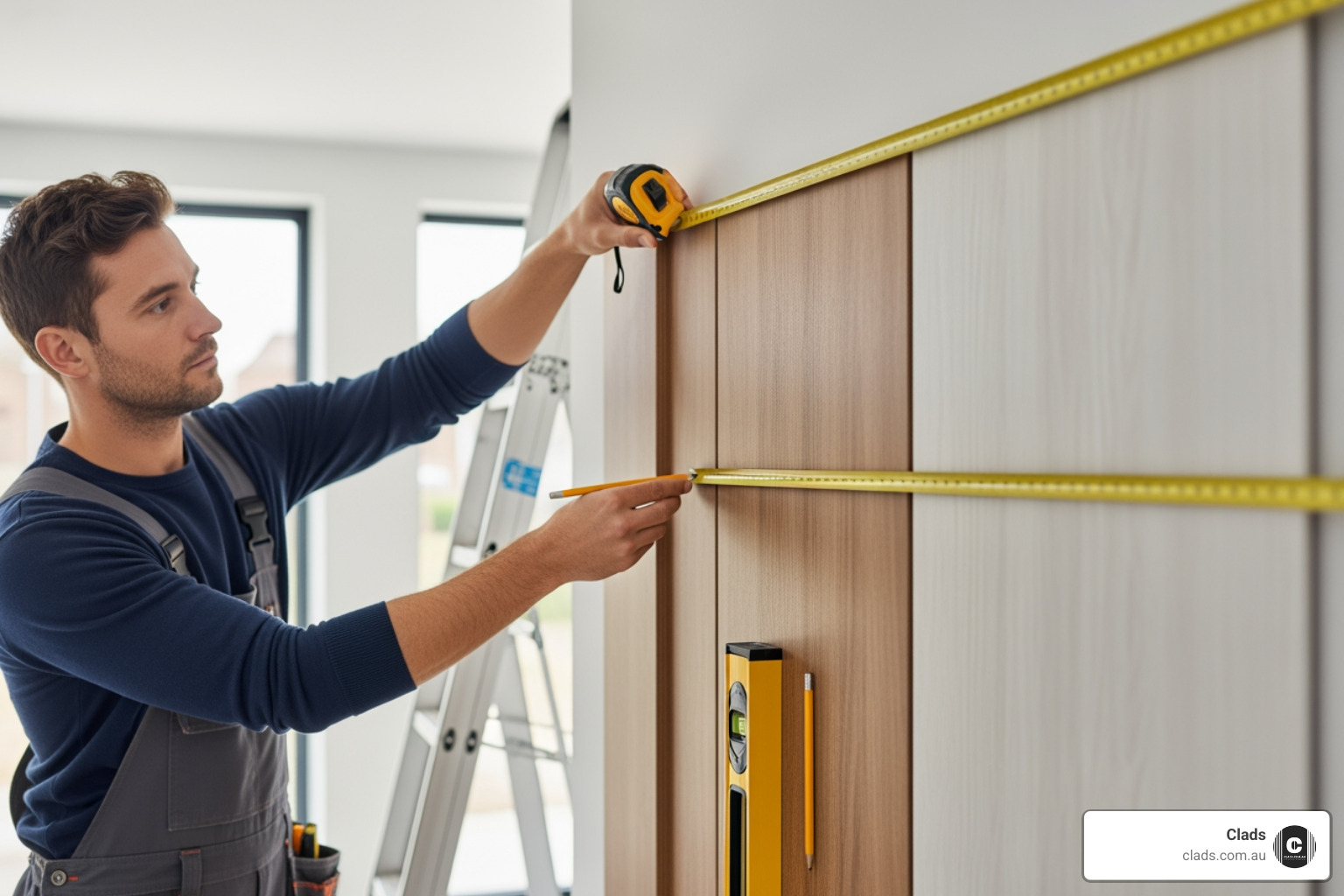
- Measuring Tools: A measuring tape and spirit level are crucial for accuracy.
- Fixings: A drill, screws, and appropriate wall plugs if using battens.
- Safety Gear: Always use safety glasses and gloves.
- Other Essentials: A pencil for marking and a Stanley knife for trimming.
How to Prepare a Wall for Internal WPC Cladding Installation
Proper wall preparation is vital for a quality finish. Follow these steps:
- Inspect the Surface: Check for damp, structural issues, or major imperfections. Address any underlying moisture problems before you begin.
- Clean the Wall: The surface must be clean, dry, and free of dust, grease, or loose debris for the adhesive to bond effectively.
- Create a Smooth Surface: Scrape off any flaking paint or old wallpaper. Fill minor cracks and holes with a suitable filler. Hammer any protruding nails flush with the wall.
- Ensure the Wall is Flat and Sound: WPC cladding is forgiving, but a flatter starting surface yields a better result. For very uneven walls, consider using battens (covered in the next section).
- Acclimatise Your Panels: This step is critical. Lay the WPC panels flat in the room of installation for 24-48 hours. This allows them to adjust to the ambient temperature and humidity, preventing expansion or contraction issues after they are fitted.
How to Fit Internal WPC Cladding: A Step-by-Step Guide
With your walls prepped and tools at the ready, you can begin the installation. This guide covers the core process, from choosing a fixing method to attaching the panels.
Choosing Your Fixing Method: Battens vs. Adhesive
Your wall's condition determines the best fixing method.
- Use Battens for: Uneven walls, or if you need to create a cavity for cables or plumbing. Battens create a new, perfectly flat frame for the cladding and improve ventilation.
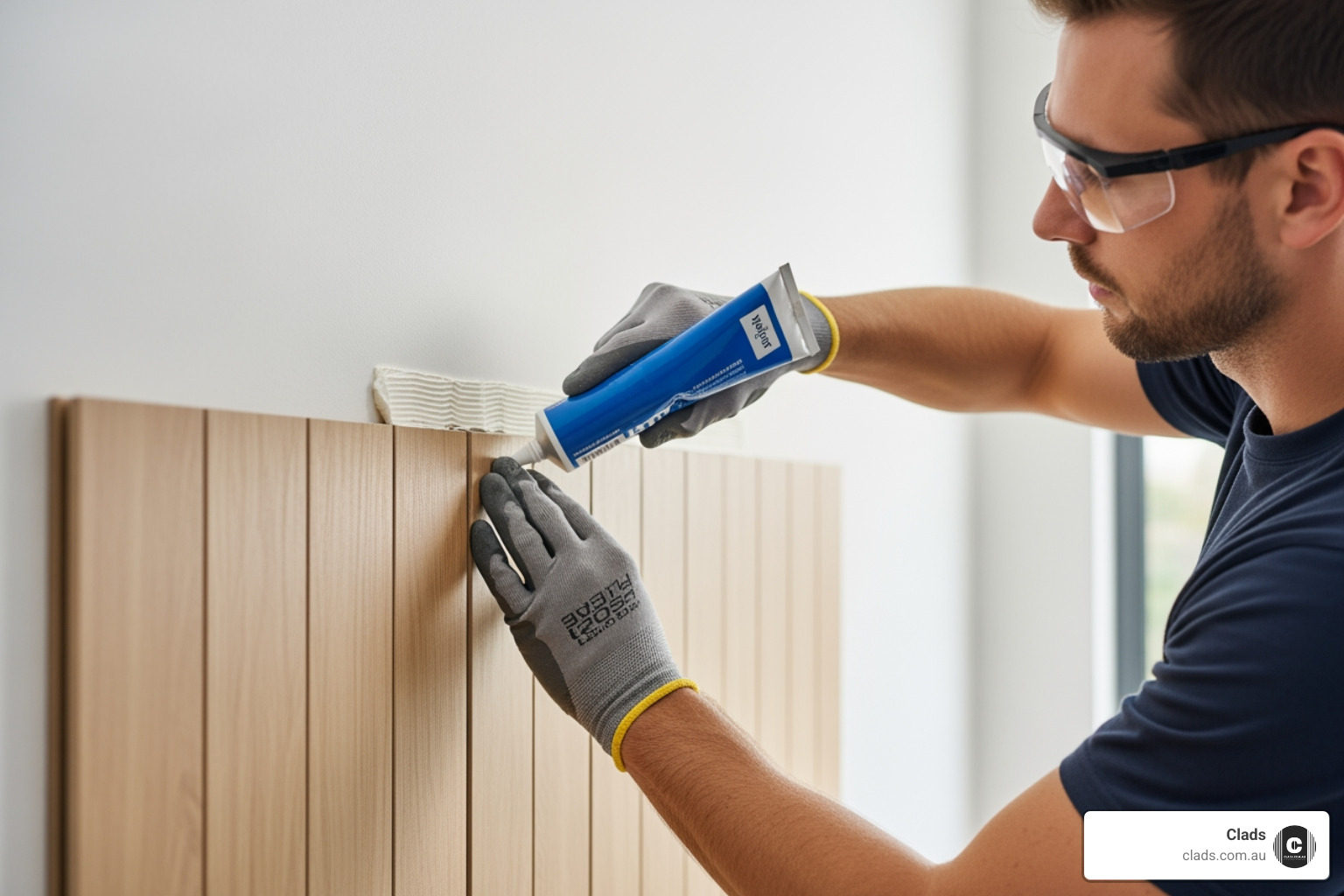
- Use Adhesive for: Flat, stable surfaces like plasterboard or soundly fixed tiles. A quality grab adhesive provides a quick, strong, and waterproof bond.
For most DIY projects on reasonably flat walls, adhesive is the faster and cleaner option.
Installing with Battens
If using battens, follow these key steps:
- Orientation: Fix battens perpendicular to the cladding direction. For vertical panels, use horizontal battens; for horizontal panels, use vertical battens.
- Spacing: Space battens between 250mm and 400mm apart at their centres for adequate support.
- Fixing: Securely screw the battens to the wall at approximately 30cm intervals, using appropriate fixings for your wall type (e.g., masonry plugs for brick).
How to Cut WPC Cladding Panels
Achieving clean cuts is simple with the right technique. Always measure twice and cut once.
- Tool: Use a fine-tooth saw (handsaw, circular saw, or jigsaw).
- Technique: To avoid chipping the decorative face, cut with the decorative side up when using a handsaw. If using a power saw (like a jigsaw), cut with the decorative side down.
- Holes: Use a hole saw attachment on your drill for cutting clean holes for pipes or sockets.
For visual guides, see our How to Install Internal Cladding - Clads Australia YouTube channel.
How to Attach Internal WPC Cladding Panels
This is where your wall transforms. Work methodically from one corner across the wall.
- Start with Trims: Install your starter or corner trim first to provide an anchor for the first panel. Secure it with silicone and screws.
-
Fix the First Panel:
- With Adhesive: Apply a quality grab adhesive in a vertical 'S' pattern on the back of the panel and press it firmly onto the wall.
- With Battens: Position the panel and fix it by driving non-corrosive screws, nails, or staples through the panel's tongue into the battens. The next panel will hide the fixings.
- Use the Tongue and Groove System: Slot the tongue of the next panel into the groove of the previously installed one. Push firmly to ensure a tight, seamless joint.
- Check for Level: Use a spirit level on each panel to ensure your installation remains straight. A slight error early on can become very noticeable later.
- Leave Expansion Gaps: Remember to leave a small expansion gap (around 5mm) at the top and bottom of each panel. These will be hidden by trims.
Achieving a Professional Finish: Trims, Corners, and Sealing
Finishing details like trims and proper sealing are what separate a good installation from a great one. They provide a polished look and ensure long-term performance, especially in wet areas.
Installing Trims for a Seamless Look
Trims cover raw edges and create a clean, professional finish. Use a fine-tooth saw or Stanley knife for cutting, and consider mitring corners for a high-end look.
- Starter Trims: These provide a level base for your first panel. Fix them securely with nails or screws, ensuring they are perfectly level.
- Corner Trims: Use internal and external corner trims to cover panel edges at corners. Secure them with adhesive and a bead of silicone.
- End Caps/Edge Trims: These 'J' trims provide a neat border where cladding ends, such as around a window or door. Secure with adhesive and silicone for a watertight seal.
Explore our range of cladding accessories to find the perfect finishing touches for your project.
Handling Corners, Edges, and Cut-Outs
Careful measurement is key when working around architectural features.
- Corners: Use dedicated internal and external corner trims for the cleanest and easiest finish.
- Sockets and Pipes: Use a jigsaw or hole saw to cut precise openings. Measure carefully, transfer the markings to your panel, and cut slowly. It's often easiest to surface-mount sockets after the cladding is installed.
- Windows and Doors: Finish the cladding flush with the frame and seal the gap with silicone. This creates a clean, waterproof edge that allows for minor movement.
Ensuring a Waterproof Installation in Wet Areas
For bathrooms and showers, diligent sealing is crucial to create an impermeable barrier.
- Seal Behind All Trims: Apply a generous bead of non-acidic silicone sealant to the back of all trims before fixing them in place.
- Seal Panel Grooves: For maximum protection in shower enclosures or wet rooms, run a small bead of clear silicone in the groove of each panel before slotting the next one in. This creates a fully waterproof seal at every joint.
This combination of sealed trims and joints results in a robust, watertight barrier that is easy to clean and maintain.
Pro Tips, Common Mistakes, and Maintenance
To ensure your project is a success, here are some expert tips, common mistakes to avoid, and simple maintenance advice to keep your WPC cladding looking its best.
Insider Tips from the Design-Led Cladding Specialists
- Order Large Samples: Always test large samples in your space to see how colour and texture interact with your home's natural and artificial light.
- Add Depth with Texture: Consider textured profiles like batten or castellated designs to create dynamic shadow lines and add architectural interest.
- Improve Room Acoustics: For home theatres or open-plan living areas, consider specialised acoustic panels to reduce echo and improve sound quality.
- Accept Low Maintenance: WPC cladding never needs painting, staining, or sealing, saving you time and effort compared to traditional timber.
Common Mistakes to Avoid
- Skipping Acclimatisation: Failing to let panels adjust to the room's climate for 24-48 hours can cause buckling or gaps later.
- Inconsistent Batten Spacing: If using battens, maintain a consistent spacing of 250-400mm to ensure a flat, professional finish.
- Over-tightening Fixings: WPC needs room to move. Over-tightening screws can create stress points and cause cracking. Pre-drill slightly oversized holes.
- Forgetting Expansion Gaps: Leaving a 5mm gap at panel ends is vital to allow for natural expansion and contraction with temperature changes.
- Inadequate Sealing in Wet Areas: The panels are waterproof, but the joints are not. Use silicone generously on all trims and joints in bathrooms and showers to prevent water ingress.
Expansion Gaps and Maintenance
Expansion Gaps Are a Necessity WPC materials naturally expand and contract. The 5mm gap you leave at the ends of panels allows for this movement without putting stress on the installation, preventing warping or buckling over time.
Cleaning and Long-Term Care
- Cleaning: WPC cladding is easy to clean. Simply use a soft cloth with mild soap and warm water. Avoid abrasive cleaners, harsh solvents, or high-pressure sprayers.
- Maintenance: Your main task is to inspect sealant joints in wet areas once or twice a year. If any silicone has degraded, clean the area and reapply to maintain a waterproof seal.
For more insights, our Essential Guide to Timber Indoor Cladding offers helpful principles that apply to various cladding types.
Frequently Asked Questions about Internal WPC Cladding
Here are answers to common questions about how to fit internal plastic cladding and its use in Australian homes.
Can I install WPC cladding over existing tiles?
Yes. If your existing tiles are clean, secure, and relatively flat, you can install WPC panels directly over them using a strong grab adhesive. This saves the time and mess of removing old tiles and is a popular method for bathroom and kitchen renovations.
What is the best way to cut WPC wall panels?
Use a fine-tooth saw for the cleanest cut. To prevent chipping the decorative face, cut with the decorative side up if using a handsaw, and down if using a power saw (like a jigsaw). A jigsaw is ideal for detailed cuts around sockets or pipes.
How do I mount heavy items like mirrors or cabinets on a clad wall?
Heavy items must be fixed through the cladding and into the solid wall or structural battens behind. WPC panels are a decorative layer and are not designed to bear significant weight. Use longer screws to ensure a secure anchor into the structure.
Is WPC cladding suitable for soundproofing a room?
Standard WPC cladding offers some sound dampening, but it is not a specialised acoustic product. For significant noise reduction in home theatres or studios, we recommend our dedicated acoustic wall panels, which are engineered to absorb sound.
How do I ensure the panels are perfectly vertical or horizontal?
Use a spirit level on the very first panel. Every subsequent panel will follow its line, so getting the first one perfectly level is critical. Check for level periodically throughout the installation to ensure a straight, professional finish.
Have more questions? We're here to help. Request your free samples today or contact our expert team for advice.
Conclusion
You now have the knowledge to master how to fit internal plastic cladding using WPC panels, from preparation to the final finishing touches. WPC cladding offers the perfect balance of timber's aesthetic appeal and the low-maintenance durability of modern composites, delivering impact and longevity to any interior space.
At Clads Australia, we are one of Australia's leading suppliers of premium WPC solutions, focused on helping you "Design the Difference" with high-quality materials. While we specialise in supplying cladding products, many of which are suitable for experienced DIYers, we do not offer installation services. However, we can connect you with experienced local installers if you require professional assistance.
Ready to transform your space? Explore our full range of Internal Cladding to find the perfect solution for your project.
To experience the quality and texture firsthand, request your free samples today. For any questions, please contact our expert team for advice—we're here to help you create something beautiful.