



What Is Black Aluminium Cladding and Why Are Australians Choosing It?

Black aluminium cladding is a non-combustible aluminium facade system used to protect and modernise external walls, and in some cases internal feature surfaces, across residential and commercial projects. In Australia, it's become a go-to choice because it looks sharp, lasts for decades, and holds up in conditions that quickly wear out painted timber or lower-grade cladding products.
Here's a quick snapshot of what matters:
- Material: Architectural-grade aluminium, commonly marine-grade 6063-T6 alloy
- Lifespan: Typically 40 to 50+ years with correct system design and normal maintenance
- Maintenance: Low, usually a wash every 6 to 12 months depending on exposure
- Fire performance: Non-combustible aluminium skin, suitable for compliant wall systems where fire performance matters
- Applications: External facades, feature walls, fences, gates, ceilings, soffits, and interior accents
- Finish options: Powder coating, PVDF coating, and black anodising
- Cost: Pricing varies per square metre depending on profile, finish, spans, and project complexity. Visit the Clads Australia website for current base rates and volume pricing.
- Sustainability: 100% recyclable material with a long service life
- Warranty: Up to 30 years on finish performance depending on product and coating system
Timber had a long run. But if you're over repainting, warped boards, and facades that look tired after a few hard summers, black aluminium cladding is a practical upgrade.
The appeal isn't just aesthetic. It's performance. A well-designed aluminium cladding system acts as part of the building envelope, not just a decorative outer skin. It sheds water, supports ventilation, helps manage heat load, and gives you a durable outer layer that doesn't ask for much in return.
That's a big reason architects, builders, and developers keep specifying it. It works with modern Australian design language, but it also answers the technical brief: durability, low maintenance, fire-conscious material selection, and compliance with the wider wall build-up when NCC and BAL requirements are on the table.
At Clads Australia, we position aluminium cladding as a specialist facade system, not a fashion item. The black finish is what people notice first. The real value is what sits behind that finish: marine-grade alloy selection, stable coatings, rainscreen logic, controlled expansion, and clean integration with compliant subframes and cavity design.
Whether you're recladding a coastal home, building a new architectural facade, or upgrading a multi-residential exterior, black aluminium gives you a crisp result with long-term reliability.
I'm Lawrismin Gomez, Sales Manager at Clads Australia, and with over 20 years in sales and more than 3 years specialising in the cladding industry, I've helped builders, developers, and homeowners across Australia choose the right black aluminium cladding systems for the demands of their projects. This guide breaks down what the material is, how the systems work, where they fit, and what to look for if you want a facade that performs for the long haul.
Understanding Black Aluminium Cladding: Materials and Performance
When we talk about high-performance black aluminium cladding, we're usually talking about extruded architectural aluminium engineered for facade use, most commonly 6063-T6. That's a marine-grade alloy widely used in Australian construction because it gives you a strong balance of corrosion resistance, structural stability, and clean surface finish. The T6 temper means the aluminium has been solution heat-treated and artificially aged to increase hardness and yield strength. In plain terms, it stays light, strong, and workable.
For Australian projects, that matters. Your cladding has to cope with salt-laden air, high UV, big temperature swings, heavy rain events, and long dry periods. Inferior metals and weak coatings get exposed fast. Proper black aluminium cladding systems are built for that reality.
One of the biggest reasons aluminium is specified is fire performance. Aluminium itself is non-combustible. It doesn't provide fuel load in the way combustible wall materials can, and it doesn't generate the same smoke issues associated with combustible plastics. That's why it's regularly considered for projects where NCC compliance, BAL requirements, and external wall performance aren't negotiable. The full wall system still needs to be assessed and detailed correctly, but the aluminium outer layer is a strong starting point from a compliance perspective.
Cladding as a Performance Layer
The simplest mistake people make is treating cladding like it's just the outer finish. It isn't. Good cladding works as part of a layered wall build-up.
A black aluminium facade is typically installed as a ventilated rainscreen. That means the outer aluminium layer takes the weather hit first, then a drained and ventilated cavity behind it helps manage any water that gets past the face. The cavity also lets the wall breathe. Instead of trapping moisture, the system allows drainage and airflow, reducing the risk of condensation, mould, or long-term moisture damage in the substrate.
That cavity changes thermal behaviour too. Because the facade is separated from the structural wall, hot air can rise and escape. This is especially important with black finishes, which naturally absorb more solar heat. In a direct-fix system, that heat can build up against the backing wall. In a ventilated system, the heat load is moderated by airflow. That's the logic behind rainscreen design. It's not about pretending water never gets in. It's about managing water and pressure properly so the wall stays dry and stable over time.
If you want a broader overview of why aluminium works so well in facade applications, our Essential Guide to Aluminium Cladding Benefits covers the fundamentals.
Engineering for the Australian Climate
Australia is hard on facades. Western Sydney heat, coastal salt exposure in places like Noosa or the Mornington Peninsula, and strong UV across most of the country all put pressure on finish performance.
That's why the coating matters as much as the metal.
A high-grade PVDF finish, or a properly specified anodised finish, gives black aluminium cladding the durability people actually expect when they hear "low maintenance". PVDF stands for polyvinylidene fluoride. It's a fluoropolymer coating known for very strong UV stability, colour retention, and chemical resistance. Anodising works differently. Instead of applying a film over the surface, it converts the outer aluminium layer into a controlled oxide finish that's hard-wearing and integrated into the metal.
For coastal work, marine-grade alloy and finish selection are especially important. You want the alloy, coating, fixings, and subframe to be considered as one system. If you specify aluminium panels well but pair them with the wrong screws or incompatible framing, you can create galvanic corrosion points or visible staining. That's why we always talk about system integration, not just panel selection.
Thermal expansion needs attention too. Aluminium moves with temperature. Black surfaces run hotter than lighter colours, so panel length, fixing method, cavity design, and expansion allowance all need to be accounted for in the shop drawings and install methodology. When that detail is ignored, you'll see oil canning, stress, or buckling. When it's done properly, the facade stays clean and stable.
For projects where wall lining, orientation, and profile type all matter, our guide to Aluminium Panels for Walls is a useful next step.
Fire, Compliance, and Core Material Context
This is where technical clarity matters.
Solid aluminium extrusions are straightforward from a combustibility perspective. Composite products need more care. ACP stands for aluminium composite panel, which means thin aluminium skins bonded to a core. That core matters. Some older or low-grade ACP products used HDPE (high-density polyethylene) cores, and that's exactly where fire risk concerns have historically come from. Fire-retardant and non-combustible alternatives exist, but they must be assessed by exact product composition and tested system performance, not assumptions.
At Clads Australia, we focus on technically appropriate cladding solutions and product guidance so specifiers and builders can make informed decisions around NCC pathways, BAL exposure, and facade compliance. We're a specialist supplier, not an installer, so our role is to provide clear product information, technical support, and practical guidance on what suits the project scope.
Sustainability and Long-Term Value
Aluminium also stacks up well from a lifecycle perspective. It's fully recyclable, widely reused, and durable enough to stay in service for decades. That matters more than surface-level sustainability claims. A facade that lasts 40 to 50+ years with low maintenance and no repeated repainting cycles generally performs better over time than a material that needs frequent intervention.
There's also reduced replacement waste, lower coating maintenance, and less disruption over the building's life. If you're targeting a facade that's durable, stable, and easier to maintain across decades, black aluminium cladding is one of the more sensible options on the market.
Types and Finishes of Black Aluminium Cladding
The look of black aluminium cladding comes down to two things: profile and finish. Get both right and the facade looks deliberate. Get one wrong and even a premium build can feel flat.
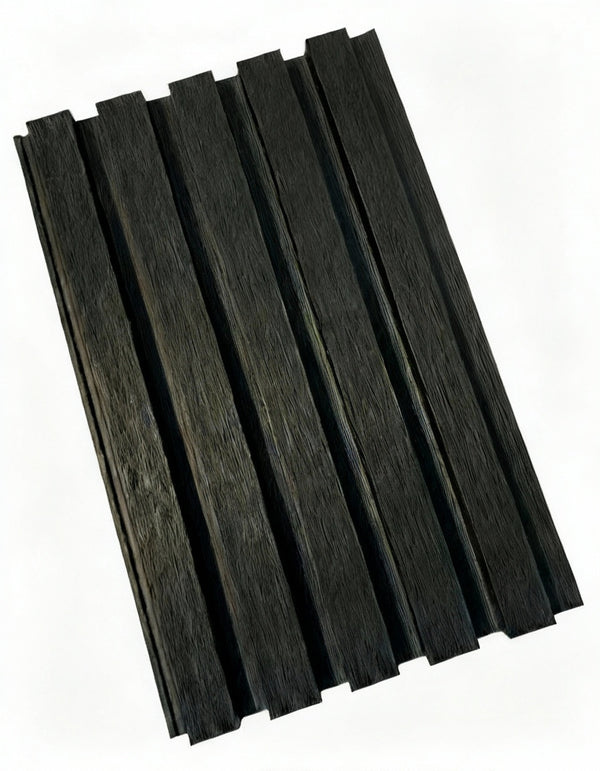
There isn't one standard product category here. "Black aluminium cladding" can mean extruded interlocking boards, batten-style systems, flat facade panels, perforated screens, or composite panel systems used in the right application.
Common product types include:
- Solid extruded aluminium panels: Strong, impact-resistant, and well suited to residential and architectural feature facades.
- Interlocking weatherboard-style profiles: A practical option for clean horizontal or vertical runs with concealed fixings.
- Aluminium battens and slatted systems: Used where a linear architectural look is the goal. These can be purely decorative or part of a screened facade build-up.
- Perforated aluminium sheets: Often specified for screening, plant enclosures, privacy treatments, or ventilated facade zones.
- Aluminium composite panels (ACP): Flat, lightweight panel systems made from aluminium skins bonded to a core. Core type must always be checked carefully for compliance. If a product uses HDPE (high-density polyethylene), that core composition needs to be understood in the context of fire performance and project requirements.
If you're comparing linear facade options specifically, our Aluminum Batten Cladding Guide is worth reading.
Architectural Finishes for Black Aluminium Cladding
Black is never just black. The finish changes how the facade reads in light, how it handles abrasion, and how well it resists fade.
The main finish options are:
PVDF (Polyvinylidene Fluoride) coating This is the premium exterior finish for long-term colour stability. PVDF performs exceptionally well under Australian UV, resists chalking, and stands up to pollution and salt exposure better than many basic coating systems. If the project is coastal, exposed, or long-hold, PVDF is usually the first finish worth considering.
Powder coating A strong residential and light commercial option with broad colour and texture flexibility. You can get matte, satin, textured, or low-sheen black finishes that suit contemporary homes very well. The quality depends on the powder specification and application process, so not all powder coating is equal.
Black anodising Anodising creates a metallic, integrated finish rather than a surface film. It's tough, stable, and particularly good where you want a refined architectural appearance with high wear resistance.
If you're weighing black facade materials more broadly, our Black Cladding Complete Guide compares the options in more detail.
Product Example: CLAD120
One of our most requested profiles is the CLAD120 with SKU CLAD120-BLK. It suits projects that want the look of narrow linear boards without the labour load of installing multiple separate battens.
Typical product details include:
- SKU: CLAD120-BLK
- Profile style: 1.5-inch linear profile that visually replicates three narrow planks in one panel
- Face width: 6.238 inches
- Length: Up to 19 feet, approximately 5.8 metres
- Weight: Approximately 4.5kg to 7.5kg per square metre depending on thickness and finish specification
- Finish options: Matte black, shadow-line architectural black, and selected textured finishes including woodgrain effects
That combination makes it attractive for both residential facades and commercial feature walls. It gives a crisp shadow line, keeps the installation pattern consistent, and reduces visible fixing clutter.
The technical point here is that profile depth and geometry aren't just visual choices. They influence rigidity, span behaviour, drainage path, and how the panel interfaces with trims and subframes. That's why product selection should always be tied back to the actual wall build-up, not just the render.
Installation Logic and System Integration
A good facade doesn't come from the face panel alone. It comes from how the whole system is put together.
Most black aluminium cladding systems use interlocking profiles with concealed fixings. That's one reason builders like them. The install sequence is clean, repeatable, and visually tidy once complete. But the bigger advantage is system control. Interlocking geometry helps with alignment, water shedding, and consistent shadow lines across the elevation.
The cladding is typically fixed over timber battens or, more commonly in commercial and higher-performance applications, steel or aluminium subframes such as top hats and rails. The subframe creates the cavity, establishes the line of the facade, and allows irregular substrates to be corrected before the visible cladding goes on.
Why Rainscreen Logic Matters
The key concept is rainscreen design.
You don't rely on the outer cladding face to be a perfectly sealed barrier. Instead, the outer layer sheds the majority of water, while the cavity behind it manages drainage and ventilation. Any moisture that gets beyond the outer face has a path to escape. Air movement through that cavity helps dry the assembly and reduce pressure differences that can otherwise drive water inward during storms.
This is a much smarter approach for Australian conditions than trapping everything tight and hoping nothing gets behind the panel.
It's also one reason black facades perform better than many people assume. A ventilated cavity helps release built-up heat. The external face gets hot, but the wall behind is buffered by airflow and separation.
Technical Installation Requirements
Clads Australia is a specialist supplier, not an installer, but we provide technical product guidance so builders and specifiers can detail the system correctly.
Typical considerations include:
- Support spacing: Battens or top hats are commonly set at maximum 500mm centres, subject to engineering, profile span limits, wind loads, and project-specific requirements.
- Fixings: Stainless steel or other corrosion-resistant fixings are essential, particularly in coastal environments. Incompatible metals can lead to galvanic corrosion.
- Cutting: Clean cuts require the right tools, usually a drop saw or mitre saw with a non-ferrous blade.
- Expansion allowance: Aluminium expands and contracts with heat. A general rule of 1mm to 2mm per metre of length may apply, but exact allowances depend on profile design, fixing type, and exposure.
- Substrate and membrane: The backing wall, sarking, cavity detailing, flashings, and drainage exits all need to be designed as part of one wall system.
- Fire and compliance detailing: For NCC and BAL-related applications, the whole wall build-up matters. Panel selection alone doesn't determine compliance.
This is where technical support matters most. On paper, two black aluminium products can look similar. In practice, differences in alloy, coating, cavity setup, fixing design, and trim integration can completely change how the facade performs over time.
Lead Times, Supply, and Shipping
Supply reliability matters on live projects, especially when facade stages are tied to programme dates.
For standard stocked lines, typical shipping time is 2 to 8 days depending on location, stock availability, and order volume. Custom lengths, non-standard finishes, or large commercial orders can take longer, so it's always best to confirm lead times at quoting stage.
Because we're a national supplier, we focus on making product access straightforward for builders, developers, and homeowners across Australia. That means clear product data, practical support, and realistic advice on what can ship fast versus what needs manufacturing lead time.
Maintaining Your Black Aluminium Cladding
Maintenance is one of the biggest reasons aluminium wins long term.
You don't need ongoing repainting cycles. You don't need to sand it back. You don't need to oil it every year because the sun has cooked the finish.
A sensible maintenance routine is usually enough:
- Inland and low-exposure areas: Wash every 12 months with mild detergent and clean water.
- Coastal or high-pollution areas: Clean every 6 months to remove salt and surface contaminants.
- Sheltered sections: Inspect more closely because rain won't always wash these areas naturally.
- Annual checks: Look at sealants, drainage paths, flashings, and fixings to make sure the facade can still drain and ventilate properly.
With quality coatings, that level of maintenance is generally all that's required to keep black aluminium cladding looking sharp for years.
Our panels typically come with a 30-year warranty covering colour fading and weather damage, giving you peace of mind that your investment is protected.
Cost Analysis and Long-Term Value
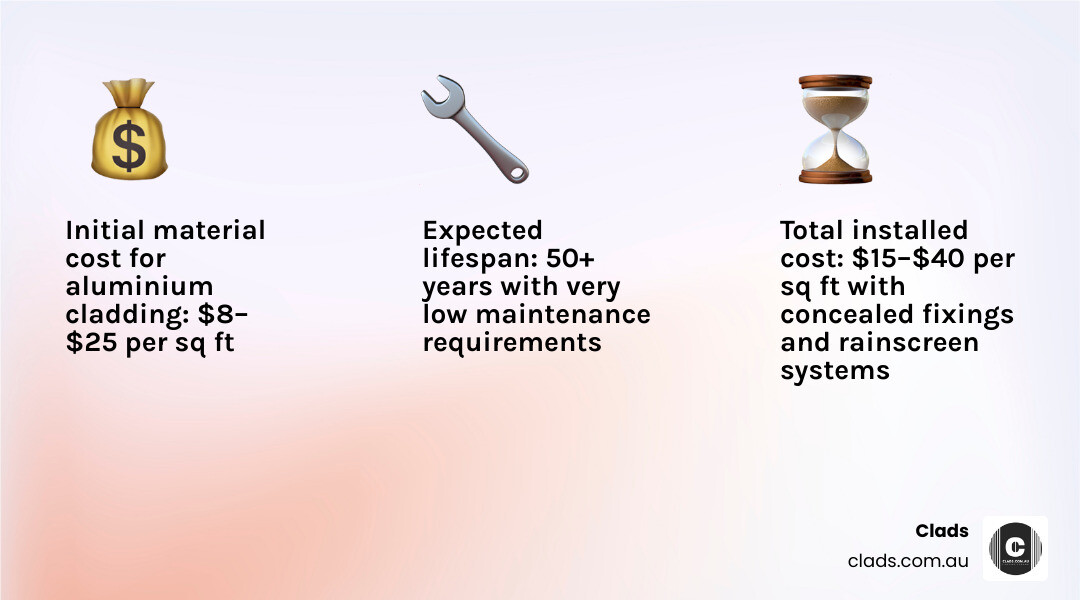
When evaluating the cost of black aluminium cladding, it's important to look beyond the initial purchase price. While it may have a higher upfront cost than vinyl or basic timber, the lifecycle cost is significantly lower.
| Material | Initial Cost (per sq ft) | Total Installed Cost | Lifespan | Maintenance |
|---|---|---|---|---|
| Aluminium | $8 - $25 | $15 - $40 | 50+ Years | Very Low |
| Timber | $5 - $15 | $12 - $30 | 15 - 30 Years | High |
| Vinyl | $3 - $8 | $8 - $15 | 20 - 40 Years | Low |
| Fiber Cement | $5 - $12 | $15 - $35 | 50+ Years | Moderate |
For current pricing and volume discounts for developers, we always recommend checking the How Much Does Aluminium Cladding Cost page on our website.
Investment vs Traditional Materials
The value of aluminium comes from what you don't have to do. Over 20 years, the cost of professional painting or oiling a timber facade can easily exceed the original cost of the material itself. Additionally, because aluminium is non-combustible, many insurance providers offer better premiums compared to homes clad in combustible materials like timber or certain composites. When you factor in the increased property value and the lack of maintenance costs, the return on investment for black aluminium cladding is clear. In high-end markets like the Gold Coast or Sydney's North Shore, the architectural appeal of a matte black finish can add significant value to a home's resale price.
There's also the "street appeal" factor. A crisp, black architectural facade can significantly boost property appraisal values, especially in design-conscious markets like Melbourne CBD, Sydney's North Shore, or the Gold Coast. To see more detailed breakdowns, visit More info about aluminium cladding costs.
Frequently Asked Questions about Black Aluminium Cladding
Does black aluminium cladding make a house hotter?
This is the most common concern we hear. While black surfaces do absorb more heat than white ones, the "chimney effect" of a ventilated rainscreen system solves this. Because there is an air gap between the cladding and the wall, the heated air rises and escapes out the top, drawing cooler air in from the bottom. This continuous airflow acts as a thermal buffer, keeping the structural wall of the house much cooler than it would be with a direct-fix cladding system. When combined with proper insulation, the impact on internal temperatures is negligible. In fact, many black aluminium panels now use thermal-reflective pigments that bounce away a portion of the infrared spectrum.
Is black aluminium cladding prone to fading in the Australian sun?
In the past, black pigments were notorious for fading. However, modern PVDF and high-grade powder coatings are engineered with UV-resistant pigments. Our systems are designed to last 20+ years before showing any significant signs of colour fading. The 30-year warranty we offer specifically covers protection against this, ensuring your house looks as dark and bold in a decade as it does on day one.
Can I install black aluminium cladding in a bushfire zone?
Yes, and it is often the recommended choice. Because aluminium is non-combustible and has a melting point of around 655 degrees Celsius, it is suitable for use in Bushfire Attack Level (BAL) zones, including BAL-FZ (Flame Zone) when used as part of a compliant wall system. It meets AS 1530.1 requirements, meaning it won't ignite or spread flames.
Conclusion
Black aluminium cladding is more than just a trend. It's a high-performance solution for the modern Australian landscape. From its non-combustible safety ratings to its 50-year expected lifespan, it offers a level of durability that traditional materials simply can't match.
At Clads Australia, we pride ourselves on being more than just a supplier. We are technical experts with 18+ years of renovation and construction experience across Victoria and beyond. Whether you're in Perth, Adelaide, or Western Sydney, our national distribution network, with over 150 depot locations, ensures you have local access to the best materials in the country.
Ready to see the quality for yourself? You can Request a free sample to feel the finish and see the colour in your own light. If you have a complex project or need technical guidance on compliance, don't hesitate to Contact our technical team. We're here to help you build something that lasts.