



What Is Cladding for Homes and Why Does It Matter in 2026?

Cladding for homes is one of the most impactful upgrades an Australian homeowner can make, transforming both the appearance and long-term performance of a property's exterior in a single project.
Here is a quick overview of the most common cladding options available to homeowners in 2026:
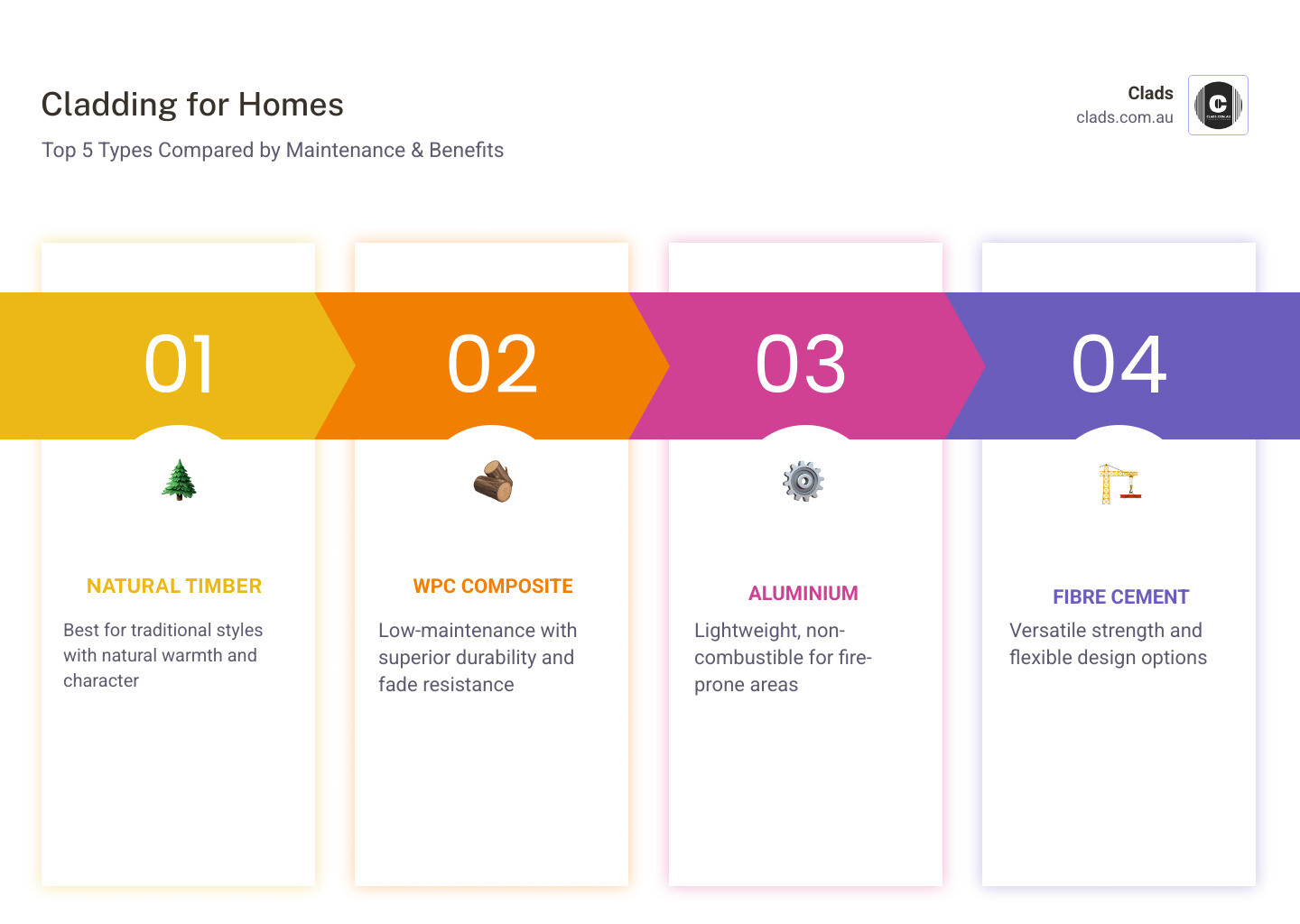
| Cladding Type | Best For | Maintenance Level | Key Benefit |
|---|---|---|---|
| Natural Timber | Traditional and coastal styles | High | Warmth and character |
| WPC Composite | Modern low-maintenance facades | Low | Durability and fade resistance |
| Aluminium | Contemporary and fire-prone zones | Very Low | Lightweight and non-combustible |
| Fibre Cement | Versatile residential exteriors | Low to Medium | Strength and design flexibility |
| Stone-Inspired Panels | Feature walls and accent sections | Low | Premium visual impact |
At its core, exterior cladding is the process of applying one building material over another to protect the structure beneath from weather, moisture, and temperature extremes. But in 2026, it is far more than a protective layer. Modern cladding systems are a primary design tool, shaping the architectural character of a home while delivering measurable improvements in thermal comfort and long-term asset value.
For Australian homeowners, the stakes are particularly high. Harsh UV exposure, coastal salt air, and bushfire risk mean that the wrong material choice can lead to years of costly maintenance, fading, warping, or worse. The good news is that the market has evolved significantly, with engineered composites, aluminium systems, and thermally modified timbers now offering performance levels that traditional timber simply cannot match.
This guide walks you through every major cladding category, from popular timber species and installation profiles to modern WPC composites and lightweight aluminium facades. Whether you are renovating an investment property or designing a new contemporary home, you will find the practical information needed to make a confident, informed decision.
I'm Lawrismin Gomez, Sales Manager at Clads Australia, and with over 20 years in sales and more than 3 years specialising in cladding for homes across the Australian market, I have helped hundreds of homeowners and builders navigate exactly these decisions. Let's break down everything you need to know to choose the right system for your project.
Understanding the Purpose of Cladding for Homes in 2026

In 2026, cladding for homes serves as the ultimate environmental armor. We no longer view it as a mere cosmetic skin; it is a sophisticated system designed to manage moisture, regulate internal temperatures, and dampen external noise. For many homeowners in Sydney or Melbourne, the decision to clad is driven by a desire to modernise an aging brick or render facade, but the functional benefits are just as significant.
A well-designed cladding system prevents water ingress, which is the leading cause of structural decay in residential buildings. By creating an additional layer of protection, we ensure that the primary wall remains dry and structurally sound. Furthermore, modern materials provide a thermal buffer, reducing the reliance on artificial heating and cooling, which is a major win for energy efficiency in the fluctuating Australian climate.
For those looking to elevate their property's market position, the aesthetic impact is undeniable. Cladding allows us to introduce texture, depth, and material contrast that paint or render simply cannot achieve. Whether it's the sleek lines of a vertical batten system or the rugged charm of stone-inspired accents, the right choice can instantly boost curb appeal and property valuation.
Check out our Exterior Cladding Options Guide for more inspiration on how to start your project.
Defining the Modern Rainscreen System
The most effective way to install cladding for homes today is via a rainscreen system. This involves fixing the cladding panels to a sub-frame of furring strips (battens), which creates a vital ventilation gap between the cladding and the weather barrier on the structural wall. This gap acts as a drainage plane, allowing any moisture that penetrates the outer skin to weep away and air to circulate, preventing mold and rot.
Enhancing Architectural Value and Aesthetics
Beyond protection, cladding is about storytelling. It allows us to define the "vibe" of a home. We often see homeowners mixing materials—using WPC for the main body and stone-inspired panels for entryways—to create visual interest. This layering of textures is a hallmark of contemporary Australian architecture.
To see how these changes can impact a real property, explore how to Unlock Your Homes Potential Inspiring Exterior Makeover Ideas.
Material Showdown: Timber vs. Modern Composites
When selecting cladding for homes, the material you choose dictates your weekend schedule for the next twenty years. Traditional timber is beautiful, but it is also demanding. In contrast, modern WPC (Wood Plastic Composite) and aluminium systems are designed for the "set and forget" lifestyle that many of us crave.
Timber requires regular oiling, staining, and inspection to prevent UV degradation and moisture damage. WPC, however, is engineered from a blend of reclaimed sawdust and recycled plastics (often up to 95% recycled content), making it incredibly resistant to fading and rot. Aluminium takes durability even further, offering a non-combustible solution that is virtually immune to the elements.
Natural Timber Cladding for Homes: Species and Performance
If you are set on the authentic look of wood, species selection is critical. Western Red Cedar remains a top choice due to its natural resins that repel decay. Siberian Larch is another popular softwood known for its density and pale straw tones. For those seeking a more rustic look, European Oak offers incredible strength, though it requires pre-drilling and stainless steel fixings to prevent iron staining.
We also see a rise in thermally-modified woods like Thermo-pine. This process uses heat to alter the cellular structure of the wood, making it more stable and durable than standard softwoods. While beautiful, all natural timber will eventually "silver off" if not regularly maintained.
If you're considering wood for the indoors as well, see An Essential Guide To Timber Indoor Cladding.
The Rise of WPC and Composite Cladding for Homes
WPC is the fastest-growing category in cladding for homes for a reason. It captures the warmth of timber without the splinters or the stress. High-performance composites like those we supply are engineered with a protective shell that resists staining, scratching, and fading.
In fact, premium composite systems often come with residential warranties of up to 50 years. For a typical garden room or extension, you might need approximately 24m² of material (including a 10% waste allowance). While the initial cost per square meter might be higher than some softwoods, the lack of ongoing maintenance costs makes WPC the more economical choice over the product's lifespan.
Popular Profiles and Design Trends for Modern Facades
The "profile" refers to the shape of the board and how it interlocks. In 2026, the trend is moving away from traditional horizontal weatherboards toward more architectural, textured looks. Profiles like V-groove and shadow gap are incredibly popular for creating clean, modern lines that emphasise the geometry of a building.
Vertical vs. Horizontal Orientation
Should you go vertical or horizontal? Horizontal is the classic choice, ideal for traditional cottages or "Hamptons" style homes. However, vertical orientation is the "hot" trend for contemporary builds. Vertical boards draw the eye upward, making a home appear taller and more grand. From a practical standpoint, vertical grooves also follow the direction of rainfall, which can aid in drainage.
Lightweight Aluminium and Stone-Inspired Systems
For a truly high-end, "architect-designed" look, many are turning to castellated profiles and batten systems. These create deep shadow lines and a rhythmic texture that adds massive visual interest to a facade. Aluminium is perfect for this, as it can be extruded into precise, sharp shapes that timber or WPC can't always replicate.
Furthermore, stone-inspired systems allow you to add the weight and prestige of masonry without the need for a structural mason. These lightweight panels can be installed over standard framing, providing a premium finish at a fraction of the weight and cost.
Installation Best Practices and Maintenance Requirements
Proper installation is the difference between a facade that lasts 50 years and one that fails in five. We always emphasise that the substructure must be perfectly level and weatherproof before the decorative cladding is applied. Using hidden fastener systems, like the Cortex system, ensures a clean finish without visible screw heads marring the surface.
Expansion gaps are another non-negotiable. All materials—timber, WPC, and aluminium—will expand and contract with temperature changes. Without proper gaps, your cladding can buckle or warp. For those planning a weekend project, our guide on How To Install Wpc Cladding is a must-read.
Weathering and Long-Term Upkeep
While we champion low-maintenance materials, "low maintenance" doesn't mean "no maintenance." All exterior surfaces will collect dust and pollutants. A simple wash with soapy water and a soft brush once or twice a year is usually all that's needed for WPC or aluminium. For timber, you'll need to stay on top of UV protection to prevent the wood from becoming brittle.
Professional vs. DIY Installation Considerations
Many of our systems are designed to be DIY-friendly, but you need to be honest about your skill level. Complex details like corner trimming, window flashings, and multi-story applications often benefit from a professional touch. We provide technical specs and guides for the handy homeowner, but we also have a referral network of tradies if you'd rather leave it to the experts.
Frequently Asked Questions about Cladding for Homes
Can cladding be installed over existing surfaces like pebbledash or render?
Yes, cladding can often be installed over existing surfaces, provided a suitable sub-frame of timber or aluminium battens is securely fixed to the structural wall. This creates the necessary ventilation gap and a level surface for the new panels. It is a popular method for modernising older Australian homes without the need for expensive demolition. This "over-cladding" approach is particularly effective in Victoria and NSW for updating mid-century brick homes.
What is the most durable cladding for coastal environments?
For coastal areas prone to salt spray and high humidity, WPC (Wood Plastic Composite) and high-grade aluminium systems are superior to natural timber. These materials do not rot, warp, or require constant restaining, making them ideal for the harsh Australian coastline from the Mornington Peninsula to the Sunshine Coast. Always ensure that fixings are 316-grade stainless steel to prevent corrosion in these salty environments.
How does cladding improve a home's energy efficiency?
Cladding acts as an additional layer of insulation, reducing thermal bridging and helping to maintain consistent internal temperatures. When installed as part of a rainscreen system, the air gap provides a thermal buffer that keeps the home cooler in summer and warmer in winter, significantly lowering energy costs. This is a strategic investment for homes in climates like Brisbane or Sydney where cooling costs can be high.
Is composite cladding fire-rated for Australian bushfire zones?
Many modern composite and aluminium cladding systems are designed to meet stringent Australian fire safety standards, including BAL (Bushfire Attack Level) ratings. It is essential to check the specific WUI (Wildland Urban Interface) compliance of your chosen material if you are building in a fire-prone region. Aluminium is inherently non-combustible and is often the preferred choice for high-risk zones.
Does internal cladding offer acoustic benefits?
Yes, internal cladding—particularly acoustic wall panels and vertical batten systems—is highly effective at reducing echo and noise transmission. These systems are frequently used in home theatres, open-plan living areas, and home offices to create a quieter, more comfortable environment while adding a sophisticated architectural feature. They are a fantastic way to bring the outside aesthetic indoors for a cohesive design.
Elevate Your Architectural Aesthetic with Clads
At Clads, we believe that high-end architectural design should be accessible to every homeowner and builder across Australia. By focusing on aesthetics and longevity, we provide the materials needed to transform a standard facade into a contemporary masterpiece. Our products are supplied nationwide through our network of 150+ depots, ensuring that your project stays on schedule regardless of your location, whether you are in Geelong, the Gold Coast, or Western Sydney.
Our founders bring over 18 years of real-world renovation experience to the table, meaning we don't just sell products—we understand how they perform on a job site.
While we do not provide installation services directly, we support our customers through a trusted referral network of experienced tradies who understand the nuances of our systems. We'll help you bridge the gap between global design inspiration and a practical, beautiful reality for your home.
Ready to transform your home?
- Explore our range and order your Free Samples
- Get expert advice via our Contact Page