



Modern House Facade: The Ultimate Guide to Creating Architectural Aesthetics and Street Appeal

Investing in a high-quality modern house facade is the most effective way to elevate your property's street appeal and ensure a lasting first impression. A well-designed exterior serves as the protective skin of your home while reflecting a sophisticated architectural vision that balances form and function. Whether you are embarking on a new build or planning a significant renovation, the facade sets the stage for the interior experience and can significantly influence the market value of your Australian home.
In this guide, we will explore the essential components of contemporary exterior design, including:
- The latest trends in external facade systems for 2025 and beyond.
- How to select the right modern cladding materials for durability and fire resistance.
- The benefits of using wood plastic composite cladding for a low-maintenance finish.
- Strategies for mixing textures with stone cladding and aluminium cladding.
- Practical tips for enhancing privacy and energy efficiency through smart design.
This comprehensive overview covers everything from material selection and colour palettes to the finer details of lighting and landscaping. We aim to provide architects, builders, and homeowners with the technical knowledge and creative inspiration needed to execute a flawless exterior transformation that stands the test of time in the harsh Australian climate.
As the design-led cladding specialists, Clads Australia is committed to helping you achieve a premium finish. We focus on sourcing and supplying the highest quality cladding that delivers impact and longevity, offering both aesthetic beauty and structural integrity. Our team understands the nuances of the local market and the specific requirements of modern Australian architecture.
I'm Suresh Babu, and I lead the team here at Clads Australia. With years of experience in the building and materials industry, I have helped countless clients navigate the complexities of exterior design. My goal is to ensure you have access to the best products and expert advice to bring your vision of a perfect modern house facade to life.
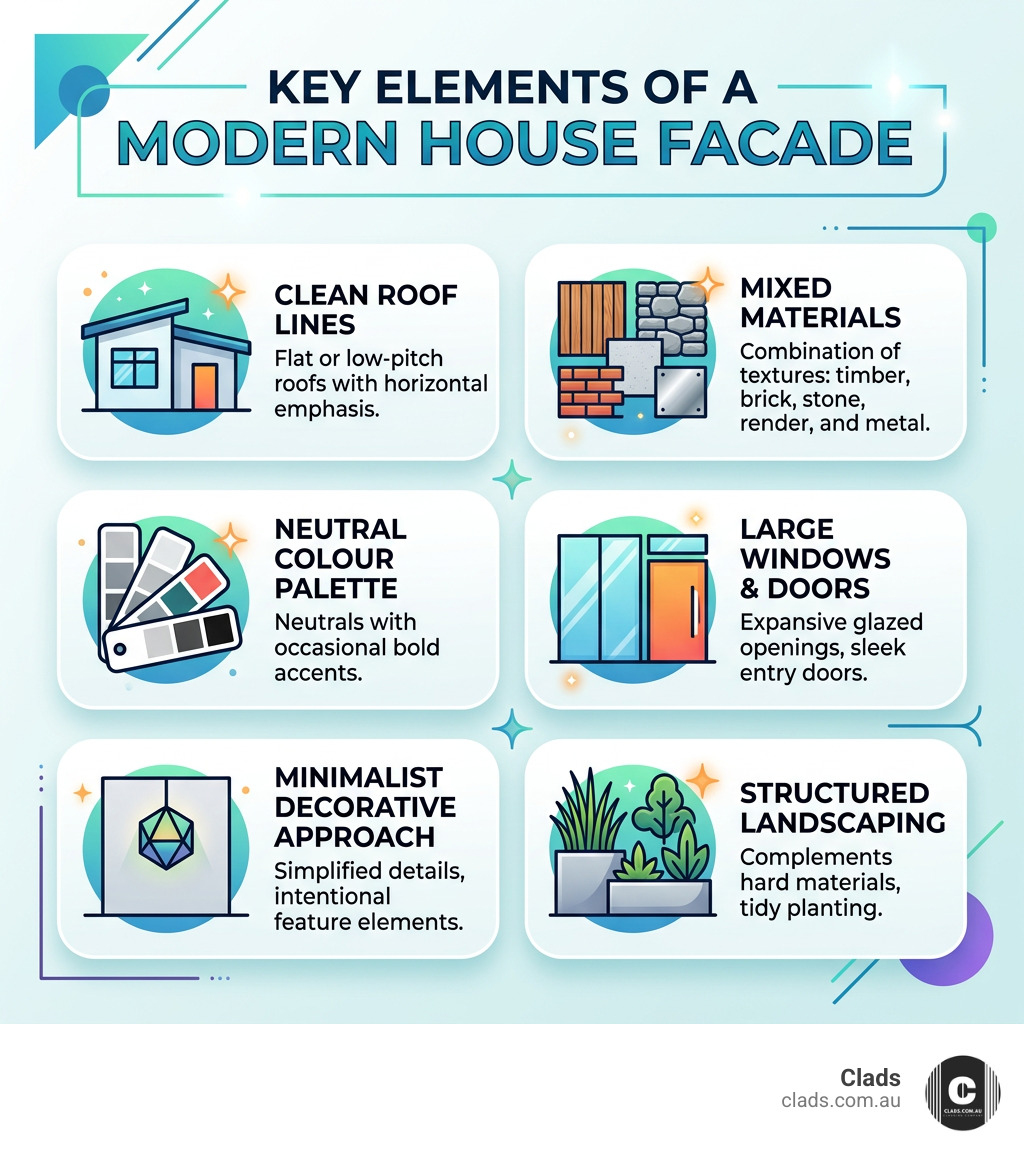
Defining the Modern House Facade: Key Characteristics and 2026 Trends
A modern house facade thrives on the philosophy of "less is more." Unlike traditional styles that may rely on ornate trimmings or decorative gables, contemporary design focuses on clarity, intentionality, and the raw beauty of materials. In 2026, we are seeing a shift toward "confident simplicity"-where the architecture itself does the talking through bold geometric shapes and high-quality finishes.
One of the most prominent trends for 2026 is the use of flat or low-pitched roof lines. These create a sleek, horizontal silhouette that feels grounded and expansive. When combined with cantilevered second storeys-where a portion of the upper floor protrudes over the lower level-the result is a dynamic, three-dimensional look that adds immediate architectural interest.
Minimalism remains a cornerstone of the modern aesthetic. This doesn't mean a house has to look "plain"; rather, it means every element serves a purpose. From hidden gutters to recessed window frames, the goal is to eliminate visual clutter. This allows the eye to focus on the interplay of light and shadow across different surfaces. The concept of house facade cladding as a building envelope strategy has evolved significantly, and today's materials offer both superior performance and striking visual appeal. For a broader context on how the outer shell of a building functions, the building envelope is a useful architectural reference.

Enhancing Your Modern House Facade with Mixed Materials and Textures
The most effective way to create a designer-quality modern house facade is to combine materials with intention. A single finish across the whole frontage can sometimes feel flat, while a thoughtful mix of render, stone, aluminium, or timber-look profiles creates contrast, depth, and a clearer architectural hierarchy. Ordering large samples before committing to a material is one of the best insider tips we can offer—seeing a product in your own light conditions makes all the difference.
In the Australian market, one of the most practical combinations is smooth render or fibre cement paired with warm, textured battens. For example, the WPC cladding collection offers the look of timber with lower upkeep than traditional hardwood. WPC stands for Wood Plastic Composite, a material made from recycled wood fibres and HDPE plastics (high-density polyethylene plastics), designed to be durable and low maintenance in exposed environments. Textured profiles in particular add visual depth and shadow lines that elevate the overall facade design.
The Power of Verticality and Contrast in a Modern House Facade
Vertical profiles are increasingly popular because they help a home appear taller and more architectural from the street. On single-storey homes in particular, vertical battens can visually stretch the facade, while contrasting horizontal brickwork, rendered volumes, or glazing help anchor the design.
Material contrast also improves wayfinding. A darker cladding profile around the entry, for instance, can frame the front door and make the approach feel more deliberate. This is one of the simplest ways of creating architectural aesthetics without overcomplicating the design.
Popular Material Pairings for a Modern House Facade
Brick and metal remain a strong combination for contemporary Australian homes. Pairing painted brick with the aluminium cladding collection can create a clean, durable finish that suits both renovations and new builds. Aluminium is also inherently fire-resistant, making it a smart choice for bushfire-prone areas.
Stone and timber-look finishes are another proven pairing. Using the stone cladding collection on a feature wall, entry pier, or lower facade adds visual weight and permanence, while WPC introduces warmth and texture.
Cement-based finishes and glass also work well in minimalist designs, especially when the goal is a restrained palette with crisp lines. It is worth noting that cladding is not just for exteriors. If you want the facade language to continue indoors, Clads Australia also offers internal cladding and acoustic panels, which can help create a seamless material transition while improving sound quality in selected interior spaces.
Choosing the Best Colour Palettes for a Modern House Facade
Colour is arguably the most cost-effective way to transform a modern house facade. In recent years, the trend has shifted away from beige-on-beige toward high-contrast, moody palettes. A "moody" palette typically involves deep greys, charcoals, or even matte blacks, balanced by crisp white or warm timber tones often achieved using WPC cladding.
A classic high-contrast example is pairing cream or light-grey siding with charcoal window frames and trim. This highlights the architectural "bones" of the house. If you prefer a more monochromatic look, you can use varying shades of the same colour—such as light grey, mid-grey, and charcoal—to create depth without introducing too many different hues.
Don't be afraid to use a single "pop" of colour to create a focal point. A statement front door in a bold orange, deep navy, or vibrant yellow can provide a playful contrast against a neutral backdrop. However, the golden rule of modern design is restraint: stick to 2–3 primary colours to ensure the design remains timeless and cohesive.
Achieving Symmetry, Balance, and Depth in Your Design
A successful modern house facade isn't just about the materials you choose; it's about how you arrange them to create a sense of visual harmony. Symmetry and balance are what make a home look intentional and well-planned. While contemporary design often embraces asymmetry, there should always be a visual equilibrium where different elements—such as window placements and material changes—counterbalance each other to prevent the facade from feeling cluttered or disjointed.
Creating Depth with Wall Offsets
Depth is essential for avoiding a flat, uninspired look. You can achieve this through wall offsets, where different sections of the facade sit at varying distances from the street. Even a small 300mm (approx. 12 inches) offset can create dynamic shadows that add character and architectural interest to the building's face. Using different thicknesses of external facade systems or layering WPC cladding over a rendered base can also help build this three-dimensional effect.
Integrating Greenery and Natural Elements
Nature is the perfect partner for modern architecture, providing a soft contrast to the sharp lines of a minimalist house. Strategic landscaping can frame the entrance and make the building feel more grounded. Consider integrated planter boxes, vertical gardens, or a single architectural tree to complement your external wall cladding. Integrating greenery not only improves curb appeal but can also assist with natural cooling and provide an additional layer of privacy for large glazed areas.
Elevating Curb Appeal with Statement Doors and Functional Features
While the walls take up the most surface area, the "jewels" of a modern house facade are the doors and windows. These are the elements that homeowners interact with daily, and they offer a prime opportunity to showcase personal style.
The Statement Front Door
A custom front door acts as the home's handshake. For a modern look, opt for oversized pivot doors or solid wood slabs with sleek, minimal hardware. Narrow glass inserts can allow light into the hallway while maintaining privacy. If you are working with a coastal or Mediterranean theme, an arched doorway can add a touch of softness to an otherwise linear design.
Low-Profile Garage Doors
Garage doors often take up a significant portion of the facade, so they shouldn't be an afterthought. Modern designs favour low-profile, flat-panel doors with minimal hardware. Some homeowners choose to "hide" the garage by using the same cladding material on the door as the surrounding walls, creating a seamless, "flush" look that doesn't break the visual flow. Products from the external cladding collection can be used to achieve this integrated appearance.
Sculptural Lighting
Lighting is what brings a modern house facade to life after the sun goes down. Instead of a single porch light, use sculptural fixtures like up-and-down wall sconces to highlight textures on a stone wall or the vertical lines of your house facade cladding. Path lighting and garden uplights can also guide visitors to the door while adding a layer of security.
Practical Considerations: Privacy, Efficiency, and Modernising on a Budget
When designing or updating a modern house facade, beauty must meet functionality to ensure the home is comfortable and sustainable. In the Australian climate, managing heat gain and maintaining privacy are top priorities for any homeowner. Modern design offers several clever ways to address these needs without compromising on the sleek aesthetic that defines the style.
Privacy and Shading
Large glass windows are a hallmark of modern design, but they can present privacy challenges in suburban settings. Incorporating sun-blocking facade ideas like horizontal wood louvres or vertical batten screens allows natural light to enter while shielding the interior from the street and the harsh afternoon sun. These screens can be made from durable aluminium cladding profiles that mimic the look of timber but offer superior longevity and fire resistance.
Modernising on a Budget
You don't need a full knockdown-rebuild to achieve a striking modern house facade. If you are working with an existing home, consider these high-impact, low-cost updates:
- Paint: Update dated brick or old weatherboards with a fresh, moody colour palette featuring charcoals or deep navies.
- Feature Cladding: You don't have to clad the whole house. Adding stone cladding to just the entrance portico or a single feature pillar can completely change the vibe.
- Hardware Update: Replace old house numbers, mailboxes, and lights with matte black or brushed metal minimalist options.
- Landscaping: Remove overgrown bushes and replace them with structured, repeating plantings and a clean stone pathway to guide the eye to the front door.
Creating Architectural Aesthetics with Clads Australia
Based in Sunshine, Victoria, we provide a wide range of modern cladding materials, including stone cladding, aluminium cladding, cement cladding, and fibre cement options. Whether you are a DIY enthusiast looking for easy-to-install WPC cladding or an architect specifying external wall cladding for a large-scale project, we have the curated range to bring your vision to life.
Why Choose Low-Maintenance Cladding?
Traditional timber requires constant care, but modern alternatives like WPC cladding offer the same organic aesthetic with a fraction of the work. These products are UV-stable, weather-resistant, and fire-resistant, making them ideal for the harsh Australian climate. By choosing the right house cladding options, you ensure your home's street appeal remains high without the need for regular sanding, oiling, or painting.
For those looking to extend the design language indoors, our acoustic panels offer an excellent way to improve sound quality in open-plan living areas while maintaining a cohesive material palette throughout the home. We also stock a full range of cladding accessories to ensure a clean, professional finish on every project.
The journey to a perfect modern house facade begins with a single choice: the materials you trust to protect and beautify your home. By focusing on clean lines, intentional material mixes, and a balanced colour palette, you can create a property that remains a standout in your street for decades to come.
Whether you are an architect specifying materials for a multi-dwelling development, a builder looking for reliable supply, or a homeowner ready to transform your property's street appeal, the right facade materials make all the difference. Our curated collection has been selected to perform in the Australian climate while creating architectural aesthetics that endure.
Contact Clads Australia | Order a Free Sample
FAQs
What is the difference between a facade and cladding? While often used interchangeably, there is a technical difference between the two terms. A facade refers to the overall front face or "skin" of the building, encompassing all visible elements, including windows, doors, and roof lines. Cladding is the specific material, such as timber, stone, or WPC cladding, that is applied over the exterior walls to provide weather resistance and aesthetic appeal. Essentially, the facade is the complete architectural design of the front, while cladding is the protective and decorative material used to achieve that look.
How can I make my single-storey home look more modern? To modernise a single-storey home, focus on emphasising horizontal lines and introducing material contrast. Replacing a traditional pitched roof with a flat roof or a hidden gutter system can instantly create a more contemporary silhouette. Additionally, adding a vertical feature wall using aluminium cladding near the entrance can add height and visual drama that single-storey homes often lack, making the property appear more substantial from the street.
Are modern facades high maintenance? Modern facades do not have to be high maintenance if you select the right materials during the design phase. While natural timber requires regular oiling to prevent fading and rot, modern cladding materials like WPC, aluminium, and stone are engineered for extreme durability. These products are UV-stable, weather-resistant, and fire-resistant, meaning they will not warp or rot over time. Choosing these low-maintenance options allows you to enjoy a premium look for decades with only occasional cleaning required.
What are the best colours for a modern house facade in Australia? In the Australian market, neutral and earthy tones are the most popular choices because they complement the natural light and landscape. High-contrast palettes, such as pairing crisp whites with deep charcoals or matte blacks, are very effective for highlighting architectural features. Many designers also incorporate warm timber-look accents using WPC cladding to prevent the design from feeling too industrial, creating a balanced and inviting exterior.
Does Clads Australia provide installation services for their products? Clads Australia is a specialist supplier of premium cladding materials and does not offer direct installation services. We focus our expertise on sourcing the best external facade systems and providing technical support to our clients. However, we maintain a network of experienced professionals and can connect you with a local installer in your area upon request to ensure your chosen materials are installed to the highest industry standards.
Can cladding be used on interior walls as well? Absolutely. One of the most common misconceptions is that cladding is only for exterior applications. In reality, products from the internal cladding collection are specifically designed for indoor use, allowing you to create feature walls, ceiling treatments, and seamless transitions from the exterior facade into the home's interior. Pairing internal cladding with acoustic panels can also significantly improve sound quality in open-plan living spaces.
How do I choose the right cladding material for my project? The best approach is to consider your home's architectural style, local climate conditions, and maintenance preferences. For a warm, natural look with minimal upkeep, WPC cladding is an excellent choice. For a bold, industrial aesthetic with superior fire resistance, aluminium cladding is ideal. We always recommend ordering large samples so you can assess the colour and texture in your own light conditions before making a final decision. You can order a free sample directly from our website.