



Why External Facade Systems Matter More Than Ever
External facade systems are the protective and aesthetic envelope of a building, acting as the crucial barrier between the interior and the outside world. Far more than a decorative finish, a facade system protects against weather, improves energy efficiency, reduces noise, and can significantly increase property value. Understanding how modern facades work is the first step toward achieving a durable, low-maintenance, and visually striking result for any new build or renovation.
The growing trend towards high-performance building envelopes means the right facade system is an active investment in your property's future, protecting its structure and reducing long-term costs.
As Lawrismin Gomez, Sales Manager at Clads Australia, notes, "Our focus is on connecting clients with the right materials and knowledge. We help you navigate the complexities of facade systems to find a solution that matches your design vision and delivers both immediate visual impact and long-term value. When needed, we can also connect you with trusted local installers to bring your project to life."
Understanding Modern External Facade Systems
At Clads Australia, we see an external facade as a critical component that defines a building's identity, performance, and relationship with the Australian climate. Modern architecture demands solutions that balance aesthetics with durability, energy efficiency, and occupant comfort.
The Core Functions and Benefits of a Facade
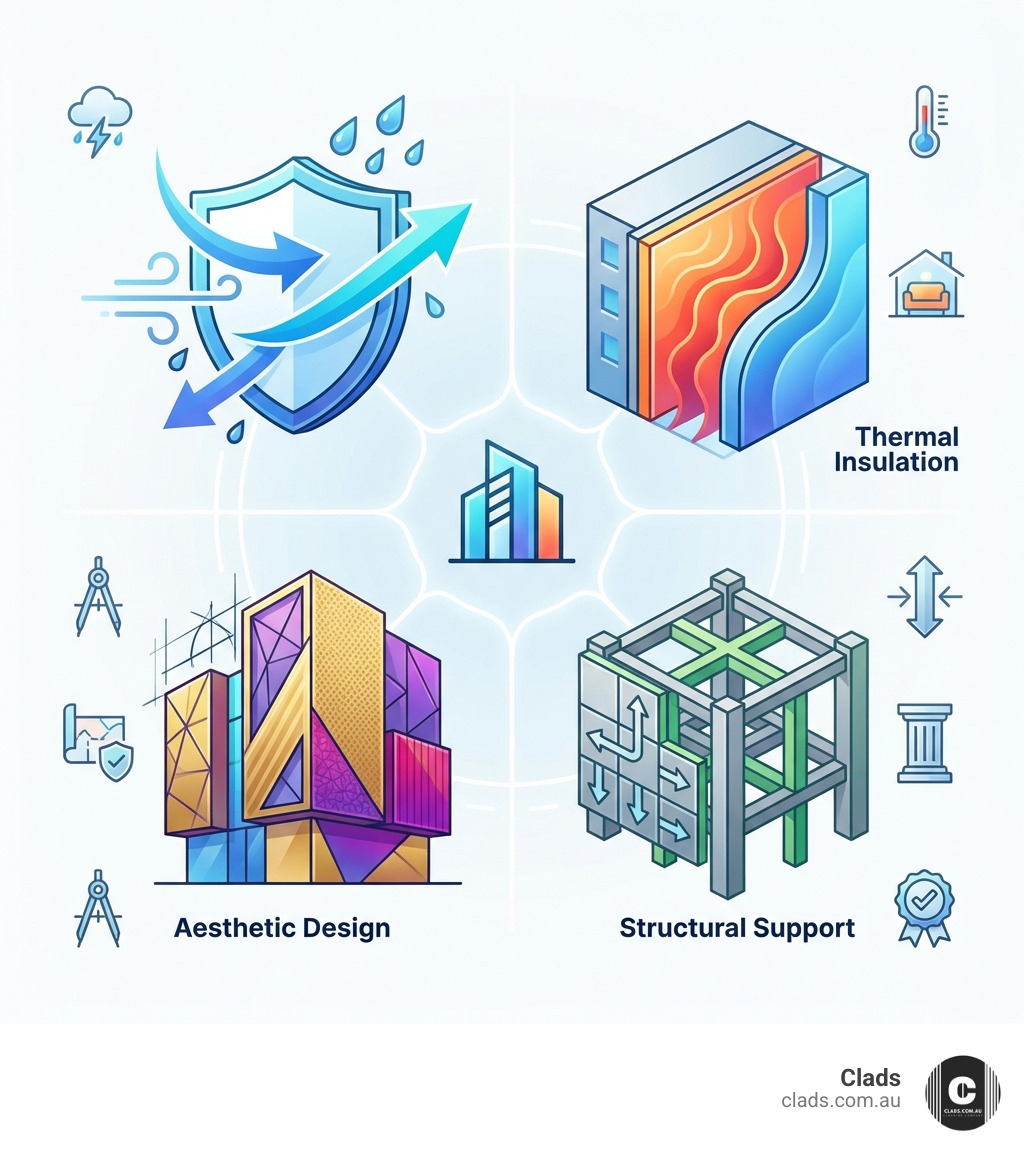
A facade is a building's first line of defence against harsh weather, protecting the structural framework from sun, rain, and wind. Beyond protection, a high-performance facade system offers several key benefits:
- Weather Protection: Safeguards the building's structure from moisture, UV radiation, and wind, extending its lifespan.
- Energy Efficiency: A well-designed facade with External Thermal Insulation reduces heat transfer, lowering heating and cooling costs and contributing to a more sustainable footprint.
- Acoustic Performance: Acts as a sound barrier, reducing noise pollution from outside for a quieter interior.
- Durability and Reduced Maintenance: High-quality materials reduce the need for frequent repairs and repainting, saving time and money. Our low-maintenance WPC cladding, for example, offers exceptional longevity.
- Aesthetic Value: The facade is the face of your building. A striking design significantly boosts curb appeal and property value.
- Inhabitant Comfort: By regulating temperature and noise, a superior facade creates a healthier and more comfortable indoor environment.
Main Categories: Ventilated vs. Non-Ventilated Systems
Facade systems are broadly categorised as ventilated or non-ventilated, each suited to different project requirements.
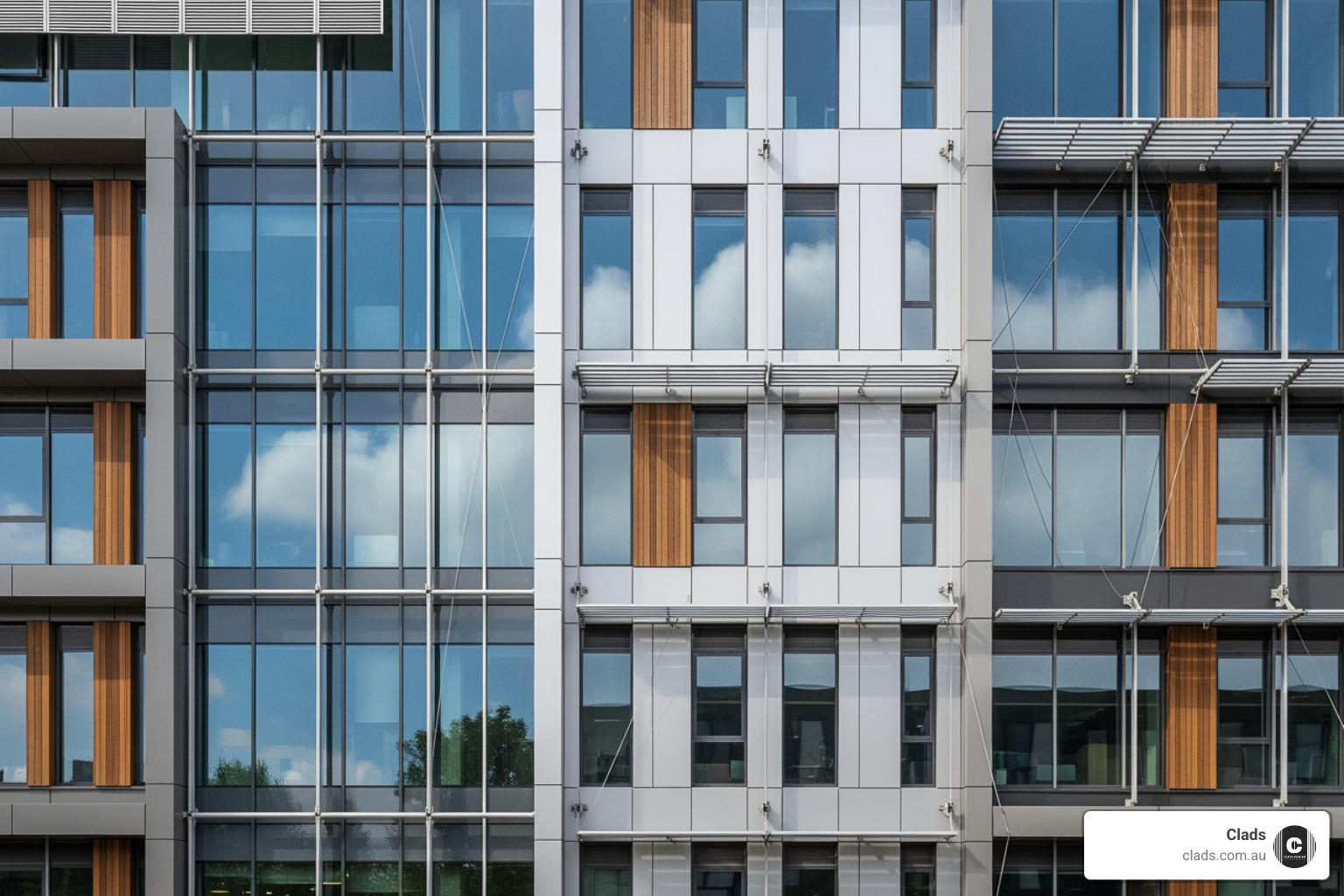
Ventilated Facade Systems (Rainscreen Cladding)
A rainscreen system consists of an outer cladding panel, an air cavity, and an insulation layer fixed to the structural wall. The continuous air gap is the key feature, creating a 'chimney effect' that allows for natural ventilation.
Benefits:
- Superior Thermal Performance: The air cavity helps dissipate heat in summer and retain it in winter, improving energy efficiency.
- Excellent Moisture Management: Any moisture that gets behind the cladding can evaporate or drain away, protecting the structural wall from water damage and condensation.
- Improved Durability: By protecting the underlying structure from moisture and temperature extremes, the building's lifespan is extended.
Non-Ventilated Facade Systems (Direct-Fix)
In these systems, the cladding material is attached directly to the building's substrate. This includes direct-fix cladding and External Thermal Insulation Composite Systems (ETICS), where insulation is fixed to the wall and covered with a protective finish.
Characteristics:
- Simplicity and Cost-Effectiveness: Generally simpler and faster to install, often with a lower initial cost.
- Good Insulation: ETICS, in particular, provide a continuous layer of insulation, reducing thermal bridges.
- Moisture Risk: Without a ventilated cavity, performance relies heavily on the integrity of the outer sealants. Any breach can trap moisture.
| Feature | Ventilated Rainscreen Systems | Non-Ventilated (Direct-Fix/ETI) Systems |
|---|---|---|
| Cost | Higher initial cost. | Generally lower initial cost. |
| Performance | Superior thermal and moisture management. | Good thermal performance; moisture management relies on seals. |
| Complexity | More complex installation. | Simpler installation. |
| Durability | Improved longevity due to structural protection. | Durability depends on sealant integrity. |
| Energy | Highly energy-efficient with dynamic thermal benefits. | Energy-efficient, but without dynamic air movement. |
| Maintenance | Lower long-term maintenance for the structure. | Maintenance focused on the outer layer and seals. |
Key Materials Used in External Facade Systems
The choice of material is pivotal to your project's appearance, durability, and maintenance needs. At Clads Australia, we focus on high-quality, low-maintenance options ideal for the Australian environment. For more ideas, see our guide to the best exterior wall cladding.
Wood Plastic Composite (WPC): WPC offers the aesthetic of timber without the high maintenance. It is durable, resistant to rot and pests, and does not require painting or sealing. Often made from recycled materials, it's a sustainable and DIY-friendly choice for residential and commercial projects.
Natural Stone Veneer: Natural stone provides a timeless, luxurious look. It is exceptionally durable, fire-resistant, and unique. Modern thin-stone veneers reduce weight, making them versatile for feature walls and entire buildings seeking a premium finish.
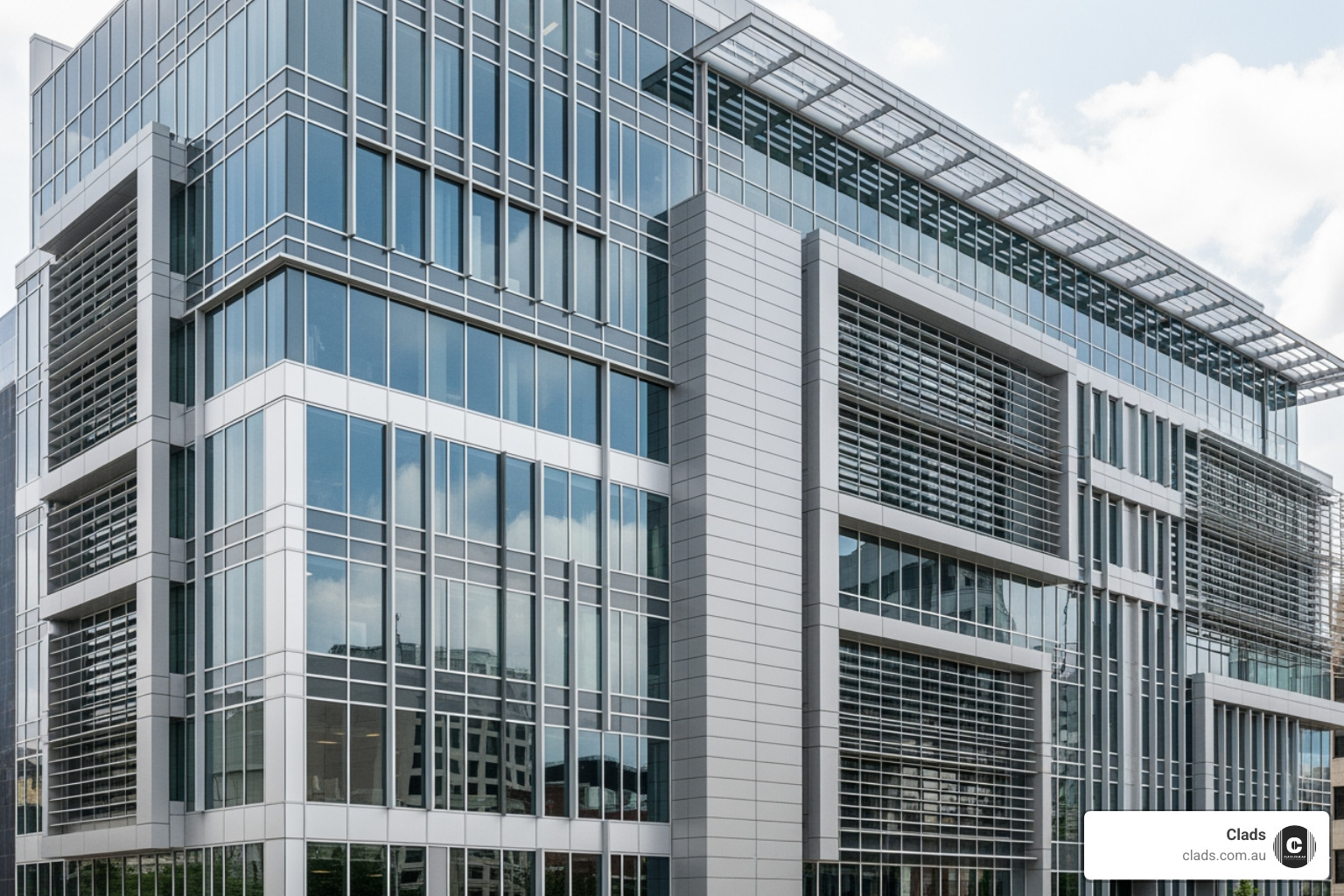
Aluminium Cladding: Lightweight, strong, and non-corrosive, aluminium is perfect for coastal areas and contemporary designs. It can be fabricated into complex shapes, offering great design flexibility. It is also fire-resistant and requires very little maintenance.
Cement Cladding: Fibre cement is renowned for its durability, stability, and high resistance to fire, pests, and moisture. It provides a clean, modern aesthetic and can be finished in a wide range of colours, making it a versatile choice for many applications.
Enhancing Sustainability and Energy Efficiency
A modern external facade system is fundamental to creating sustainable, energy-efficient buildings. By selecting the right system and materials, you can significantly reduce a building's environmental impact and operational costs.
Key sustainable benefits include:
- Reduced Energy Consumption: Ventilated facades and continuous insulation minimise thermal bridging, reducing the reliance on artificial heating and cooling.
- Sustainable Materials: Choosing materials with recycled content, like our WPC products, or those that are recyclable, lowers a building's embodied energy.
- Long Service Life: Durable materials like stone and aluminium last longer, reducing the resource consumption associated with replacement and repairs.
Selecting the Right External Facade System
Choosing the ideal facade involves balancing performance, aesthetics, budget, and local conditions.
- Climate Considerations: In Australia, UV resistance, moisture management (especially for coastal areas), and thermal performance are key. For bushfire-prone zones, select fire-resistant materials like cement or stone.
- Building Type: Residential projects often favour WPC and stone for their aesthetic appeal, while commercial buildings may use aluminium for its sleek look and large panel sizes.
- Budget and Lifecycle Cost: Look beyond the initial price. Low-maintenance materials like WPC and aluminium offer significant long-term savings. Our guide to cheap cladding options can help manage initial costs.
- Aesthetic Goals: The facade defines your building's character. Consider the desired look—be it the natural warmth of WPC, the timeless elegance of stone, or the clean lines of aluminium.
- Durability and Maintenance: Opt for materials built to withstand the elements with minimal upkeep. This is crucial for long-term value and owner satisfaction. Our guide on durable exterior cladding offers more insight.
- DIY-Friendliness: For homeowners, ease of installation is a major plus. We offer WPC cladding systems specifically designed for straightforward DIY installation.
Innovations and Design Integration
The world of facades is constantly evolving. Emerging trends include adaptive "smart" materials that respond to the environment and the use of 3D profiles and textured surfaces to create dynamic feature walls. These innovations allow architects to create tactile building envelopes that interact with light and shadow.
In modern design, digital tools like Building Information Modelling (BIM) are also essential. BIM objects and detailed technical documentation allow architects to precisely integrate facade systems into their models, ensuring performance, compliance, and structural integrity are planned from the start.
Conclusion: Cladding Your Project for Success
Choosing the right external facade system is a critical decision that impacts your project's longevity, performance, and visual appeal. As we've explored, these systems are much more than just a decorative shell; they are integral components that protect, insulate, and define a building's identity. From the energy-saving benefits of ventilated rainscreen cladding to the timeless elegance of natural stone or the low-maintenance practicality of WPC, the options available today are vast and exciting.
By understanding the interplay between materials, system types, and design intent, you can create a building that is not only beautiful but also resilient, energy-efficient, and built to last in the unique Australian climate. We believe in creating architectural aesthetics that deliver both immediate visual impact and long-term value, future-proofing your design and investment.
At Clads Australia, we are passionate about connecting you with high-quality, design-led cladding solutions. We pride ourselves on supplying trusted, low-maintenance, and DIY-friendly options that empower you to bring your vision to life.
Ready to explore the possibilities for your next project? Browse our extensive range of external cladding solutions or get in touch with our expert team. To see and feel the quality for yourself, request your free samples today and start bringing your vision to life. For any questions, contact us – we're here to help.