



Why WPC Cladding is the Smart Choice for Adelaide Homes

WPC cladding Adelaide homeowners are finding offers a compelling blend of natural timber aesthetics and modern composite durability. If you're searching for a low-maintenance, weather-resistant exterior finish that won't demand constant repainting or sealing, you're in the right place.
Clads Australia is based in Sunshine, Victoria, but we work with architects, builders, and homeowners right across the country, including metropolitan and regional Adelaide. Our national delivery network and design support mean you can source high-quality WPC cladding from a trusted Australian supplier, even if your project is interstate.
Quick Answer: Where to Find WPC Cladding in Adelaide
- Supplier: Clads Australia delivers nationwide, including Adelaide metro and regional areas
- Typical Sizes: Panels range from 2200mm to 5400mm in length, approximately 220mm wide
- Colour Options: Charcoal, Teak, Walnut, Grey, Antique, and more
- Price Range: Visit the WPC Cladding collection for current pricing
- Lead Time: Contact us for delivery schedules; we can also suggest experienced local installers
- Warranty: Up to 20-25 years on quality products
Wood Plastic Composite, or WPC, combines natural wood fibres with recycled plastic polymers to create a building material that mimics the warmth of timber without the drawbacks. Unlike traditional wood cladding that cracks, warps, and fades under Adelaide's intense UV rays and seasonal weather shifts, WPC maintains its appearance and structural integrity year after year. The composite construction makes it impervious to termites, rot, and moisture damage, three of the biggest enemies of conventional timber in Australian conditions.
The appeal goes beyond durability alone. WPC cladding delivers genuine architectural aesthetics, with realistic woodgrain textures and a spectrum of contemporary colours that suit both modern minimalist designs and classic Australian homes. Whether you're renovating a heritage cottage in the Adelaide Hills or building a new coastal property, the design versatility allows you to achieve the look you want without compromising on performance.
Adelaide's climate presents unique challenges for exterior materials. Hot, dry summers with high UV exposure can bleach and crack timber, while winter rains test moisture resistance. WPC cladding from a design-led specialist like Clads Australia handles both extremes with ease, requiring nothing more than an occasional wash to look pristine. There's no annual sanding, staining, or sealing, which means you save both time and ongoing maintenance costs.
I'm Lawrismin Gomez, Sales Manager at Clads Australia, and over my three years specialising in WPC cladding Adelaide projects, I've helped hundreds of homeowners and builders select the perfect profiles for their properties. My focus is matching the right product specifications to each project's aesthetic goals and budget, ensuring you get lasting value from your investment.
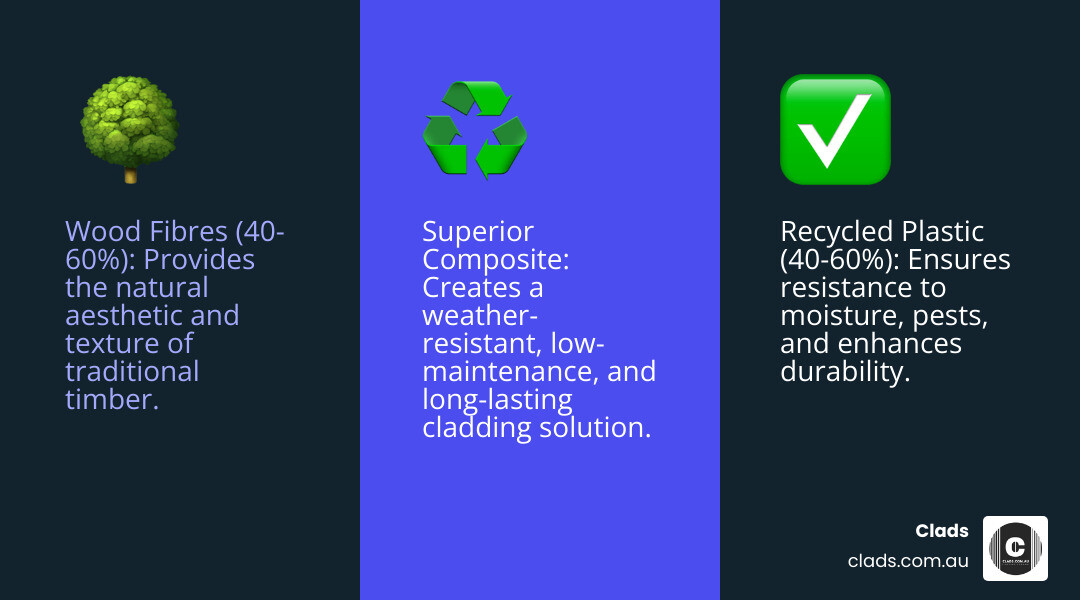
WPC cladding Adelaide vocab explained:
Your Complete Guide to WPC Cladding Adelaide

This section will cover the core details Adelaide homeowners and builders need to know, from performance benefits to design possibilities and cost considerations. We aim to provide a comprehensive understanding of why WPC cladding is an excellent investment for properties across South Australia.
WPC vs. Traditional Timber in Adelaide's Climate
Choosing between WPC and traditional timber cladding for your Adelaide property involves weighing several key factors. While timber offers a classic appeal, its suitability for Adelaide's demanding climate often comes with significant trade-offs in terms of maintenance and longevity.
Here's a comparison to highlight why WPC cladding is often the superior choice for our local environment:
| Attribute | WPC Cladding | Traditional Timber Cladding |
|---|---|---|
| Maintenance | Very low; no painting, oiling, or sealing required | High; requires regular sanding, staining, or painting |
| Durability (UV) | High; engineered to resist fading and degradation | Moderate; prone to fading, cracking, and weathering |
| Durability (Rain) | High; waterproof, resistant to moisture absorption | Moderate; susceptible to rot, mould, and warping |
| Rot & Pests | Excellent; impervious to rot, termites, and insects | Low; vulnerable to rot, fungal decay, and pest infestations |
| Long-Term Cost | Lower; minimal ongoing maintenance expenses | Higher; significant costs for regular upkeep and repairs |
| Colour Stability | High; consistent colour retention over time | Low; colours can fade and change significantly |
This comparison makes it clear that while timber can be beautiful, the practicalities of WPC cladding offer a much more resilient and hassle-free solution for Adelaide homes. Our products offer a 20 to 25-year warranty, providing peace of mind that your cladding will maintain its integrity and appearance for decades, unlike timber which can require extensive work every few years.
Aesthetic Versatility: Designing with WPC Cladding
One of the most exciting aspects of WPC cladding Adelaide homeowners can accept is its incredible aesthetic versatility. We understand that design is paramount, and our WPC solutions are crafted to meet diverse architectural visions, from sleek modern facades to warm, traditional exteriors.

Our range includes a vast spectrum of colours, textures, and finishes. You can find rich woodgrain patterns that perfectly mimic natural timber, or opt for contemporary solid colours like Charcoal, Silver Grey, Teak, Walnut, Antique, Black, Coffee, and Smoke Grey. This extensive palette allows for precise colour matching to your existing architectural elements or to create a striking contrast. The textures available also add depth and character, from smooth, refined surfaces to more rustic, brushed finishes. An insider tip for architects and designers: using textured profiles can add incredible depth and visual interest to a facade, creating dynamic shadow lines that shift with the light.
WPC cladding isn't just for exteriors; it's also a fantastic choice for interior feature walls, bringing the warmth of wood indoors without the associated maintenance. Imagine a stunning TV wall in your living room or a unique accent in a commercial space like a bar or restaurant.
For exterior design, the possibilities are endless. Consider vertical layouts to create a sense of height and grandeur, or horizontal installations for a wider, more expansive appearance. You can experiment with geometric patterns for a contemporary feel, or stick to classic woodgrain for a timeless look. Light and airy colours work wonderfully for coastal properties, while earthy tones improve natural beauty. For more inspiration, dig into Beyond Wood: Exploring WPC Wall Panel Exterior Design Options and Transform Your Space: Everything You Need to Know About WPC Wall Panels.
Understanding the Cost of WPC Wall Cladding in Adelaide
When budgeting for your WPC cladding Adelaide project, it's important to look beyond the initial purchase price and consider the long-term value. Several factors influence the cost of WPC wall cladding, but its inherent benefits often lead to significant savings over time.
The price of WPC cladding is primarily influenced by the material composition and quality, with higher-grade composites offering improved durability and aesthetic retention. Board dimensions and profiles also play a role; larger panels or more intricate profiles may have different price points. The finishes and textures chosen can also impact the cost, as some advanced finishing techniques provide superior UV resistance or a more realistic wood appearance. Finally, don't forget to factor in necessary accessories and fasteners, which are crucial for a professional and secure installation.
While the upfront cost of WPC cladding might be comparable to or slightly higher than some traditional timber options, the long-term savings are where it truly shines. As we've discussed, WPC requires virtually no maintenance—no annual painting, staining, or sealing. This eliminates recurring labour and material costs associated with timber upkeep, which can quickly add up over a few years. WPC's resistance to rot, pests, and weathering also means fewer repair and replacement expenses.
Investing in quality WPC cladding means avoiding frequent replacement costs and enjoying a beautiful, low-maintenance facade for decades. For the most up-to-date pricing specific to our high-quality products, we encourage you to visit our WPC Cladding collection directly.
From Selection to Installation: Your WPC Cladding Project
This final section provides actionable advice on sourcing your materials and completing your project, ensuring a professional finish that lasts. We're here to support you every step of the way, from choosing the right panels to connecting you with skilled installers for your WPC cladding Adelaide project.
Finding a Supplier and Choosing the Right Panels
When choosing your panels, consider the sizing and dimensions carefully. Our WPC cladding panels are typically available in various lengths, often ranging from 2.2 metres to 5.4 metres, with widths around 220 millimetres. These dimensions allow for efficient installation and minimal waste, depending on your project's scale. Selecting the right profile is also crucial for achieving your desired design aesthetic, whether you prefer a sleek, modern look or a more traditional timber appearance.
An essential insider tip we always share is the importance of getting large samples. Photos on a screen can only tell you so much. Holding a large sample allows you to truly appreciate the colour, texture, and profile in different lighting conditions and against your existing architectural elements. This ensures you make an informed decision that you'll be happy with for years to come.
To explore the full range of options and find the perfect fit for your project, we invite you to Explore our full External Cladding range and browse our comprehensive selection of View our Accessories for installation.
A Guide to WPC Cladding Installation
Installing WPC wall cladding can be a rewarding DIY project for those with some experience and the right tools. Our WPC panels are designed with user-friendly features, such as tongue-and-groove systems, to simplify the process.
Here's a general overview of the key installation steps:
- Wall Preparation: Ensure your wall surface is clean, dry, flat, and level. This might involve cleaning, patching, or installing battens to create a smooth, even substrate for the cladding. For some applications, WPC cladding can be fixed directly to masonry or rendered walls.
- Cutting Panels: WPC panels can be cut using standard woodworking tools like a mitre saw for precise cuts and a circular saw for lengthwise cuts. Always use a new fine-tooth blade and support both sides of the panel to ensure clean edges. Applying masking tape to the cut line can also help prevent chipping.
- Starter Rails: Begin by attaching a starter rail or trim to the base of your installation area, ensuring it is perfectly level.
- Panel Installation: Our WPC cladding systems often utilise hidden fastener systems, such as clips or screws, that secure the panels to the battens or directly to the wall, maintaining a clean, seamless look. Panels are then typically fitted together using a tongue-and-groove method, ensuring a tight and secure fit. We recommend staggering joins between panels for both structural integrity and a more visually appealing finish.
- Finishing Touches: Complete your installation with corner pieces, trims, and sealants where necessary. These elements not only provide a polished look but also protect the edges of the cladding.
For a detailed walkthrough, especially for internal applications, our guide on Mastering Internal WPC Panel Installation offers valuable insights. You can also find visual guides and project inspiration on the Clads Australia YouTube channel. While we at Clads Australia supply these high-quality materials, we do not provide installation services ourselves. However, for Adelaide projects we can suggest experienced local installers who are familiar with our systems, helping you achieve a professional result.
Conclusion
Choosing WPC cladding for your home or commercial property in Adelaide is a decision that blends style, durability, and practicality. With its exceptional resistance to our harsh climate, minimal maintenance requirements, and vast design flexibility, WPC offers a smart, long-term solution that improves curb appeal and protects your investment.
We are dedicated to being your design-led cladding specialists, providing cladding that delivers impact and longevity for projects across Adelaide and the rest of Australia. To start designing your project, get in touch with our expert team at Clads Australia or order your free samples today.