



Why Exterior Building Cladding Systems Matter More Than You Think
Exterior building cladding systems are the protective and aesthetic layers attached to a building's structural frame. While many focus on looks, these systems are a critical interface between your home and the elements, playing a complex role in protecting your investment, managing moisture, providing thermal insulation, and ensuring long-term durability.
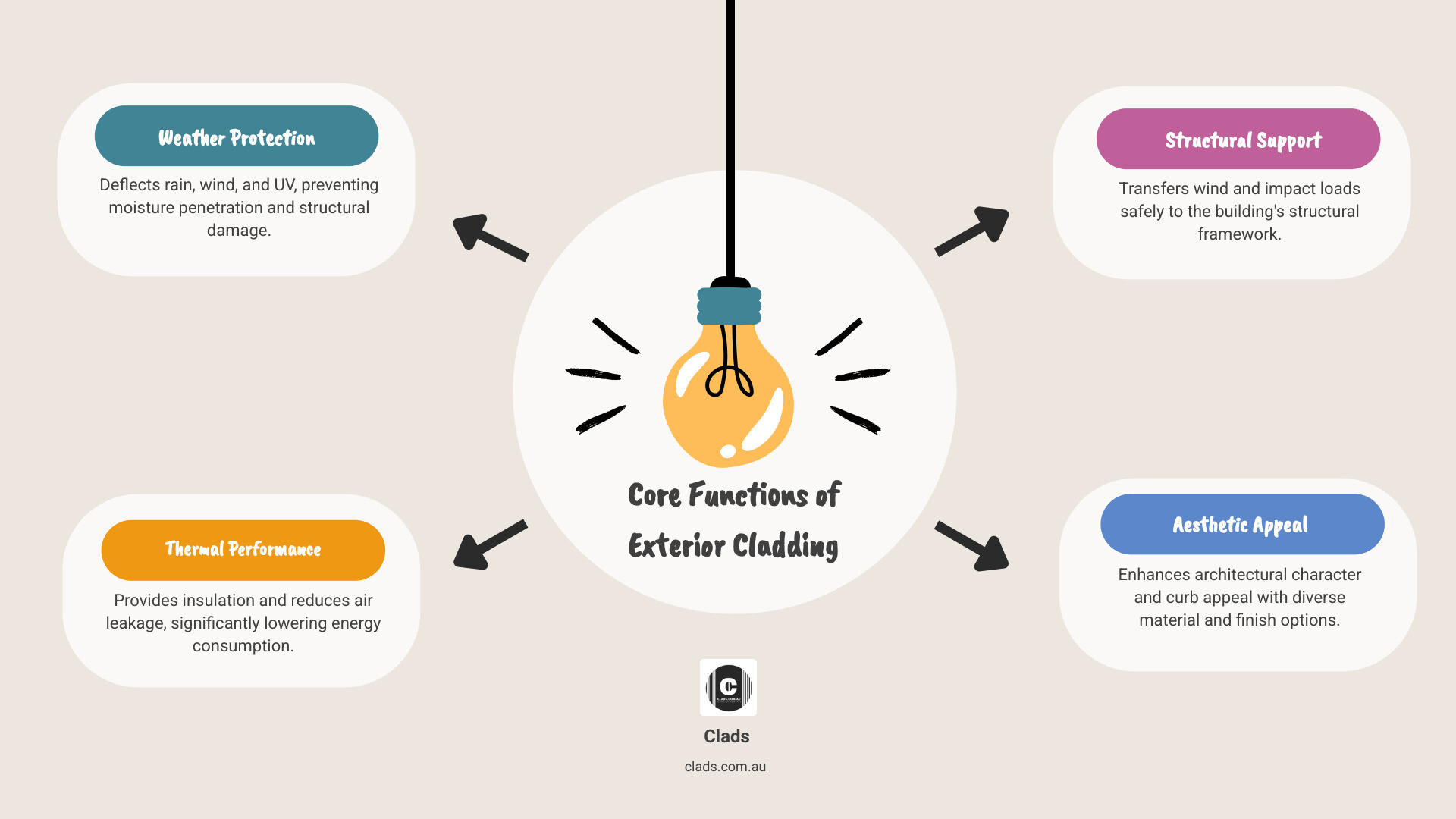
High-performance cladding systems are engineered to:
- Protect the structure from rain, wind, and UV radiation
- Insulate the building to reduce energy costs
- Manage moisture to prevent rot and mould
- Transfer wind and impact loads to the structural frame
- Improve the building's architectural character
- Resist fire, crucial in many parts of Australia
- Minimise air leakage for improved energy efficiency
For homeowners tired of the constant upkeep of traditional timber, a high-performance system can save thousands on energy bills, prevent costly moisture damage, and maintain its appearance for decades with minimal maintenance.
I'm Suresh Babu, a cladding specialist at Clads Australia. I've helped countless builders, architects, and homeowners select solutions that balance aesthetic vision with real-world performance. This guide will explore the science behind high-performance cladding, compare popular materials, and offer practical insights to help you make an informed decision that protects your investment for years to come.
Find more about exterior building cladding systems:
A Deep Dive into High-Performance Exterior Building Cladding Systems
A high-performance exterior building cladding system is more than a decorative skin; it's an integrated shield designed to protect, insulate, and improve a building's longevity. The key lies in building science, particularly moisture management, which is crucial in Australia's diverse climates.
Effective systems follow the "Four D's" principle to prevent water from causing rot, mould, and structural damage:
- Deflection: The first line of defence, where the cladding surface resists and sheds the bulk of rain and wind.
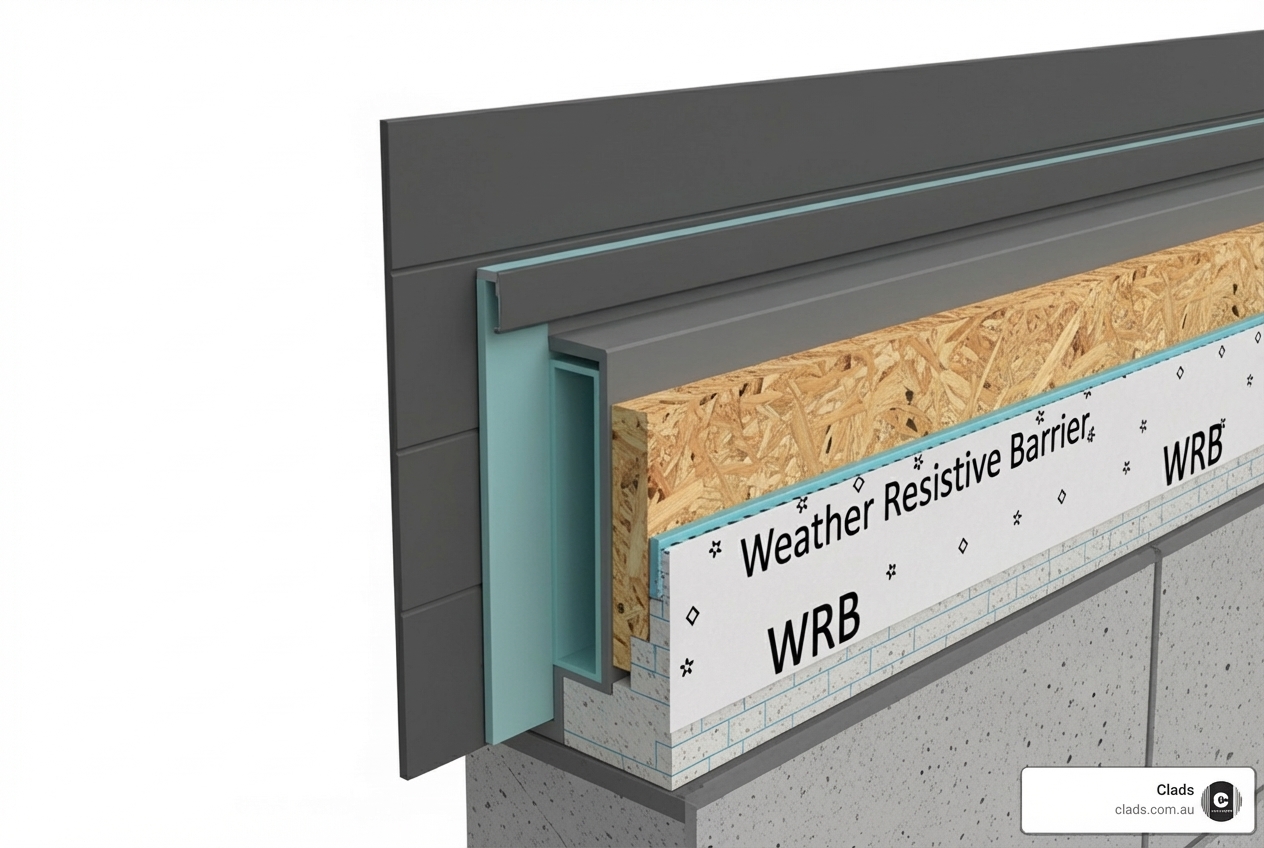
- Drainage: Since no system is perfectly sealed, a drainage plane or cavity behind the cladding allows any water that gets past to drain away safely.
- Drying: A ventilated cavity promotes airflow, allowing the wall assembly to dry out any residual moisture.
- Durability: The system must withstand UV rays, temperature cycles, and moisture over time to maintain its integrity and performance without frequent repairs.
Together, these principles create a robust building envelope that is sustainable, energy-efficient, and safe.
To dig deeper into the fundamentals of cladding, explore The Clad Truth: Everything You Need to Know About Cladded and Cladding.
Choosing Your Armour: A Guide to Cladding Materials
Selecting the right material is pivotal, influencing aesthetics, performance, and long-term maintenance. At Clads Australia, we focus on materials offering exceptional durability and design versatility for Australian conditions.
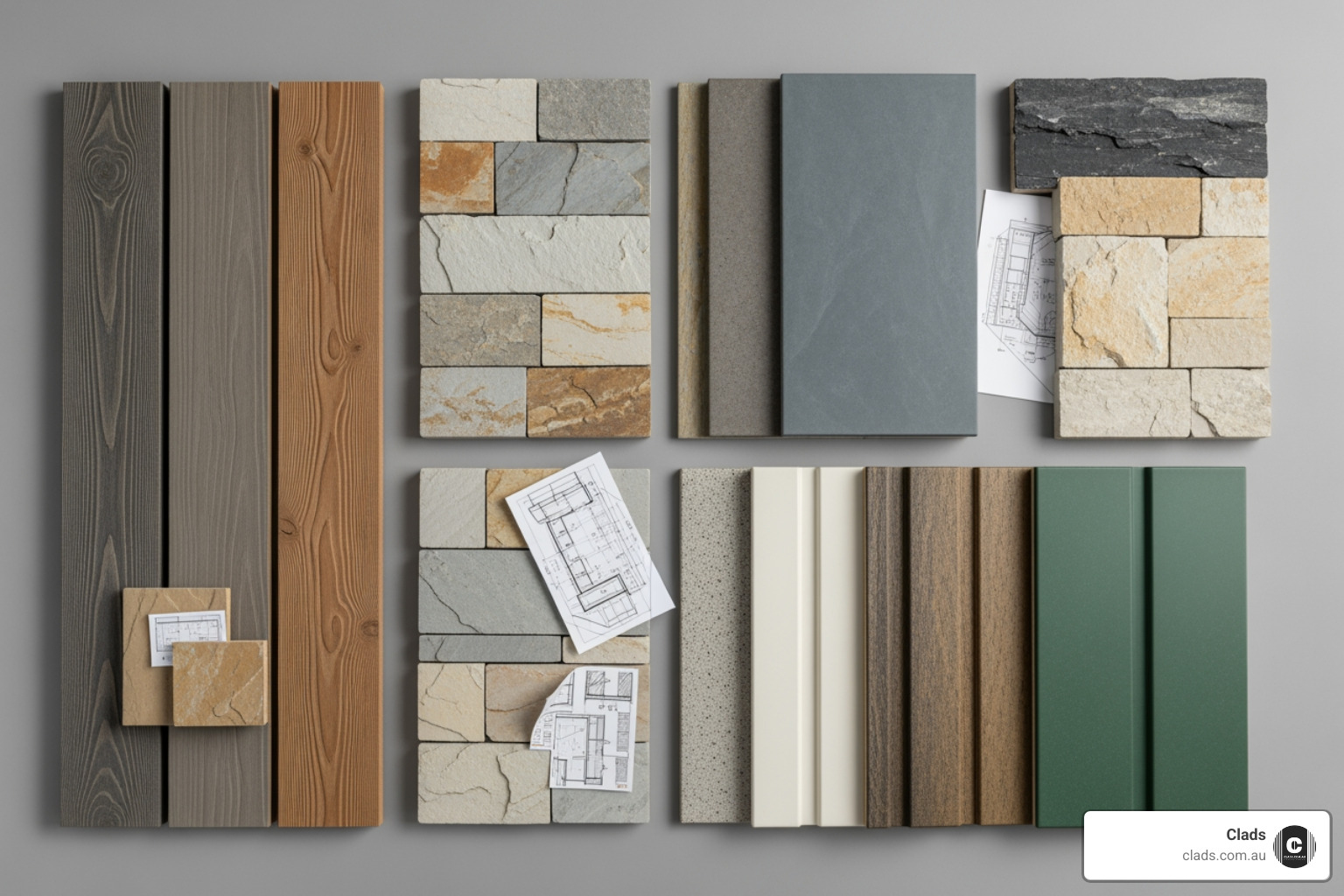
Wood Plastic Composite (WPC): WPC cladding offers the timeless appeal of timber without the high maintenance. It is highly resistant to moisture, rot, and decay, making it a superior, low-maintenance choice compared to traditional wood. Benefits: Low maintenance, high rot/moisture resistance, durable, often made from recycled materials. Drawbacks: Higher initial cost than some materials. Explore our WPC Cladding collection.
Fibre Cement: A versatile and robust material engineered for superior weather protection and durability. It can mimic the look of shake, stone, or concrete with greater fire safety. Modern clip-in systems simplify installation and improve performance. Benefits: Excellent fire resistance (up to BAL-FZ), highly durable, versatile aesthetics, low maintenance. Drawbacks: Can be heavy and requires careful handling. Learn more in A Comprehensive Guide to Cement Cladding.
Stone Veneer: For the luxurious look of stone without the weight and cost, fibre cement stone cladding is an excellent alternative. It allows for faster installation and creates a beautiful, durable finish. Benefits: High-end aesthetic, lighter than full stone, faster installation, durable. Drawbacks: Can be more expensive than other options and requires skilled installation for a natural look. Understand the costs in The Price of Perfection: Your Guide to Stone Cladding Expenses.
Aluminium Cladding: Aluminium offers a sleek, modern, and highly durable option. It is lightweight, corrosion-resistant, and allows for creative and customisable façades. Benefits: Very high durability, excellent corrosion resistance, lightweight, wide range of finishes, 100% recyclable. Drawbacks: Higher embodied energy, can be prone to denting. Find our Aluminium Cladding collection.
Here’s a quick comparison of these materials:
| Attribute | WPC Cladding | Fibre Cement Cladding | Stone Veneer (Fibre Cement) | Aluminium Cladding |
|---|---|---|---|---|
| Durability | High (resistant to rot, insects, moisture) | Very High (dimensionally stable, weather-resistant) | High (weather-resistant, long-lasting finish) | Very High (corrosion-resistant, lightweight) |
| Maintenance | Very Low (no painting/sealing) | Low (may require occasional cleaning/recoating) | Low (occasional cleaning) | Very Low (occasional cleaning) |
| Aesthetics | Realistic wood look/feel | Versatile (mimics wood, stone, concrete) | Authentic stone appearance | Sleek, modern, customisable |
| Fire Resistance | Moderate (check specific ratings) | Excellent (up to BAL-FZ) | Good (check specific ratings) | Good (non-combustible, check specific ratings) |
The Science Behind the Shield: Key Performance Considerations
Beyond material choice, the system's design and installation are critical for performance.
Rainscreen Systems and Moisture Management A rainscreen is a high-performance design that incorporates a ventilated cavity between the cladding and the wall's water-resistive barrier (WRB). This gap allows any water that penetrates the cladding to drain away and lets the wall dry, preventing moisture damage. The WRB (or building wrap) is the primary defence against air and water, and is essential for any high-performance system.
Open-joint rainscreen systems deliberately leave small gaps between boards or panels to create strong airflow and shadow lines, while closed-joint systems use shiplap or interlocking profiles to visually close the joints while still allowing the cavity behind to ventilate.
Energy Efficiency Cladding is vital for energy efficiency. By minimising air leakage and allowing for continuous insulation (CI), cladding systems reduce thermal bridging—heat transfer through structural elements like studs. Wrapping the exterior in insulation significantly reduces heat loss or gain, leading to substantial savings on energy costs. For more on this, read Clad and Cozy: Everything You Need to Know About External Thermal Insulation.
Factors Influencing Your Cladding Choice
Choosing the ideal system involves balancing practical needs with aesthetic goals.
Climate Considerations Australia's diverse climate demands careful selection. In Victoria, this means considering:
- UV Resistance: High UV stability (found in quality WPC and aluminium) prevents fading.
- Coastal Conditions: Corrosion-resistant materials like aluminium and WPC are ideal for coastal areas with salt spray.
- Bushfire-Prone Areas: Fire resistance is non-negotiable in Australia's bushfire-prone areas. A material's Bushfire Attack Level (BAL) rating is critical, and you must always check it to ensure compliance with local building codes. Materials like fibre cement are often preferred as they can achieve high ratings such as BAL-FZ, offering peace of mind in high-risk zones. For more on durable solutions, see Built to Last: Choosing the Best Durable Exterior Cladding for Your Home.
Building Type and Architectural Style Whether for a home or a commercial project, cladding defines the architectural style. Residential projects often favour the aesthetics and low maintenance of WPC and fibre cement. Commercial builds may require the durability and customisation of aluminium. Modern systems allow you to mix materials, colours, and textures to create a unique façade. For inspiration, check out Exterior Cladding Ideas That Will Instantly Elevate Your Home’s Look.
Sustainability Environmental impact is a growing consideration. Look for materials with recycled content (like WPC), high recyclability (like aluminium), and longevity. Durable cladding that lasts for decades reduces waste and conserves resources in the long run.
From Factory to Façade: Installation and Maintenance Insights
The final stage involves proper installation and understanding long-term maintenance.
Installation Methods Modern systems are far more efficient to install than traditional materials. Many of our products, like WPC and fibre cement, feature DIY-friendly clip-in systems that speed up installation and ensure a secure finish. Always use high-quality fasteners, such as stainless steel, to prevent rust and ensure longevity, especially in coastal areas. For more on this, read Screw It: Why Stainless Steel is Your Best Bet.
Prefabricated cladding panels and thoughtful layout planning can further reduce waste on site, improve quality control, and shorten installation time, whether you are a builder or an experienced DIY renovator.
Maintenance Requirements A key advantage of modern cladding is minimal upkeep. Materials like WPC and fibre cement resist fading, moisture, and pests, and require no regular painting or sealing. This contrasts sharply with traditional timber, which needs constant maintenance to prevent deterioration. The long-term savings in time and money are significant. For DIY advice, see our Transform Your Home: The Complete DIY External Cladding Handbook.
Conclusion: Creating Architectural Aesthetics That Last
We've explored how exterior building cladding systems are far more than a cosmetic finish. They are your home's first line of defence, managing moisture, providing insulation, and resisting fire. The science behind rainscreen systems and continuous insulation is key to the high performance that modern Australian homes demand.
The choice of material—from the low-maintenance elegance of WPC to the durable versatility of fibre cement and aluminium—is a balance of climate, style, and sustainability. What unites the solutions at Clads Australia is a commitment to longevity and reduced upkeep, freeing you from the hassles of traditional materials.
Choosing a high-performance system is a critical decision that impacts your building's resilience, energy use, acoustic comfort, and visual identity. By understanding the interplay between materials, design, and installation, you can create a façade that not only looks exceptional but is built to last. Modern cladding offers superior durability and lower maintenance, protecting your investment for years to come.
As design-led cladding specialists, the team at Clads Australia provides a curated range of trusted, low-maintenance, and high-performance cladding solutions—including external WPC, fibre cement, stone, aluminium, internal feature linings, acoustic panels, and accessories—to help architects, builders, and homeowners create Architectural Aesthetics that deliver both impact and longevity. Clads supplies the products and expert guidance, and can connect you with local installers upon request if you need support bringing your design to life.
Ready to transform your project with cladding that delivers Impact and Longevity? Contact the expert team at Clads Australia today for advice on your specific needs. To see and feel the quality for yourself, and to compare colours, textures, and profiles at scale, order your free samples and start your design journey.
Frequently Asked Questions (FAQs)
Q1: What are the primary functions of exterior building cladding systems? A1: Exterior building cladding systems primarily protect the structure from external elements (rain, wind, UV), provide thermal insulation, manage moisture through deflection, drainage, and drying, transfer wind and impact loads, improve aesthetic appeal, and minimise air leakage for energy efficiency. They are crucial for a building's longevity and performance.
Q2: What are the "Four D's" of high-performance cladding, and why are they important? A2: The "Four D's" stand for Deflection, Drainage, Drying, and Durability. They are crucial for effective moisture management and overall system performance. Deflection prevents water entry, drainage removes any water that gets in, drying evaporates residual moisture, and durability ensures the system withstands environmental stresses over time, preventing issues like rot and mould.
Q3: How do modern cladding materials like WPC and fibre cement compare to traditional timber for Australian homes? A3: Modern materials like WPC and fibre cement offer significant advantages over traditional timber. They are highly resistant to rot, moisture, and pests, require significantly less maintenance (no constant painting or sealing), and often come with superior fire resistance ratings (like BAL-FZ for fibre cement). They also offer diverse aesthetics, mimicking the look of wood, stone, or concrete without timber's vulnerabilities.
Q4: What is a rainscreen system, and why is it beneficial for exterior cladding? A4: A rainscreen system incorporates a ventilated cavity between the outer cladding layer and the building's wall structure. This cavity allows any moisture that penetrates the outer cladding to drain away and evaporate, preventing it from reaching the structural wall. It's beneficial because it improves moisture management, improves thermal performance, and increases the overall durability of the wall assembly.
Q5: How can exterior cladding contribute to a building's energy efficiency? A5: Exterior cladding contributes to energy efficiency by facilitating continuous insulation (reducing thermal bridging), minimising air leakage, and providing an airtight building envelope. These features help regulate internal temperatures, reducing the demand on heating and cooling systems, and thus lowering energy consumption and costs.
Q6: Are Clads Australia's cladding products suitable for DIY installation? A6: Yes, some of our cladding products, particularly our WPC cladding, are designed to be DIY-friendly. They often feature intuitive clip-in systems and straightforward installation methods, making them accessible for homeowners who want to undertake their own projects. However, for more complex installations or projects in bushfire-prone or coastal zones, we always recommend consulting with experienced builders or installers.
Q7: How do I choose the right cladding material for my home in Victoria, Australia? A7: When choosing cladding for your home in Victoria, consider your local climate (e.g., coastal exposure, bushfire risk), your home's architectural style, your desired aesthetic, and your maintenance preferences. Materials like fibre cement offer excellent fire resistance for BAL areas, while WPC is ideal for low-maintenance wood looks. Aluminium is great for modern aesthetics and durability. We recommend getting large samples to see colours and textures in your natural light and discussing your project with our experts to find the best fit.
Q8: Does cladding only apply to exteriors, or can it be used inside as well? A8: Cladding is not just for exteriors. Many designers and homeowners use internal cladding and acoustic panels to create feature walls, improve sound quality, and tie interior spaces to the exterior façade. Clads Australia offers design-led internal and acoustic solutions that complement our external ranges, helping you create a cohesive, high-performance envelope inside and out.