



What Are Composite Wall Panels and Why Are They Worth It?

Composite wall panels are engineered building materials made by combining recycled wood fibres with high-density polyethylene (HDPE) plastics to create a surface that looks like timber but performs far better over time. If you are weighing up your options, here is a quick snapshot of what makes them stand out:
| Feature | Composite Wall Panels | Traditional Timber |
|---|---|---|
| Maintenance required | Minimal (wipe clean) | High (sand, oil, paint) |
| Rot and insect resistance | Yes | No |
| UV and fade resistance | Yes (co-extruded cap) | Limited |
| Fire-retardant options | Available | Rare |
| Recycled content | Up to 95% | None |
| Typical service life | 15 to 25 years | Variable, often less |
Whether you are renovating a tired exterior or designing a feature wall indoors, composite panels offer a durable, low-maintenance alternative that holds its looks season after season. They are available in a wide range of profiles, colours, and finishes, from warm timber tones to bold modern greys, and they suit everything from residential facades to commercial fitouts.
This guide walks through the full picture, covering materials, applications, installation, sustainability, and how to choose the right panel for your specific project. If you have already decided on composites and want to browse options, the WPC cladding collection at Clads Australia is a solid place to start.
I'm Suresh Babu, and with years of experience in the Australian building supply industry, I have helped builders, architects, and homeowners find the right product for projects of every scale. At Clads Australia, we pride ourselves on being The Design-Led Cladding Specialists, and my goal is to simplify the selection process so you can achieve professional results on every project. Let's dig into everything you need to know to make a confident choice.
Composite wall panels vocab explained:
Understanding the Science Behind Composite Wall Panels
Composite wall panels are engineered to give you a timber-style aesthetic with far greater dimensional stability and weather resistance. Most WPC (wood-plastic composite) panels are manufactured from a blend of recycled wood fibres and HDPE plastics (high-density polyethylene), plus a small percentage of bonding agents and UV inhibitors. That mix is melted and formed through high-heat extrusion to create a dense core that resists moisture uptake, helping reduce common timber issues like warping, splintering, and biological decay.
For harsh Australian exposure, co-extruded composite wall panels are often the premium choice. Co-extrusion adds a protective outer “cap” (shield layer) fused to the core during manufacturing, improving resistance to staining, surface wear, and UV-driven colour change. If you are comparing profiles and finishes, the WPC cladding collection is a practical place to start because it lets you assess colour tones, textures, and system components as a whole.
Fabrication and panel geometry also influence the final finish. Many systems use tongue-and-groove edges or precision routing to achieve consistent spacing, predictable expansion behaviour, and cleaner joins, especially around corners and openings. If you want a deeper technical breakdown of how WPC is produced and why it performs so well in cladding applications, see the definitive guide to WPC cladding.
Versatile Applications for Internal and External Cladding
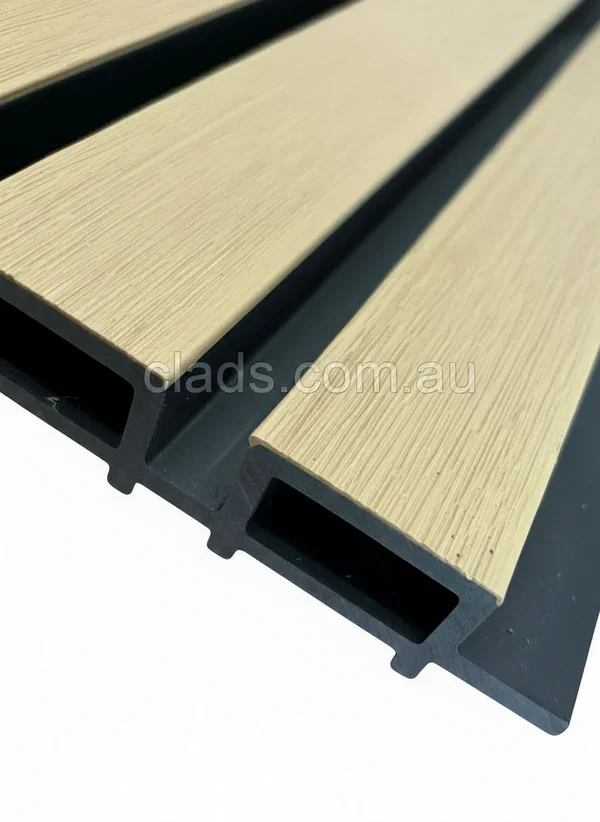
The adaptability of composite wall panels allows them to transition effortlessly from rugged outdoor environments to sophisticated indoor spaces. For exteriors, outdoor composite wall panels are designed to withstand the intense Australian sun and heavy seasonal rain, making them ideal for residential facades, garden walls, and pool areas. Internally, they are used to create depth and texture, often replacing traditional wallpaper or paint with a more durable, 3D woodgrain finish that adds immediate warmth to a room.
Exploring Interior Composite Wall Panels
Interior design has seen a massive shift toward "texture-first" aesthetics, and composite wall panels are leading the charge in modern Australian homes. Unlike traditional materials, these panels provide a tactile woodgrain finish that adds immediate depth to living rooms, bedrooms, and home offices. They are particularly popular for creating feature walls that serve as a focal point for the entire interior design scheme. Because they are so durable, they are also an excellent choice for commercial fitouts where walls need to withstand constant traffic.
A major trend within interior applications is the use of internal acoustic panels. These panels are designed with a specific slat profile that helps trap sound waves, reducing echo and improving the overall sound quality of a space. This makes them a "must-have" for home theatres or open-plan living areas where noise can often bounce off hard surfaces. To understand the full potential of these interior upgrades, check out our article on everything you need to know about WPC wall panels.
Long-Term Value of Exterior Composite Wall Panels
When used externally, these panels act as a protective skin for the building, contributing to better thermal insulation and overall energy efficiency. The benefits of wood-plastic composite include a significant reduction in lifetime maintenance costs, as they never require the sanding, oiling, or painting associated with timber. This "set and forget" nature is a primary reason why architects and builders increasingly specify composite solutions for high-exposure projects.
In regions with unique environmental challenges, such as South Australia, WPC cladding in Adelaide has become a popular choice for homeowners looking to protect their properties from coastal salt spray and extreme temperature fluctuations. Composite panels remain dimensionally stable, meaning they won't cup or twist over time. This ensures your home looks just as good ten years from now as it did on the day of installation, providing peace of mind and protecting your property value.
Performance Metrics: Durability, Fire Safety, and Sustainability
Composite wall panels are chosen for consistent, measurable performance in exterior and interior environments, particularly where timber maintenance is a risk. In practice, the big wins are durability (rot and insect resistance), stable appearance in UV exposure, and predictable movement when installed correctly with appropriate clearances and airflow.
For fire safety, it is essential to select products based on project requirements and verified testing documentation, then confirm suitability with your designer, certifier, or builder. Many composite wall panel systems are available with fire-retardant options, but performance varies by product, wall build-up, and application, so the safest approach is to match the exact panel and system to your compliance pathway before purchase. In Australia, relevant standards include AS1530.3 for simultaneous determination of ignitability, flame propagation, heat release, and smoke release, so always verify that your chosen product has been tested accordingly.
Sustainability is another major reason specifiers consider composite cladding. Many WPC panels use a high percentage of recycled inputs (often reclaimed timber fibres and recycled polymers), helping reduce demand for virgin timber and divert waste from landfill. Choosing long-life, low-maintenance cladding also supports sustainability goals by lowering repainting cycles and reducing ongoing material consumption over the building's service life. For visual inspiration and to see how these panels perform in real-world installations, the Clads Australia YouTube channel features project showcases and product walkthroughs worth exploring.
In Australia's high-UV conditions, UV inhibitors and co-extruded caps help minimise fading and surface breakdown compared with many painted or stained timber finishes. If you are looking at colour and texture combinations with long-term visual consistency in mind, this overview of WPC cladding design options is a useful reference point for selecting a finish that keeps its impact over time.
Installation Essentials and Design Customisation
While Clads Australia is a dedicated supplier and does not provide installation services, we have designed our product range to be as DIY-friendly as possible for those with basic carpentry skills. Most composite wall panels feature a tongue-and-groove system or use hidden fastener clips that simplify the process. This design not only makes for a faster installation but also hides the screws, resulting in a clean, professional finish without visible fixings. If you prefer professional help, we can certainly connect you with a local installer in your area upon request.
The key to a successful installation lies in the preparation of the sub-frame and the use of the correct cladding accessories. It is essential to use a proper batten system to allow for airflow and the natural expansion and contraction of the panels. Using starter clips, corner trims, and joists specifically designed for composite materials is non-negotiable if you want a result that lasts. For a step-by-step breakdown, we highly recommend reading our guide on how to install WPC cladding.
Design-wise, the options for customisation are virtually limitless. You can choose from various textures, such as deep-embossed woodgrains that are nearly indistinguishable from real timber, or smooth finishes for a more industrial look. For internal projects, mastering internal WPC panel installation gives you the freedom to play with vertical or horizontal orientations. Vertical slats can make a ceiling feel higher, while horizontal boards can make a narrow room feel wider. We always suggest ordering a few samples to see how the colours look in your specific lighting before making a final decision.
FAQs
What is the expected lifespan of composite wall panels?
Most high-quality composite wall panels have an expected service life of 15 to 25 years. This impressive longevity is the result of the fusion between recycled wood fibres and durable HDPE plastics, which creates a material that is naturally resistant to rot, termites, and fungal decay. Unlike natural timber, which can start to degrade within a few years if it isn't meticulously maintained, composites are designed to maintain their structural integrity and aesthetic appeal with almost no intervention. This makes them an exceptionally strong long-term investment for both residential homes and commercial buildings.
Do composite wall panels require any maintenance?
One of the primary advantages of switching to composite cladding is the significant reduction in maintenance. These panels do not require the regular sanding, staining, or sealing that natural wood demands to stay protected. For general upkeep, a simple wash with mild soap and water once or twice a year is usually all that’s needed to remove surface dust or dirt. This low-maintenance quality is a game-changer for homeowners who would rather spend their weekends enjoying their space than maintaining it, and for commercial property managers looking to reduce ongoing operational costs.
Are composite wall panels fire-rated for Australian buildings?
Safety is a top priority, and many composite wall panels are available with fire-retardant cores specifically designed to meet Australian safety standards. It is vital to check the specific fire rating of a product—such as its Group Rating or compliance with standards like AS1530.3—before you begin your project. Fire-rated panels are engineered to be self-extinguishing and to limit the spread of flames, providing an essential layer of safety, particularly for multi-storey developments or homes located in bushfire-prone areas.
Can I install composite wall panels myself?
Yes, many of the systems we offer are designed with the DIY enthusiast in mind. They often feature intuitive tongue-and-groove designs or clip-based systems that simplify the process. We provide all the necessary accessories and detailed guides to help you through the process. If you aren't comfortable with DIY, we always recommend hiring a qualified local carpenter or builder who has experience working with composite materials to ensure the sub-frame and expansion gaps are handled correctly. You can also check out our YouTube Channel for more installation tips.
How do composite panels contribute to environmental sustainability?
Composite wall panels are a standout choice for eco-conscious building. They are primarily manufactured using recycled materials, such as reclaimed wood, sawdust and recycled plastic bottles or bags. This process diverts millions of tonnes of waste from landfills every year. Furthermore, the panels themselves are often 100% recyclable at the end of their long life. By opting for composites over virgin timber, you are actively helping to reduce deforestation and supporting a more sustainable, circular economy within the Australian construction industry.
Transforming Your Vision into a Lasting Reality
Composite wall panels represent the perfect intersection of aesthetic appeal and long-term performance. By choosing a material that resists the elements while requiring minimal upkeep, you are investing in the future of your property. Whether you are a homeowner embarking on a DIY renovation or a professional builder specifying for a large-scale commercial project, the right cladding system provides the durability and style needed to stand the test of time. Our team is ready to help you select the ideal profiles and accessories to ensure your project delivers maximum impact.